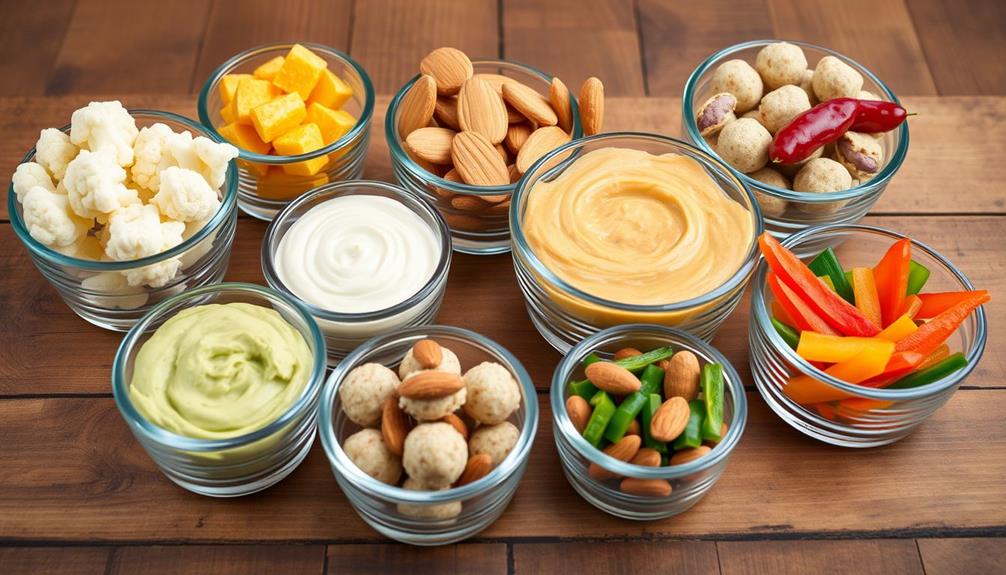
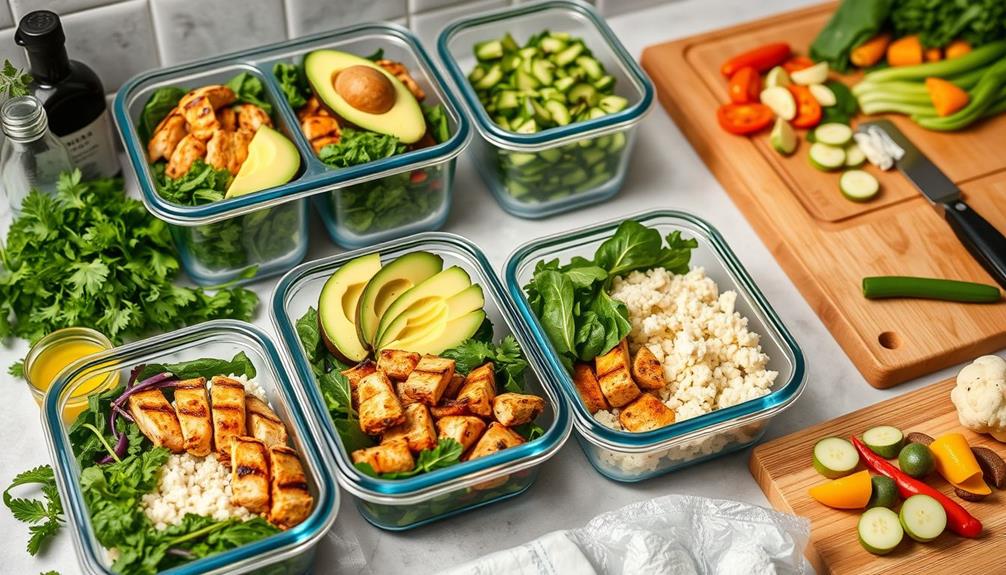
To tailor your meal prep for different macros, focus on swapping fats or proteins based on your goals. If you want energy and healthy fats, include nuts, oils, or fatty fish in your meals. For muscle growth or recovery, prioritize lean proteins like chicken, fish, or eggs, spreading them evenly across your day. Fine-tuning these balances helps you meet your macros effectively, and exploring these options will give you more control over your nutrition plan.

Get kitchen staples and gadgets delivered free with Prime
- Fast, free delivery on millions of items
- Prime Video, Amazon Music and more included
- Member-only deals all year
Key Takeaways
- Prioritize fats in meal prep to support energy stability and meet calorie goals with nutrient-dense sources like nuts and oils.
- Emphasize lean protein sources to promote muscle repair, satiety, and consistent muscle synthesis across meals.
- Adjust fat and protein proportions based on goals—more fats for energy and recovery, more protein for muscle building or weight loss.
- Distribute fat and protein evenly throughout the day to optimize absorption, energy levels, and macro adherence.
- Timing meals around workouts can enhance fat utilization or protein absorption, depending on your macro focus.

Preparing meals tailored to your specific macronutrient goals can substantially boost your health and fitness progress. Whether you’re aiming for a higher fat intake or focusing on protein, understanding how to balance your meals is key. When you adjust your macros, you’re essentially fine-tuning your nutrition plan to support muscle growth, fat loss, or overall wellness. One critical aspect is calorie counting, which helps you stay within your daily energy limits, making sure you don’t overeat or undereat. Meal timing also plays a fundamental role, especially when you’re focusing on specific macros, because strategically spacing your meals can optimize nutrient absorption and energy levels.
If you’re emphasizing fats in your meal prep, you’ll want to include sources like nuts, seeds, oils, and fatty fish. These foods provide essential fatty acids and help meet your calorie goals without excessive volume. When calorie counting, keep in mind that fats are calorie-dense, offering about 9 calories per gram, so small portions can greatly contribute to your daily intake. To balance this, incorporate moderate amounts of protein to preserve muscle and aid recovery, while keeping carbohydrate intake in check if you’re aiming for a high-fat, low-carb approach. Meal timing becomes indispensable here; spacing your fat-rich meals evenly throughout the day can help maintain steady energy levels and prevent dips that might lead to overeating later. You might also find it beneficial to consume fats around your workouts, either before or after, to maximize energy and recovery.
On the other hand, if your focus is on increasing protein intake, you’ll want to prioritize lean sources like chicken, fish, eggs, and low-fat dairy. High-protein meals support muscle repair and satiety, making it easier to stick to your calorie goals. When calorie counting, remember that protein has about 4 calories per gram, so tracking your intake ensures you’re hitting your macro targets without going overboard. Proper meal timing becomes especially important here; spreading your protein intake evenly across meals can optimize muscle protein synthesis and keep you feeling full longer. Consuming protein shortly after workouts can further accelerate recovery and muscle growth. Adjust your meal timing to prevent long gaps between protein-rich meals, which could otherwise hinder your progress.
Ultimately, whether you’re adjusting for more fats or proteins, the key is consistency and precision. Use calorie counting as your guide, and plan your meal timing to support your macro goals. By doing so, you’ll set yourself up for better results, improved energy, and a more sustainable approach to your nutrition.
Frequently Asked Questions
How Do I Track Macros Accurately During Meal Prep?
To track macros accurately during meal prep, use a digital scale for precise portion control. Log each ingredient in a tracking app, paying attention to meal timing to make certain you’re meeting your macro goals throughout the day. Focus on consistent portion sizes and measure ingredients carefully to maintain accuracy. This approach helps you stay on track with your nutritional targets, whether you’re adjusting for fat or protein focus.
Can I Combine High-Fat and High-Protein Meals in One Prep?
Sure, why not throw a high-fat, high-protein party on your meal prep table? Combining these macros boosts prep versatility, offering variety and flavor. Just remember, it’s like mixing oil and water—sometimes stubborn, sometimes perfect together. Balancing your meal combination keeps your macros on point without turning your fridge into a science experiment. So go ahead, embrace the chaos—your taste buds and macros will thank you.
What Are Quick Snack Options for Macro-Focused Meal Plans?
You can choose healthy snacks like protein bites or mixed nuts to quickly boost your macro intake. Protein bites are great because they’re portable, easy to make, and packed with protein, making them perfect for on-the-go snacking. For variety, include Greek yogurt, hard-boiled eggs, or beef jerky. These options help you stay on track with your macro goals without sacrificing convenience or flavor.
How Do I Adjust Macros for Weight Loss or Muscle Gain?
To adjust macros for weight loss or muscle gain, you should use macro cycling to vary your intake based on activity levels. Focus on nutrient timing by consuming more carbs around workouts for muscle gain and reducing them for fat loss. Increase protein to support muscle repair during gains, and create a slight calorie deficit for weight loss. Regularly track your progress and tweak your macros accordingly.
Are There Specific Foods Recommended for Macro-Specific Meal Prep?
Did you know that combining specific foods can enhance macro intake? For protein-focused meals, include lean meats, eggs, and dairy to maximize muscle repair. For higher fat meals, opt for nuts, seeds, and avocados to support energy needs. To keep meal variety, pair these with vegetables and whole grains. This way, you get balanced macro-specific meal prep with tasty food pairing options, making your meal planning both effective and enjoyable.
Conclusion
By customizing your meals to focus on fats or proteins, you’re fundamentally crafting a roadmap to fuel your unique journey. Think of your macros as the compass guiding your nutritional adventure—each adjustment like shifting gears to accelerate or cruise. With a little experimentation, you’ll find the perfect balance that keeps your energy soaring and your goals within reach. So, embrace the flexibility and let your meal prep be the engine propelling you toward success.
Fall Picks
fall essentials
As an affiliate, we earn on qualifying purchases.