To stay motivated weekly, mix things up by incorporating different herbs, spices, and cuisines to keep flavors exciting. Plan themed menus, experiment with various cooking techniques, and switch between quick and elaborate recipes based on your energy level. Remember to keep meal prep enjoyable and flexible, so it doesn’t feel overwhelming. If you want more tips on maintaining enthusiasm and avoiding burnout, there’s plenty more to discover to make your routine sustainable.
Key Takeaways
- Incorporate themed cuisines and new recipes to keep meal prep exciting and engaging.
- Use flavor variety through herbs, spices, and sauces to prevent monotony.
- Keep routines flexible by adjusting ingredients and techniques based on energy levels.
- Include quick, no-fuss recipes for days when motivation is low.
- Regularly experiment with different cooking methods and ingredients to maintain enthusiasm.
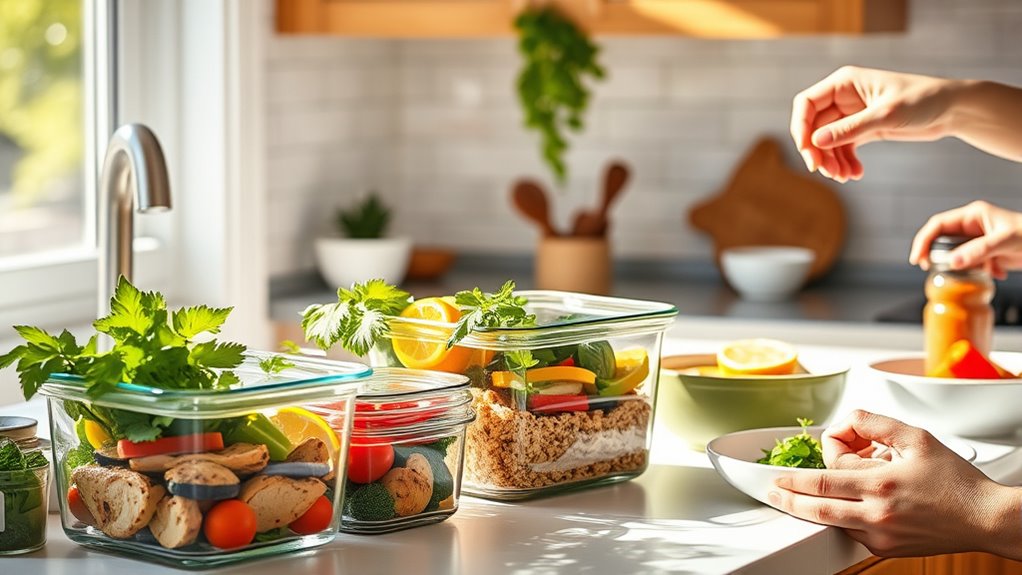
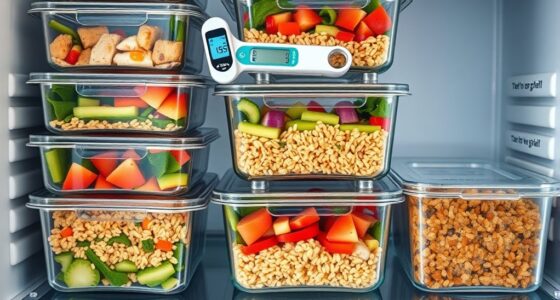
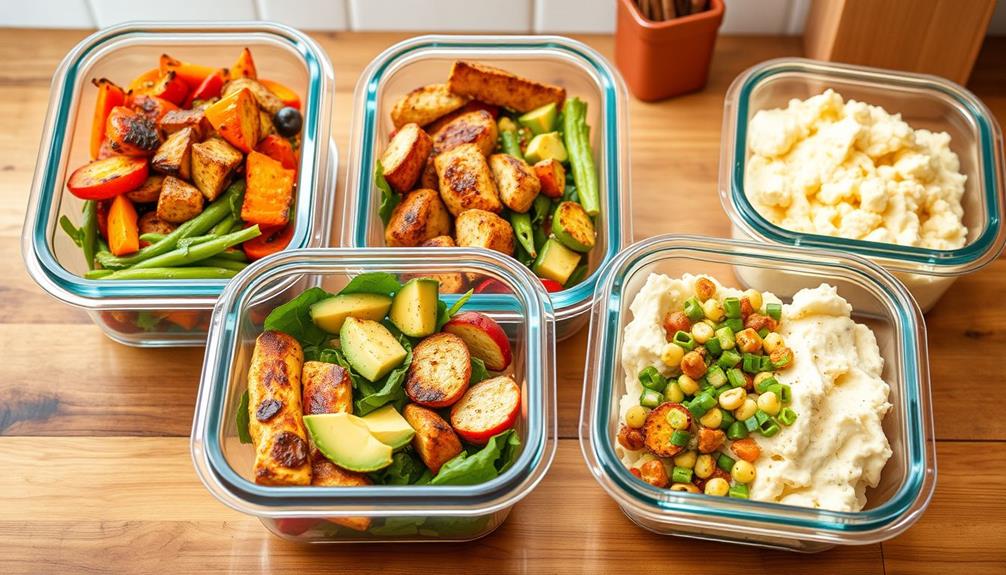
Meal prep burnout can hit even the most dedicated meal planners, making it feel like a chore rather than a helpful routine. When you start to feel overwhelmed or uninspired, it’s easy to fall into a cycle of repetition, where every week feels like a grind. One way to combat this is by embracing batch cooking. Instead of cooking individual meals each day, you dedicate a few hours to preparing large quantities of staples or versatile ingredients. This not only saves time but also reduces the mental load of daily cooking decisions. With batch cooking, you can make big pots of grains, roasted vegetables, or proteins that can be transformed into multiple dishes throughout the week. It keeps things simple and efficient, giving you more freedom to experiment with new flavors without starting from scratch every time.
Batch cooking saves time and mental energy, allowing flexible, flavorful meal options throughout the week.
That said, flavor variety is essential to keep your meals exciting and prevent burnout. If your meals start tasting the same, you’ll quickly lose motivation. To avoid this, incorporate different herbs, spices, and sauces into your batch-cooked staples. For example, a batch of grilled chicken can be seasoned with Italian herbs one week and then used in a spicy Thai-inspired stir-fry the next. Switching up seasonings and cooking methods keeps your palate engaged and makes each meal feel fresh. You can also rotate proteins and vegetables to introduce new textures and tastes. Incorporating a variety of flavor profiles helps you look forward to your meals rather than dread them.
Another tip is to plan your meals around themes or cuisines. One week, focus on Mediterranean flavors; the next, try Asian-inspired dishes. This approach keeps your routine dynamic and prevents boredom. Additionally, don’t be afraid to try new recipes or cooking techniques to add excitement. Even small changes, like roasting vegetables differently or using a new marinade, can make a big difference in flavor without requiring a complete overhaul of your routine. Keep a list of go-to flavor combos that you enjoy, and experiment with them regularly. Exploring regional cuisine and incorporating authentic ingredients can also elevate your meal prep experience.
Finally, remember that flexibility is key. If you’re feeling burnt out, it’s okay to take a break or simplify your prep. Sometimes, switching to quick, no-fuss recipes or even eating more fresh or minimally prepared foods can recharge your enthusiasm. The goal is to make meal prep sustainable and enjoyable, not a source of stress. By incorporating batch cooking, prioritizing flavor variety, and staying open to new ideas, you’ll find it easier to stay motivated and keep your meal prep routine fresh and rewarding each week.

Dealusy 50 Pack 32 oz Meal Prep Containers with Lids 3-Compartment, Black
- Durable and Reusable Material: Made of premium thick plastic with strong construction
- Leakproof and Stackable Design: Tight sealed lids prevent leaks and spills, easy stacking
- Microwave and Freezer Safe: BPA-free plastic withstands -4℉ to 248℉ temperatures
As an affiliate, we earn on qualifying purchases.
As an affiliate, we earn on qualifying purchases.
Frequently Asked Questions
How Can I Involve Family Members in My Meal Prep Routine?
You can involve family members in your meal prep routine by encouraging shared planning, where everyone suggests their favorite dishes. Assign simple tasks like washing vegetables or setting the table to foster family participation. Make it fun by turning it into a group activity or challenge. This not only lightens your load but also creates a sense of teamwork and excitement around mealtime, keeping everyone motivated and engaged.
What Are Quick, Healthy Snacks to Prepare in Advance?
You can prepare healthy snack ideas like veggie sticks with hummus, Greek yogurt with berries, or homemade trail mix in advance. Use quick prep tips like portioning snacks into small containers or bags, so they’re ready to grab. These snacks are nutritious, easy to make ahead, and perfect for busy days. Keep your energy up and stay motivated by having healthy options on hand, making it simple to stick to your routine.
How Do I Handle Dietary Restrictions During Meal Prep?
Think of your meal prep as a tailored suit; it needs to fit just right. When handling dietary restrictions, use customized meal plans that address your specific needs, incorporating allergen substitutions where necessary. You might swap nuts for seeds or gluten-free grains. This approach guarantees your meals are both safe and satisfying, helping you stay committed and confident in your prep routine. Adaptation is key to enjoying every bite.
What Tools Can Make Weekly Meal Prep Easier?
To make weekly meal prep easier, you should use meal prep apps like MyFitnessPal or Mealime to organize your plans and shopping lists. Kitchen gadgets such as slow cookers, food processors, and mandoline slicers save you time and effort. These tools streamline your process, reduce prep time, and keep you motivated. With the right apps and gadgets, meal prep becomes more manageable and less stressful, helping you stay on track.
How Can I Prevent Boredom With My Meal Choices?
You might worry that variety means extra work, but it’s easier than you think. To prevent boredom, focus on incorporating seasonal ingredients and exploring new flavor combinations regularly. Swap out herbs, spices, or sauces to keep meals exciting without much effort. Planning ahead and trying different cuisines also help maintain your enthusiasm. This way, your meals stay fresh, flavorful, and enjoyable, keeping you motivated to stick with your prep routine.
As an affiliate, we earn on qualifying purchases.
Conclusion
By staying mindful of your goals, celebrating small victories, and maintaining variety, you’ll keep your motivation alive. Embrace flexibility, shift your routines, and listen to your needs, knowing each step keeps burnout at bay. Remember, the key to sustainable meal prep lies in persistence, adaptation, and passion. With these principles, you’ll transform weekly routines into lasting habits, turning meal prep from a chore into a rewarding part of your lifestyle. Keep going, stay inspired, and enjoy the journey ahead.
As an affiliate, we earn on qualifying purchases.
As an affiliate, we earn on qualifying purchases.