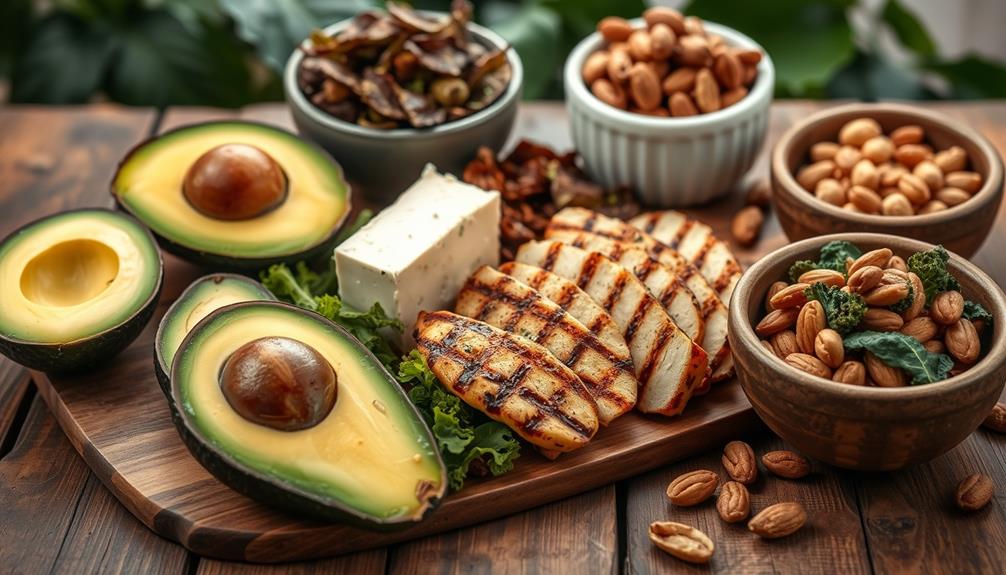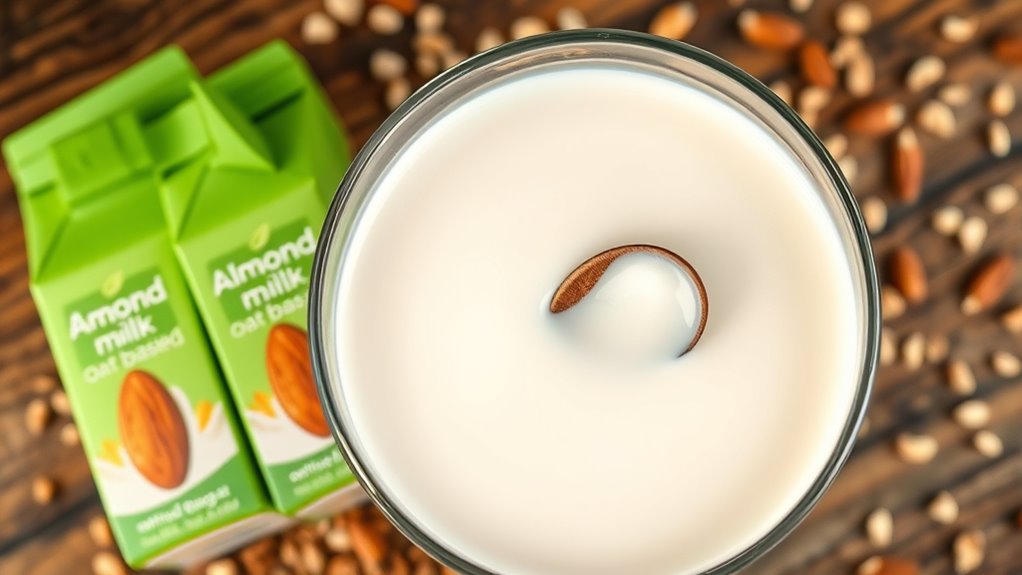

Dairy milk isn’t typically keto-friendly because it contains about 12 grams of carbs per cup, mainly from lactose. In contrast, many plant-based milks—like unsweetened almond or coconut milk—are lower in carbs and better suited for a low-carb diet. Always check labels for added sugars and carb content, and opt for unsweetened varieties to stay within your keto limits. If you want to find out more about choosing the best milk options for your goals, keep exploring.

Get kitchen staples and gadgets delivered free with Prime
- Fast, free delivery on millions of items
- Prime Video, Amazon Music and more included
- Member-only deals all year
Key Takeaways
- Traditional dairy milk contains about 12g of carbs per cup, making it less ideal for strict keto diets.
- Unsweetened plant-based milks, like almond or coconut, typically have fewer carbs and are more keto-friendly.
- Sweetened or flavored milk options usually contain added sugars, increasing carbohydrate content and reducing keto compatibility.
- Plant milks vary in protein content; choose higher-protein options like soy or pea milk for balanced macros.
- Reading nutrition labels and controlling portion sizes are essential for maintaining keto compliance with milk choices.

If you’re following a keto diet, you might wonder whether milk fits into your plan. The answer largely depends on the type of milk you’re considering and how it fits into your daily carbohydrate limits. Traditional dairy milk undergoes dairy processing, which influences its carbohydrate content and overall keto compatibility. During dairy processing, milk is often pasteurized and sometimes fortified or altered to achieve specific textures or flavors. This processing can affect the natural composition of milk, but the carbohydrate content remains a key factor in determining if it’s keto-friendly. Regular cow’s milk contains about 12 grams of carbs per cup, mostly from lactose, which is a sugar. If you’re strict about carb intake, that amount can add up quickly, making traditional milk less ideal for a keto diet.
On the other hand, plant-based alternatives—like almond, coconut, or cashew milk—generally have lower carbohydrate levels because they are often crafted to be low in sugars. These plant-based milks vary in their plant protein content, which can be a significant factor if you’re looking to maintain muscle mass while on keto. Many commercial plant milks are fortified with added nutrients to mimic the nutritional profile of cow’s milk, but they tend to have less protein overall. For instance, almond milk might have just 1 gram of protein per cup, while soy milk can offer around 7 grams. If plant protein content is a priority for you, soy and pea-based milks are better options, especially since they tend to be higher in protein compared to other plant milks.
When choosing between dairy milk and its plant-based alternatives, always check the nutrition labels. Some flavored or sweetened plant milks can contain added sugars, which raises the carbohydrate count and makes them less suitable for keto. Unsweetened versions are usually your best bet. Additionally, consider the ingredient list; many commercial plant milks include thickeners, stabilizers, and fillers that might impact your digestion or overall health goals.
Ultimately, whether milk is keto-friendly depends on the type and how you incorporate it into your daily macros. Unsweetened almond or coconut milk with minimal carbs can be a good choice, especially if you’re sensitive to dairy. If you prefer dairy milk, opt for small portions and account for the carbs in your daily intake. Understanding dairy processing and plant protein content helps you make informed decisions, ensuring you stay within your carb limit while enjoying the beverages you love.
unsweetened almond milk for keto
As an affiliate, we earn on qualifying purchases.
As an affiliate, we earn on qualifying purchases.
Frequently Asked Questions
Are There Any Keto-Friendly Flavored Milk Options?
Yes, there are keto-friendly flavored milk options. When considering flavored milk, look for those with no added sugars and low carbs to fit your keto considerations. You can try unsweetened almond or coconut milk infused with natural flavorings like vanilla or cocoa powder. Always check labels carefully, as many flavored milks contain hidden sugars that can derail your keto goals. Opt for homemade versions to control ingredients and keep carbs low.
How Does Lactose Content Affect Keto Diet Plans?
Lactose is the sugar found in milk, and it can be a hidden trap in your keto journey. If you have lactose digestion issues or dairy sensitivity, consuming milk might feel like trying to fit a square peg in a round hole. Since lactose converts to sugar, it can spike your blood sugar and kick you out of ketosis. Opt for lactose-free or plant-based alternatives to stay on track.
Can Milk Consumption Impact Ketosis Levels?
Milk consumption can impact your ketosis levels, especially if you’re lactose intolerant or consume regular dairy milk. Lactose, a sugar found in milk, can kick you out of ketosis if ingested in large amounts. Milk processing often adds sugars or carbs, increasing its impact. To stay in ketosis, consider lactose-free or plant-based alternatives, which typically contain fewer carbs and won’t affect your ketosis as much.
What Are the Best Dairy-Free Milk Choices for Keto?
You’re about to discover the holy grail of keto-friendly drinks! For dairy-free milk choices, opt for unsweetened almond milk, coconut milk, or macadamia nut milk—these are low in carbs and perfect for ketosis. Steer clear of sweetened or flavored plant-based milks, which can sabotage your goals. These options give you creamy texture and flavor without knocking you out of ketosis, making your keto journey smoother than ever!
Are There Any Hidden Carbs in Plant-Based Milk Alternatives?
Yes, some plant-based milk alternatives can have hidden carbs, so you should verify their calorie comparison and ingredient transparency. Many options like sweetened almond or oat milk contain added sugars, increasing carb content unexpectedly. Always read labels carefully, focusing on unsweetened versions. By doing so, you ensure you’re choosing options that fit your keto diet without consuming hidden carbs that could disrupt ketosis.
As an affiliate, we earn on qualifying purchases.
Conclusion
So, whether you stick with dairy or choose plant-based milk, remember that moderation is key on your keto journey. Just like a wise old sage once said, “A little goes a long way,” even in the age of dial-up internet. Keep an eye on carb content, and you’ll find the perfect milk alternative to suit your goals. With mindful choices, you can enjoy your favorite beverages without kicking your ketosis to the curb.
As an affiliate, we earn on qualifying purchases.
As an affiliate, we earn on qualifying purchases.
Halloween Picks
halloween
As an affiliate, we earn on qualifying purchases.