
If you’re not losing weight on keto, your meal timing and exercise routine might be off. Eating large or irregular meals, especially late at night, can stall progress by disrupting your blood sugar and insulin levels. Inconsistent workouts or not timing exercise properly can also hinder fat burn. Adjusting when you eat and work out, aligning with your body’s natural rhythms, can boost your results. Keep exploring to discover strategies that help break through these plateaus.
Key Takeaways
- Irregular meal timing or late-night eating can disrupt ketosis and slow weight loss.
- Consuming carbs right before bed may interfere with fat burning and insulin regulation.
- Inconsistent or insufficient exercise reduces calorie deficit and stalls progress.
- Overtraining or lack of rest increases cortisol, hindering fat loss.
- Not aligning meal and workout timing with your body’s natural rhythms can impair weight loss.
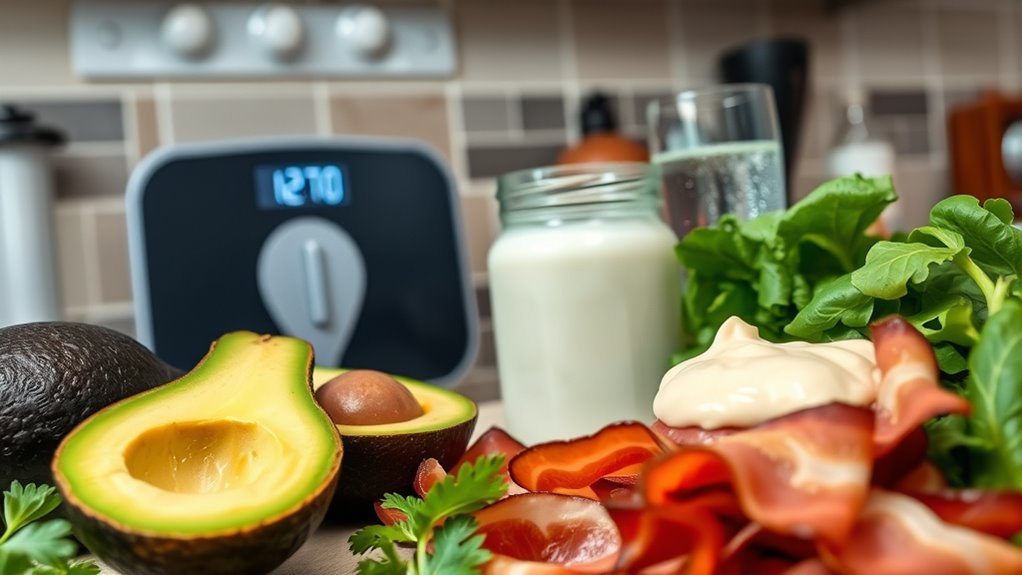
If you’re following a keto diet but not seeing the weight loss you expected, you’re not alone. Many people struggle with plateaus or slow progress, and often, the reasons aren’t immediately obvious. One common factor is how you’re managing meal timing and your exercise routines. These elements can profoundly influence your body’s response to ketosis and how quickly you shed those pounds.
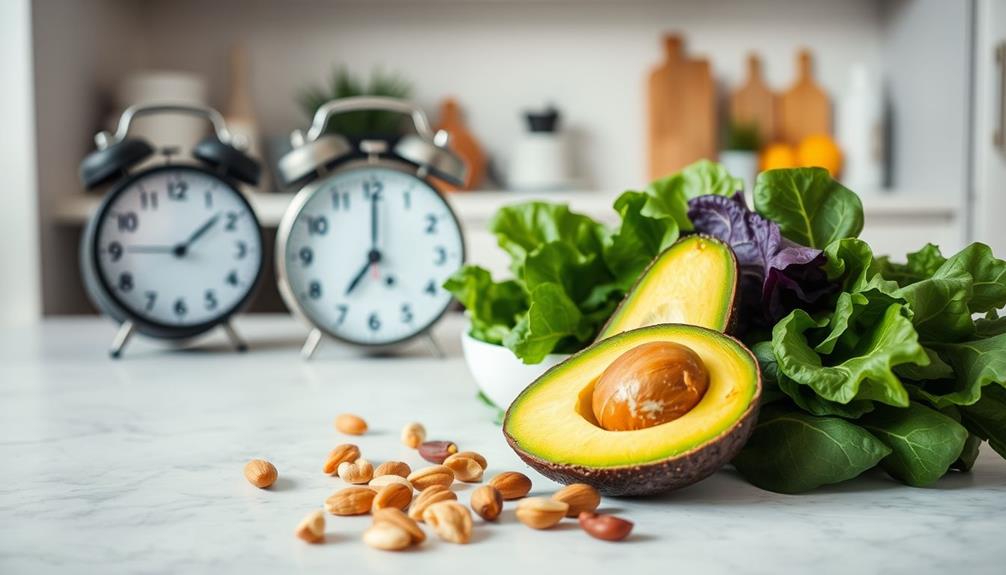
First, consider your meal timing. Even if you’re sticking to a low-carb, high-fat plan, eating at irregular intervals or consuming large meals late at night can hinder your progress. Your body operates on a circadian rhythm, which means that when you eat can be just as important as what you eat. Spreading your meals evenly throughout the day helps maintain steady blood sugar levels and prevents insulin spikes, which can slow down fat burning. Additionally, some people find that implementing intermittent fasting—such as eating within an 8-hour window—can boost ketosis and accelerate weight loss. This approach encourages your body to tap into fat stores for energy more efficiently. Pay attention to how your meal timing aligns with your activity levels; eating a carbohydrate-rich meal right before bed can also interfere with ketosis, so timing your carbs and fats strategically is key.
Next, examine your exercise routines. Physical activity can enhance your weight loss efforts, but only if you’re engaging in the right type of workouts consistently. Incorporate a mix of cardio and strength training to optimize fat burning. Cardio helps create a caloric deficit, while strength training builds muscle, which increases your resting metabolic rate. If your workouts are infrequent or not intense enough, you might not see the progress you want, even on keto. Also, consider the timing of your workouts—exercising during your fasting window or shortly after a high-fat meal can help your body burn fat more efficiently. Be mindful of overtraining, which can stress your body and elevate cortisol levels, potentially leading to weight stalls. Rest days are just as important as workout days. Remember, meal timing and exercise routines are essential components that work together to support or hinder your progress.
Ultimately, if you’re not losing weight on keto, look at the bigger picture. Your meal timing and exercise routines are vital components that work together to support or hinder your progress. Adjusting these factors, staying consistent, and listening to your body can help you break through plateaus and reach your goals faster. Remember, weight loss isn’t just about strict adherence to macros; it’s about creating a sustainable routine that aligns with your body’s natural rhythms and energy needs.
Frequently Asked Questions
Can Stress Affect My Keto Weight Loss Progress?
Yes, stress can affect your keto weight loss progress. When you’re stressed, your stress hormones, especially cortisol, increase. Elevated cortisol levels can lead to fat retention and cravings for unhealthy foods, making it harder to stay in ketosis and lose weight. Managing stress through relaxation techniques, exercise, and proper sleep can help lower cortisol levels, supporting your keto goals and improving your chances of weight loss success.
Does Drinking Alcohol Slow Down Ketosis?
Alcohol can indeed slow down ketosis because it triggers alcohol metabolism, which takes priority over fat burning. When you drink, your body focuses on processing alcohol first, leading to ketosis suppression. Think of alcohol as a roadblock on your keto journey—your body diverts energy to alcohol metabolism, delaying fat loss. To stay in ketosis, limit alcohol intake and choose low-carb options if you do indulge.
How Does Sleep Quality Impact Keto Weight Loss?
Poor sleep quality can hinder your keto weight loss by causing sleep disruption and hormone imbalance. When you don’t sleep well, your body produces more cortisol, which can increase appetite and promote fat storage. Additionally, sleep deprivation affects insulin sensitivity, making it harder for your body to burn fat efficiently. To support your keto goals, prioritize good sleep habits, aiming for consistent, restful nights to optimize hormone balance and enhance weight loss.
Are There Hidden Carbs in Supplements or Medications?
Hidden carbs can definitely be in supplements or medications through certain ingredients like sugars, maltodextrin, or fillers. You should always check supplement ingredients carefully, as some additives may contain carbs that kick you out of ketosis. When in doubt, opt for plain, label-free supplements or consult your healthcare provider. Being vigilant about hidden carbs in your supplements and medications helps make sure you stay on track with your keto goals.
Can Certain Medical Conditions Prevent Keto Weight Loss?
Certain medical conditions, like hormonal imbalances, can prevent keto weight loss. If you have thyroid issues, insulin resistance, or PCOS, your body might not respond well to a keto diet. These conditions affect how your body processes fats and carbs, making weight loss harder. It’s essential to consult your healthcare provider to address any underlying medical conditions and get personalized advice for effective weight management on keto.
Conclusion
If you’re not shedding pounds on keto, remember that progress isn’t always a straight path—sometimes, the key lies beneath the surface, like roots unseen underground. Your body’s metabolism may be working silently, waiting for the right signals to bloom. Keep nurturing your habits, stay patient, and trust that, with time, the weight loss you seek is like a seed destined to sprout when the conditions are just right. Patience turns the underground roots into a thriving tree.