
Net carbs are the carbohydrates that truly impact your blood sugar and ketosis, so paying attention to them helps you stay on track. They’re calculated by subtracting fiber and sugar alcohols from total carbs because these don’t raise blood sugar considerably. Understanding net carbs makes it easier to manage your intake and prevent disrupting ketosis. Keep going to discover how to practically use net carbs to support your keto goals effectively.
Key Takeaways
- Net carbs are total carbs minus fiber and sugar alcohols, representing carbs that impact blood sugar.
- They are crucial on keto because they influence insulin levels and ketosis maintenance.
- High-fiber foods have fewer net carbs, helping you stay within your daily carb limit.
- Calculating net carbs helps prevent exceeding carb thresholds that disrupt ketosis.
- Understanding net carbs allows for smarter food choices while ensuring proper nutrition on keto.

If you’re following a keto diet, understanding net carbs is vital for staying in ketosis. Net carbs refer to the amount of carbohydrates your body actually digests and converts into glucose, which impacts your blood sugar and insulin levels. While total carbs include everything on the nutrition label, net carbs focus on the carbs that can affect your ketosis state. To calculate net carbs, you subtract fiber content and sugar alcohols from the total carbs. This is because fiber isn’t digested by your body, so it doesn’t raise blood sugar, and sugar alcohols are processed differently, often causing minimal impact on insulin levels.
Net carbs are total carbs minus fiber and sugar alcohols, key for staying in ketosis.
You’ll notice many low-carb and sugar-free products list sugar alcohols like erythritol, xylitol, or sorbitol in their ingredients. These sugar alcohols are popular because they provide sweetness without the same blood sugar spike as regular sugar. However, some sugar alcohols can still affect your blood sugar slightly, so it’s wise to check how your body responds. When calculating net carbs, you subtract the grams of sugar alcohols, but be aware that not all sugar alcohols are created equal—some may have a more significant impact on blood sugar than others. For example, erythritol is almost completely non-impactful, so it’s often excluded from net carb calculations, whereas maltitol can raise blood sugar more noticeably.
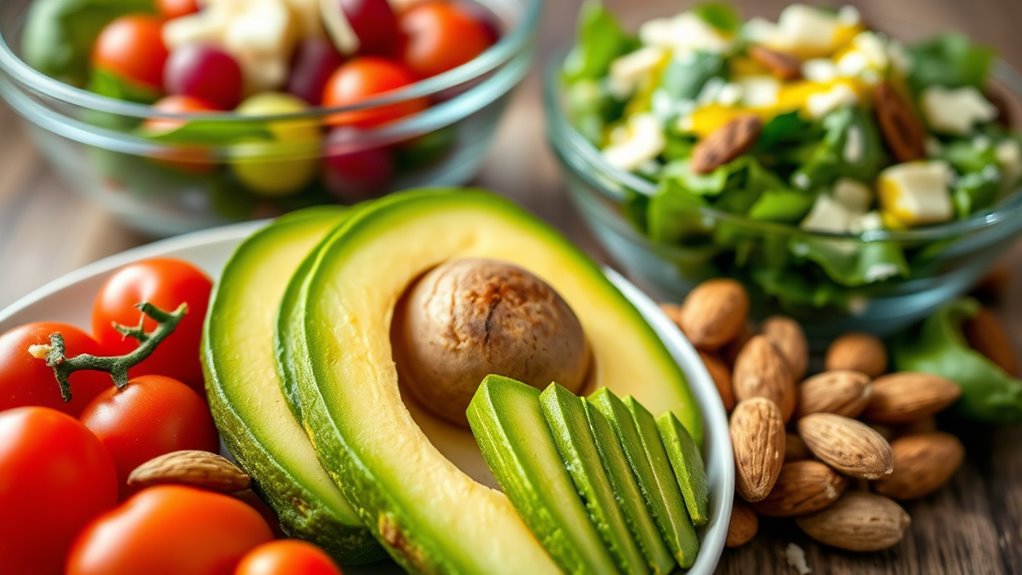
Fiber content plays an essential role in determining net carbs because fiber isn’t digested and doesn’t contribute to blood glucose. Foods high in fiber, like leafy greens, nuts, and seeds, typically have fewer net carbs even if their total carbohydrate count seems high. By subtracting fiber from total carbs, you get a more accurate picture of the carbs that could affect your ketosis. Additionally, adequate hydration is important for supporting digestion and overall metabolic health while on a keto diet. For instance, a food with 10 grams of total carbs and 8 grams of fiber only has 2 grams of net carbs, making it a suitable choice for your keto plan. Paying attention to fiber content helps you include nutrient-dense, fibrous foods that support digestion and overall health without knocking you out of ketosis.
In essence, understanding net carbs involves looking beyond the total carbohydrate number and factoring in fiber and sugar alcohols. Doing so allows you to make smarter food choices, enjoy a variety of foods, and stay in ketosis more effectively. This approach ensures you’re consuming enough carbs to nourish your body without exceeding the limits that would kick you out of ketosis, keeping your keto journey on track.

Keto Cheat Sheets Magnets Booklet – Keto Cookbook Meal Plan – Keto Diet Book for Beginners Over 60 – Keto Food Book Magnetic Chart – Weight Loss Low Carb Ketogenic Diet – Keto Food List Charts
Magnetic Keto Cheat Sheet for Meal Planning. This magnetic keto cheat sheet is a simple yet powerful keto…
As an affiliate, we earn on qualifying purchases.
As an affiliate, we earn on qualifying purchases.
Frequently Asked Questions
Can Net Carbs Be Negative?
Yes, net carbs can be negative in some cases. This happens when the fiber impact and sugar alcohols are high enough to surpass the total carbs, reducing net carbs below zero. For example, certain sugar alcohols like erythritol have little to no impact on blood sugar, and high-fiber ingredients can markedly lower net carbs. Keep in mind, though, not all sugar alcohols behave this way, so check labels carefully.
How Do Fiber and Sugar Alcohols Differ in Net Carbs?
Fiber and sugar alcohols both affect net carbs differently. Fiber impacts your net carbs by not raising blood sugar, so you subtract it from total carbs. Sugar alcohols, however, vary—some have minimal impact, while others can slightly raise blood sugar, so subtract only those that don’t impact you personally. This distinction is essential for maintaining ketosis, as fiber generally has no effect, but sugar alcohols can sometimes influence blood sugar levels.
Are Net Carbs More Important Than Total Carbs?
Yes, net carbs are more important than total carbs if you’re following a keto diet, because they reflect the carbs that impact your blood sugar and ketosis. You should focus on fiber impact, as fiber isn’t digested and doesn’t raise blood sugar, making it less relevant for carbohydrate counting. By subtracting fiber and sugar alcohols from total carbs, you get a clearer picture of what affects your keto goals.
Do All Keto Foods Have Net Carbs?
Not all keto foods have net carbs, and that’s no coincidence. Foods high in fiber or sugar alcohols can reduce net carbs, making them more keto-friendly. When you look at labels, consider fiber impact and sugar alcohols—they lower net carbs without spiking blood sugar. So, while some keto foods are crafted to have minimal net carbs, others may contain more, depending on their fiber and sugar alcohol content.
How Do I Track Net Carbs Accurately?
To track net carbs accurately, start by meal planning and choosing foods with low carb counts. Use nutrition labels to read serving sizes and subtract fiber and sugar alcohols from total carbs, as these don’t impact blood sugar much. Keep a food journal or use a tracking app to stay consistent, ensuring you stay within your daily net carb limit. This helps you maintain ketosis effectively.

NatureBell Xylitol Sweetener, 5lbs | Natural Birch Crystal Source – 1:1 Sugar Substitute – Sweet Flavor with No Erythritol – Low Calorie & Glycemic Impact – Sugar Free, No Aftertaste, Non-GMO
Premium 5lb supply of Xylitol, 1:1 sugar substitute, sourced from natural birch bark crystals, offering a sweet flavor…
As an affiliate, we earn on qualifying purchases.
As an affiliate, we earn on qualifying purchases.
Conclusion
Understanding net carbs helps you stay on track and enjoy your keto journey. While total carbs might seem intimidating, focusing on net carbs gives you clarity and control. It’s about balancing what you eat with your goals, not restriction for restriction’s sake. So, embrace the knowledge, enjoy your favorite foods in moderation, and watch how small carb choices make a big difference. Because on keto, awareness is your best tool for success.

Mission Foods Zero Net Carb Flour Tortilla
One 14-count package of Mission Zero Net Carbs Original Tortillas
As an affiliate, we earn on qualifying purchases.
As an affiliate, we earn on qualifying purchases.

keto snacks Keto Crackers chips (variety) low carb Crackers Almond flour. Low carb snack keyto cracker zero carbs snacks no sugar, 0 no carbs sugar free snack high fiber.
Keto crackers (sea salt, cheddar cheese, rosemary) low carb almond crackers variety pack
As an affiliate, we earn on qualifying purchases.
As an affiliate, we earn on qualifying purchases.