
Yes, soy can fit into your keto diet if you choose minimally processed options like tofu, soy sauce, and edamame, and watch your portion sizes. Tofu and soy sauce are low in carbs, while edamame has moderate carbs, so portion control is key. These soy products are high in protein and retain more natural nutrients, making them suitable for keto. To discover how to incorporate soy into your plan effectively, keep exploring for helpful tips.
Key Takeaways
- Tofu is low in carbs (about 2 grams per serving), making it suitable for a keto diet.
- Soy sauce contains approximately 1 gram of carbs per tablespoon and can be included in moderation.
- Edamame has around 8 grams of carbs per half-cup, so portion control is important for keto adherence.
- Minimally processed soy products like tofu and edamame retain nutrients and are keto-friendly options.
- Highly processed soy products may contain added sugars or carbs, so choose minimally processed options for keto compatibility.

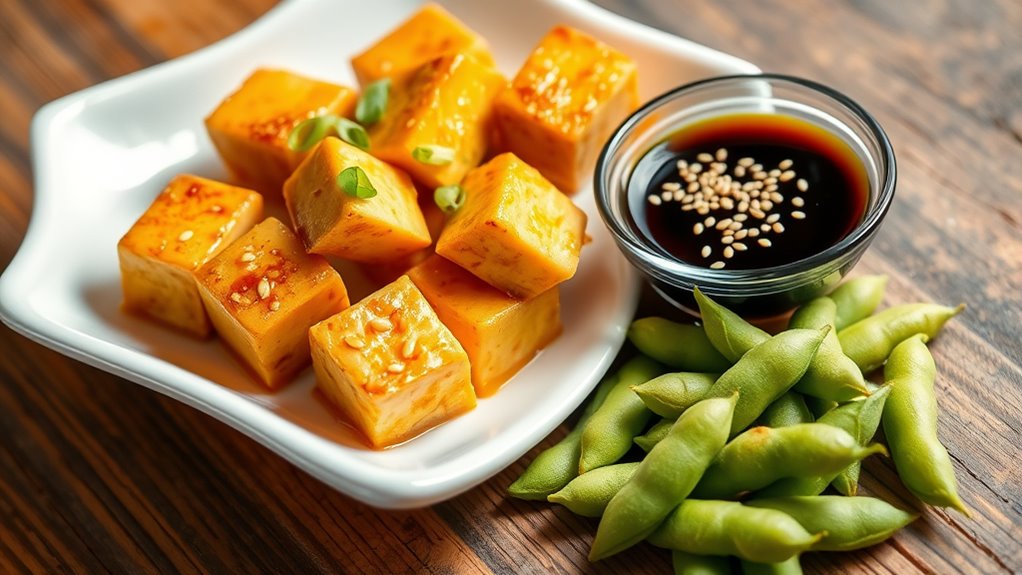
Is soy keto friendly? If you’re exploring plant-based proteins to fit into your ketogenic lifestyle, soy is often on your radar. It’s a versatile source of protein that can help you maintain variety in your diet while keeping carbs low. But before you jump in, it’s worth understanding soy processing and how it impacts its keto compatibility. Soybeans, the raw material for many soy products, undergo various processing steps to produce tofu, soy sauce, edamame, and other items. These processes can influence the carbohydrate content and overall healthfulness of the final product. For example, tofu is made by curdling soy milk, which involves coagulating agents that separate soy solids from liquids. This results in a protein-rich, low-carb product that fits well into a keto diet. On the other hand, soy sauce is usually made through fermentation, which can add some carbs, but generally, in small amounts, it remains keto-friendly. Edamame, young green soybeans, are minimally processed and are a good source of plant-based proteins, but they contain a moderate amount of carbs. So, portion control becomes key when including edamame in your keto meal plan.
When contemplating soy products, pay attention to their carbohydrate content. Tofu, especially the firm variety, typically has about 2 grams of carbs per serving, making it an excellent choice for keto diets. It’s low in calories and high in protein, helping you stay full without knocking you out of ketosis. Soy sauce, although flavorful and low in carbs—roughly 1 gram per tablespoon—should be used in moderation because some brands contain added sugars or wheat, which can increase carb counts. Always read labels carefully. Edamame offers about 8 grams of carbs per half-cup, which might be acceptable depending on your daily carb limit, but you’ll need to monitor your intake to avoid exceeding your goal.
Understanding soy processing helps clarify why some soy products are more keto-compatible than others. Highly processed soy products like soy protein isolates or textured soy protein often contain added ingredients or undergo extensive processing that might increase carb content or reduce nutrient density. Conversely, minimally processed soy items like tofu and edamame retain more of their natural nutrients and can be incorporated into a keto diet with some mindful planning. Overall, soy can be a valuable source of plant-based proteins on keto, but it’s essential to weigh the specific product and portion size. With careful selection and moderation, soy products like tofu, soy sauce, and edamame can definitely be part of your low-carb, high-protein routine.
Frequently Asked Questions
Can Soy Products Affect Hormone Levels on a Keto Diet?
Soy products can influence hormone levels due to their phytoestrogen effects, which mimic estrogen in your body. If you consume large amounts regularly, they may impact hormone balance, especially in those with hormone-sensitive conditions. On a keto diet, moderate soy intake is usually safe, but it’s wise to observe how your body responds. Staying balanced and consulting with a healthcare provider helps ensure soy fits well with your overall health goals.
Are Soy-Based Protein Powders Suitable for Keto?
Soy-based protein powders can be suitable for keto if they are low in carbs and free from added sugars. Look for soy protein isolates, which have higher protein content and minimal carbs, making them more keto-compatible. You should check labels carefully to guarantee the product fits your daily carb limits. When incorporated thoughtfully, soy protein powders can be a beneficial, plant-based way to boost your protein intake on a keto diet.
How Does Soy Compare to Other Plant-Based Proteins for Keto?
Surprisingly, soy protein outshines many other plant-based options for keto, despite its reputation. It packs a punch with high-quality plant-based nutrients and offers a satisfying protein boost without knocking you out of ketosis. While options like pea or rice protein are decent, soy’s versatility and impressive amino acid profile make it a top contender. So, when comparing plant-based proteins, soy’s the clever choice that keeps your keto goals on track.
Are There Any Soy Allergies to Consider When Keto Dieting?
If you have soy allergies, you should avoid soy products like tofu, soy sauce, and edamame while on keto. Soy allergies can cause reactions ranging from mild to severe, so allergy considerations are vital. Always check ingredient labels and consult with a healthcare professional if you’re unsure about your allergy status. Staying vigilant ensures you maintain a safe, effective keto diet without risking allergic reactions.
Does Soy Consumption Impact Ketosis or Fat Loss?
Imagine you’re enjoying tofu stir-fry, wondering if soy impacts ketosis. Soy can slightly affect digestion and insulin response, but moderate intake usually doesn’t hinder fat loss or ketosis. If you notice increased hunger or blood sugar spikes, cut back. For most, soy’s protein and nutrients support keto goals without disrupting fat burning. Pay attention to your body’s responses, and you can confidently include soy in your keto diet.
Conclusion
So, is soy keto friendly? It can be, if you choose your portions wisely and track your intake carefully. Tofu, soy sauce, and edamame each offer benefits but also contain carbs you need to monitor. By balancing these soy foods with your overall keto goals, you can enjoy their flavors and nutrients without knocking yourself out of ketosis. Stay mindful, stay balanced, and enjoy soy’s versatility on your keto journey.