To keep your keto recipes satisfying, you’ll want to use flours like almond and coconut, which are low in carbs and high in healthy fats. Thickeners such as xanthan gum and psyllium husk help mimic gluten’s structure, improve texture, and bind ingredients without extra carbs. Sweeteners like erythritol and monk fruit keep desserts keto-friendly. Stick with these options, and you’ll discover how to craft delicious low-carb baked goods and sauces that meet your goals.
Key Takeaways
- Keto-friendly flours like almond and coconut flour are low in carbs and suitable for baking and cooking.
- Thickeners such as xanthan gum and psyllium husk improve texture, elasticity, and structure in keto recipes.
- Small amounts of xanthan gum mimic gluten, while psyllium adds fiber and gut health benefits.
- Adjust liquids when using coconut flour due to its high absorbency for optimal results.
- Combining keto flours and thickeners allows for versatile, satisfying low-carb baked goods and sauces.
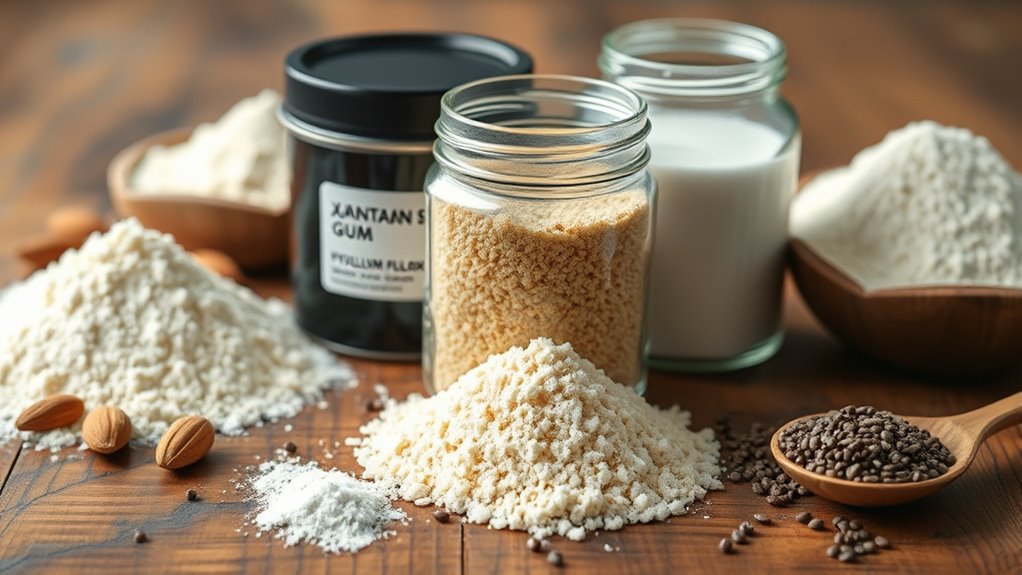
Are you looking for keto-friendly alternatives to traditional flours and thickeners? If so, you’re in the right place. When following a keto diet, you need to avoid high-carb ingredients, which means swapping out wheat flour, cornstarch, and other common thickeners. Luckily, there are plenty of gluten substitutes and sugar alternatives that work well in keto recipes, helping you create delicious baked goods and sauces without breaking your carb bank.
One of the most popular gluten substitutes is almond flour. Made from ground almonds, it provides a nutty flavor and works well in muffins, pancakes, and bread. Coconut flour is another excellent option, known for its high fiber content and ability to absorb moisture. These flours are low in carbs and rich in healthy fats, making them ideal for keto baking. When choosing flours, always consider their absorbency and adjust your liquid ingredients accordingly.
For thickeners, ingredients like xanthan gum and psyllium husk are game changers. Xanthan gum, a powerful thickening agent, is used in small amounts to improve the texture of baked goods, sauces, and smoothies. It mimics the structure gluten provides in traditional baking, giving your recipes a satisfying consistency. Psyllium husk, on the other hand, is a soluble fiber derived from plant seeds. It adds elasticity and helps bind ingredients together, making it perfect for bread and muffins. Plus, psyllium can improve digestion, which is a bonus on a high-fiber keto plan. Additionally, crochet styles for locs can be used to protect your hair while engaging in keto-friendly meal prep or cooking sessions.
Sweeteners also play a pivotal role in keto cooking, especially when recipes require a touch of sweetness. Instead of sugar, you can use sugar alternatives like erythritol, monk fruit extract, or stevia. These options provide the sweetness you crave without spiking your blood sugar levels. They’re versatile and blend seamlessly into baked goods, drinks, and even sauces. Combining these sugar alternatives with keto-friendly flours and thickeners allows you to create a wide variety of desserts and savory dishes that taste just as good as their traditional counterparts.
When experimenting with these ingredients, start small and adjust to your taste and texture preferences. Some gluten substitutes and sugar alternatives may require a bit of trial and error to get the perfect consistency. Always read labels and measure accurately since a little of these ingredients goes a long way. With a bit of practice, you’ll be able to craft keto-friendly dishes that are satisfying, nutritious, and free from high-carb flours and sugars. This way, you can enjoy your favorite foods while staying on track with your ketogenic lifestyle.
Frequently Asked Questions
Can Keto Flours Be Used Interchangeably in Recipes?
You can’t always use keto flours interchangeably in recipes because they differ in texture, flavor, and binding properties. For successful recipe substitution, consider how each flour’s flavor compatibility and thickening ability will affect your dish. Psyllium husk, for example, adds elasticity, while almond flour offers a nutty taste. Adjust quantities accordingly, and test small batches to make certain your final product maintains the desired texture and flavor.
Are There Gluten-Free Alternatives to Traditional Thickeners?
Yes, there are gluten-free substitutes you can use as thickening alternatives. You might try cornstarch, arrowroot powder, or potato starch, which work well in many recipes. Additionally, ground flaxseed or chia seeds can add thickness while boosting nutrition. These gluten-free substitutes provide effective thickening options if you want to avoid traditional thickeners, making your dishes suitable for gluten sensitivities or celiac disease.
How Do I Store Keto Flours and Thickeners Properly?
Did you know that proper storage can extend shelf life by up to 50%? You should store your keto flours and thickeners in airtight containers to keep moisture out, which prevents clumping and spoilage. Keep them in a cool, dark place away from sunlight and heat. Proper storage containers guarantee freshness and potency, helping you avoid waste and maintain ideal baking results over time.
What Are the Best Keto-Friendly Thickening Agents for Sauces?
For keto-friendly sauces, you should try plant-based thickeners like xanthan gum or guar gum, which work quickly and require small amounts. If you’re dairy-free, arrowroot starch or coconut flour are good options too, though they might need slightly longer cooking. These thickeners give your sauces a smooth texture without adding carbs, making them perfect for a keto diet while keeping everything plant-based and dairy-free.
Do Keto Flours Affect Baking Times or Texture?
Keto flours can affect baking times and texture variations. You might need to adjust baking times slightly, as almond or coconut flour can cause baked goods to brown faster or need longer to cook through. They also influence texture, making items denser or more crumbly. Experimenting with small batches helps you find the right balance, ensuring your baked goods turn out perfect every time.
Conclusion
Think of keto flours and thickeners as your trusty toolbox on a culinary adventure. With psyllium, xanthan gum, and others, you’re like a skilled alchemist transforming simple ingredients into delicious, low-carb masterpieces. Each adds its magic touch, helping your recipes rise and thicken just right. Embrace these tools, and you’ll craft baked goods that stand tall and sauces that cling perfectly—turning your kitchen into a domain of endless tasty possibilities.