TL;DR

Get kitchen staples and gadgets delivered free with Prime
- Fast, free delivery on millions of items
- Prime Video, Amazon Music and more included
- Member-only deals all year
A USDA Agricultural Research Service study found no significant difference in E. coli O157:H7 survival or growth when romaine was shipped to a nearby processor or transported across the country before processing. Food Safety News publisher Bill Marler argues that this narrow result does not establish overall safety and says the public summary leaves out findings and questions about contamination, bacterial load and the study’s scope.
The USDA’s Agricultural Research Service found no significant difference in E. coli O157:H7 survival or growth between romaine shipped to a nearby processor and romaine transported across the country before processing, according to a study described in a recent agency summary. In a Food Safety News commentary, publisher and food-safety attorney Bill Marler disputed the broader framing that the finding confirms forward processing is safe, saying it answers a limited question about transit rather than how lettuce becomes contaminated.
The research followed romaine from the same commercial field along two routes: one to a processor near the field and another to an East Coast plant. Researchers used data loggers during the shipments and also conducted laboratory simulations, inoculating lettuce with outbreak strains of E. coli O157:H7. The project was conducted from 2022 to 2023 by scientists led by Xiangwu Nou at the ARS Environmental Microbial and Food Safety Laboratory. It was funded through the Center for Produce Safety, an industry research group, according to Marler’s account of the work.
The study found no significant difference in pathogen survival or growth between the two routes. Marler says the forward-processed lettuce had slightly lower surviving pathogen numbers in the simulation, but also arrived with a higher overall bacterial load and aged faster in storage. He argues those results belong alongside the agency’s headline finding. The available source material does not provide detailed measurements for the total bacterial load or the rate of aging.
The USDA’s public summary, as described by Marler, said forward processing had been confirmed safe and that an expensive industry overhaul was not needed. Marler says that wording goes beyond what the experiment established: a finding that transport did not increase E. coli growth does not show that lettuce was free of the pathogen before shipping, or that the full production and processing chain is safe.
What the Shipping Result Establishes
The result addresses an industry question with practical consequences: whether transporting whole romaine over a longer distance before chopping and washing makes E. coli more likely to survive or grow. If that route does not increase pathogen survival under the conditions tested, processors may have less reason to change where they handle lettuce solely because of shipping distance. The study does not, by itself, establish the safety of every shipment or processing setup.
That distinction matters because E. coli O157:H7 can cause illness without growing during transit. Marler says the infectious dose can be very small, citing a range of 10 to 100 cells. A truck journey that does not make the bacteria multiply would not remove contamination already on the leaves. The central public-health question therefore remains how the pathogen reaches romaine and how effectively it is detected and controlled before the product is eaten.
The broader stakes are clear in the outbreak history cited by Marler: contaminated leafy greens have been linked to illnesses, hospitalizations and deaths. A precise account of what a study tested helps readers distinguish evidence about one transport step from a conclusion about food safety overall.
Products Worth Considering

Cuisinart TOA-112 15-in-1 Extra-Large Digital Toaster Oven Air Fryer

Ninja SP101 Digital Air Fry Countertop Oven, 8-in-1, XL, Silver

Le Creuset Signature Deep Round Enameled Cast Iron Dutch Oven, 6.5 qt, Sea Salt
As an affiliate, we earn on qualifying purchases.
Romaine Outbreaks and Field Risks
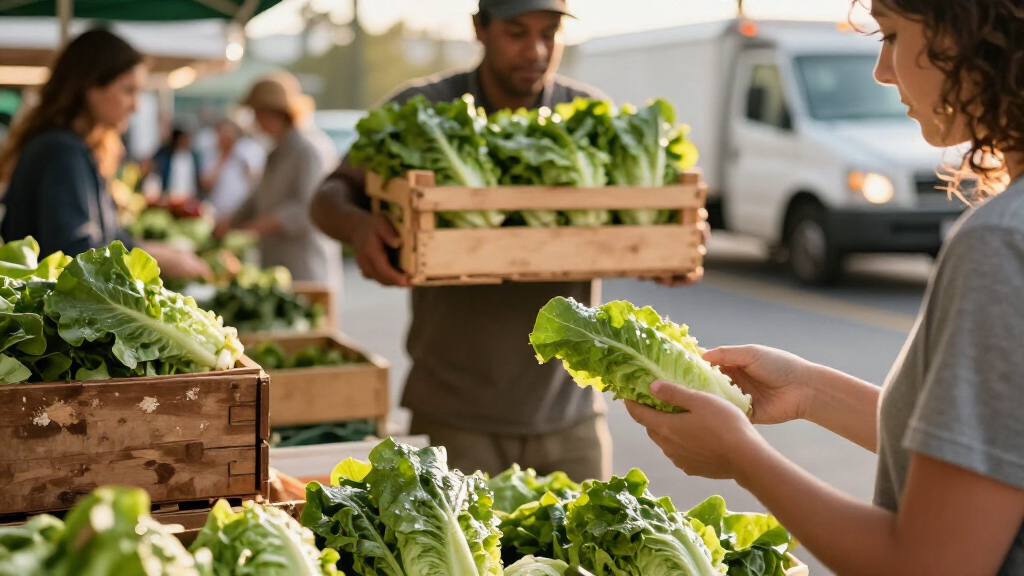
The ARS research followed concerns raised after romaine E. coli outbreaks between 2017 and 2020, including illness clusters far from growing regions. The question was whether “forward processing”—shipping whole romaine from California or Arizona to plants farther east for chopping, washing and packaging—gave the pathogen more time to survive or grow before processing.
Marler points to earlier investigations as evidence that transportation is only one part of the risk. In the 2018 Yuma outbreak, he reports, 210 people in 36 states became ill, 96 were hospitalized, 27 developed hemolytic uremic syndrome and five died. Investigators found the outbreak strain in an irrigation canal. FDA noted that the canal was near a large feedlot; Marler says the cattle industry maintained that no definitive link had been established. Environmental sampling took place after harvest, when lettuce was no longer available to test.
Marler also cites 2018 and 2019 outbreaks linked to California’s Central Coast, where investigations pointed to an agricultural water reservoir and cattle grazing on adjacent land. In 2019, Maryland investigators found an outbreak strain in an unopened salad bag. In 2020, FDA found the strain in cattle feces near a farm associated with illnesses and told Central Coast growers to treat it as a reasonably foreseeable hazard, according to Marler. These examples concern potential sources and routes of contamination; they do not show that the ARS shipping study tested those sources.
“The science behind it is fine. The question it answers is narrow.”
— Bill Marler, publisher of Food Safety News
Questions Beyond the Transit Test
The source material does not include the full research paper or the complete ARS summary, so several details cannot be independently assessed here. Marler says the project title also referred to antimicrobial susceptibility and infectivity, but he says the public summary did not report whether the long trip changed how E. coli responded to wash-water sanitizers or affected how dangerous the bacteria were. It is unclear from the available material whether researchers answered those questions elsewhere or whether they were outside the reported findings.
It is also unclear how large the difference in total bacterial load was, what caused the faster aging of forward-processed lettuce, and whether those observations changed storage or handling recommendations. Marler says the agency summary claimed that “tons” of lettuce are discarded each year because of E. coli but gave no figure or source; the cited material supplies no number to verify that claim. The study’s conclusion should also be read within its described scope: one field, two shipping routes and laboratory simulations do not settle every condition in commercial production.
Marler’s commentary raises questions about the agency’s framing, but it does not establish that forward processing itself makes lettuce unsafe. The reported test found no significant difference in E. coli survival or growth between the routes. The potential significance of the higher overall bacterial load remains unclear from the information provided.
Full Findings and Agency Clarification
The next useful step for readers is access to the full study and its methods, including results on bacterial load, storage life, sanitizer susceptibility and infectivity, if those outcomes were measured. A fuller account would allow readers to see how the laboratory simulations related to the commercial shipments and what limits researchers placed on their conclusions.
The source material does not report a USDA response to Marler’s criticism, nor does it identify a planned follow-up study or a change in handling rules. Until those details are available, the supported conclusion remains narrow: under the conditions described, researchers found no significant difference in E. coli O157:H7 survival or growth between the two shipping routes. Whether that finding changes industry practices, or what additional controls are needed to prevent contamination before romaine leaves the field, remains unsettled.
Key Questions
What did the USDA study find about shipping romaine?
It found no significant difference in E. coli O157:H7 survival or growth between romaine sent to a nearby processor and romaine shipped across the country before processing, according to the study description in the source material.
Does the result prove forward-processed romaine is safe?
No. The finding concerns pathogen survival and growth across the routes tested. It does not establish that lettuce was uncontaminated before shipping or that every part of production and processing is safe.
What other finding did Marler say should be reported?
Marler says forward-processed lettuce had a higher total bacterial load and aged faster in storage. The source material does not provide the measurements or explain the practical effect of those findings.
Did the study identify how E. coli gets onto romaine?
No. As described, the study compared shipping routes and did not investigate how contamination began in the field. Marler points to earlier outbreak investigations involving agricultural water and nearby cattle as relevant background, not as findings from this shipping study.
Source: foodsafetynews.com