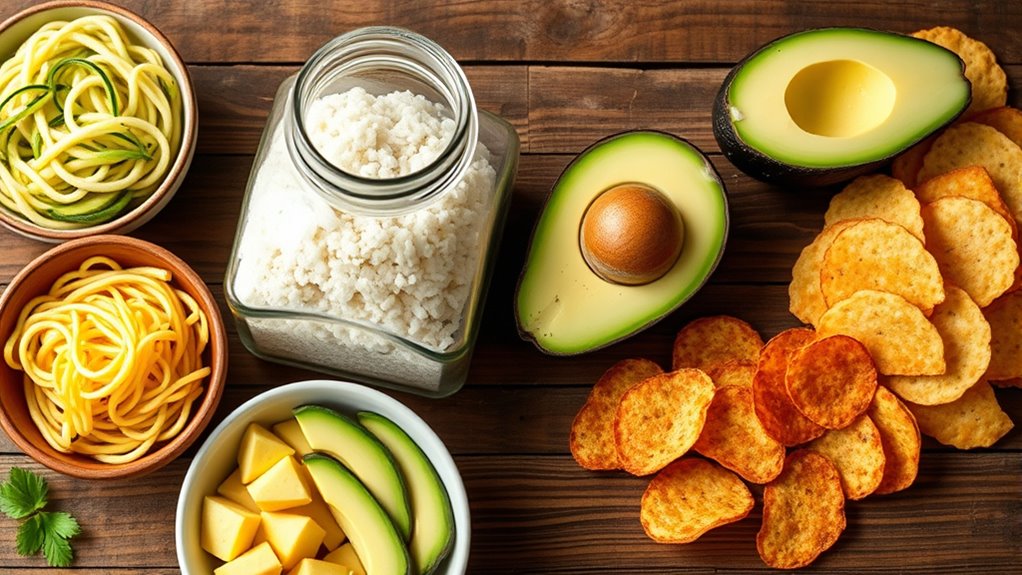

To swap high-carb foods on keto, try using almond or coconut flour instead of wheat. For pasta, opt for zucchini noodles, shirataki, or mashed cauliflower. Use sweeteners like erythritol or stevia to replace sugar, and incorporate cream cheese or eggs for moisture and texture. These swaps help you enjoy baked goods and pasta dishes without breaking ketosis. If you want to discover more creative substitutions, keep exploring what’s possible.

Get kitchen staples and gadgets delivered free with Prime
- Fast, free delivery on millions of items
- Prime Video, Amazon Music and more included
- Member-only deals all year
Key Takeaways
- Replace wheat flour with almond or coconut flour for low-carb baking options.
- Use erythritol, stevia, or monk fruit as blood sugar-friendly sweeteners.
- Opt for zucchini noodles, shirataki, or cauliflower rice as low-carb pasta alternatives.
- Incorporate cream cheese or mascarpone to add moisture and richness in keto recipes.
- Experiment with ingredient swaps to maintain flavor, texture, and variety while supporting ketosis.
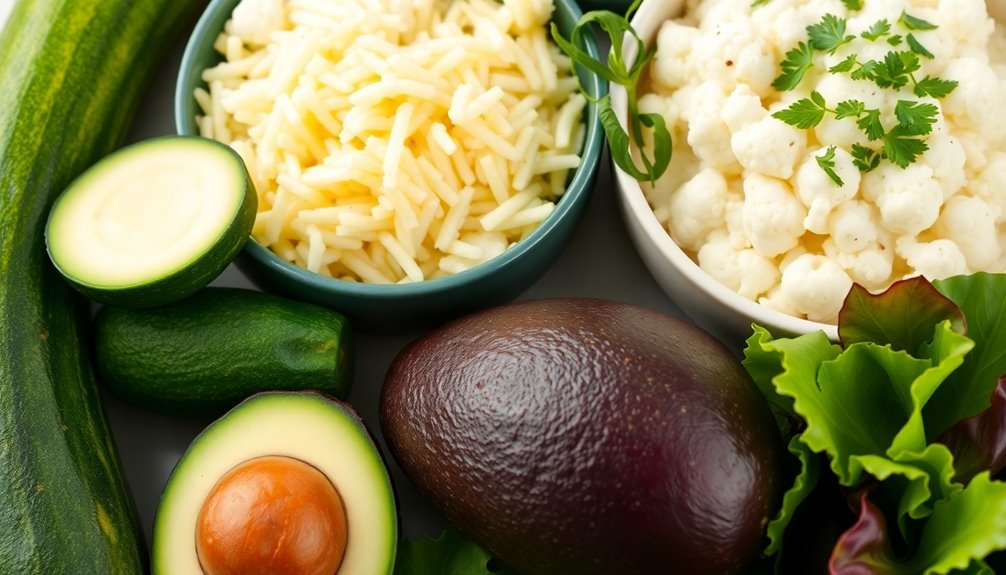
Switching to a ketogenic diet often requires replacing common ingredients with low-carb alternatives. One of the biggest challenges is finding ways to enjoy your favorite baked goods and pasta dishes without kicking yourself out of ketosis. Luckily, there are plenty of keto ingredient swaps for baking that make it easier to satisfy your sweet tooth or bread cravings. Instead of traditional wheat flour, you can use almond flour or coconut flour—both are low in carbs and rich in healthy fats. For sweetening, options like erythritol, stevia, or monk fruit provide sweetness without raising blood sugar levels. When baking, you might try using cream cheese or mascarpone to add moisture and richness to your recipes, and eggs always serve as a reliable binder. These swaps allow you to create muffins, bread, or cookies that taste indulgent without compromising your low-carb goals.
When it comes to pasta, many people miss the comforting, carb-heavy dishes they used to love. Luckily, low carb alternatives for pasta are widely available. Zucchini noodles, also called zoodles, are a popular choice—just spiralize zucchinis to mimic the texture of traditional pasta. Shirataki noodles made from konjac root are another excellent option; they’re very low in carbs and have a neutral flavor that absorbs sauces well. Cauliflower rice or mashed cauliflower can also serve as a base for pasta-like dishes. You can toss these low-carb pasta alternatives with your favorite keto-friendly sauces—think creamy Alfredo, pesto, or marinara made without sugar—to recreate the flavors you crave. These swaps not only cut carbs but also add fiber and nutrients to your meals, making them more satisfying. Additionally, understanding the cost differences of various low-carb ingredients can help you plan your meals more effectively without overspending.
Adapting your recipes might take some experimentation, but the results are worth it. You’ll find that baking with keto ingredients produces treats that are just as delicious as their high-carb counterparts, without the blood sugar spikes. Similarly, switching to low carb alternatives for pasta allows you to enjoy pasta dishes without guilt. By incorporating these ingredient swaps into your cooking routine, you maintain variety and flavor while sticking to your ketogenic lifestyle. It’s all about finding the right substitutes that work for your taste buds and dietary needs. With a little creativity, you can still enjoy comforting, satisfying meals that align with your goals, proving that a low-carb lifestyle doesn’t mean sacrificing flavor or enjoyment.
Frequently Asked Questions
Are Keto Swaps Suitable for Gluten Intolerance?
If you have gluten intolerance, keto swaps can be suitable if you choose gluten-free options. Always check labels to avoid cross-contamination concerns, as some low-carb substitutes may be processed in facilities handling gluten. Focus on naturally gluten-free ingredients like nuts, seeds, and certain vegetables. By being vigilant about ingredients and manufacturing processes, you can enjoy keto-friendly foods safely without risking gluten exposure.
Can These Substitutes Be Used in Baking?
You might worry that keto baking isn’t as versatile, but these substitutes actually work well in your recipes. You can replace traditional flours with almond or coconut flour, and use psyllium husk or flaxseed meal for structure. These low-carb ingredients allow you to enjoy baked goods without sacrificing taste or texture. So yes, you can confidently incorporate keto ingredient swaps into your baking for delicious, gluten-free treats.
Do They Affect the Flavor Profile of Dishes?
When you use keto ingredient swaps, you’ll notice some flavor impact, but with careful selection, taste preservation remains strong. These substitutes can slightly alter the dish’s flavor profile, often adding a unique twist or subtle differences. However, you can usually adjust seasonings or spices to maintain your desired taste. Overall, these swaps help you enjoy familiar flavors while sticking to your low-carb goals without sacrificing too much of the original taste.
Are Keto Ingredient Swaps Cost-Effective?
This is the best idea since sliced bread! Keto ingredient swaps can be surprisingly cost-effective, especially when you leverage ingredient versatility to use fewer high-priced items. You’ll save on cost savings over time because many low-carb alternatives are affordable and versatile, allowing you to make various dishes without breaking the bank. Plus, you cut down on waste, making your keto journey more economical and sustainable in the long run.
How Long Do Keto Substitutes Last in Storage?
You’re wondering about how long keto substitutes last in storage. Typically, their shelf life depends on the ingredient; for example, almond flour lasts about 6-12 months in a cool, dark pantry, while cream cheese keeps for about 1-2 weeks refrigerated. Follow proper refrigeration tips, such as airtight containers and keeping the fridge at the right temperature, to maximize freshness and prevent spoilage. Always check for signs of spoilage before use.
Conclusion
By embracing these keto-friendly swaps, you’re gently steering your meals toward a lighter, more vibrant path without feeling deprived. Think of it as giving your favorite dishes a little makeover—preserving the flavors you love while softening the carb load. With each mindful choice, you’re nurturing your body and making the journey smoother. So, keep experimenting, enjoy the process, and remember, every small step is a step toward a healthier, happier you.
Halloween Picks
halloween
As an affiliate, we earn on qualifying purchases.