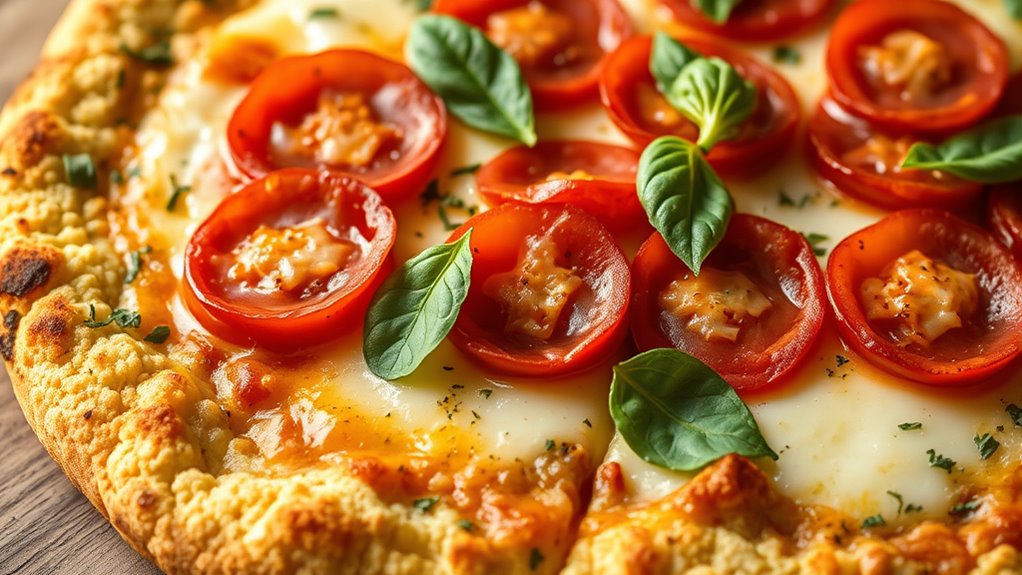

To make the ultimate cauliflower pizza crust, start by processing fresh cauliflower into rice-like pieces and squeeze out all excess moisture. Mix the cauliflower with shredded cheese, an egg, and optional herbs like oregano or garlic powder to create your dough. Pre-bake the crust for 10-15 minutes until firm and golden, then add your toppings and continue baking until crispy. Follow these tips for a delicious, low-carb, gluten-free pizza—more details follow to perfect your crust.
Key Takeaways
- Use fresh cauliflower, process into rice, and thoroughly drain moisture for a crisp, gluten-free crust.
- Mix cauliflower rice with shredded cheese, egg, and optional herbs to form the dough.
- Pre-bake the crust at 400°F for 10-15 minutes to set it and prevent sogginess.
- Add toppings after pre-baking, then bake again until crust is golden and toppings are cooked.
- Cool slightly before slicing to ensure crust stability and enjoy a healthy, keto-friendly pizza.

Have you ever wondered if you can enjoy pizza without compromising your health? The answer is yes, especially when you try a cauliflower pizza crust. This keto-friendly option is perfect if you’re looking to cut carbs or avoid gluten. One of the best parts is that cauliflower crust is naturally gluten free, so it caters to those with gluten sensitivities or celiac disease. Plus, it’s a versatile base that lets you get creative with your toppings. With a few simple cooking tips, you can craft a crust that’s crispy on the outside and tender inside, mimicking traditional pizza crust but with a healthier twist.
To start, choosing the right ingredients is essential. For gluten free options, fresh cauliflower works best. You’ll want to process it into rice-sized pieces using a food processor, then drain out excess moisture. This step is key because too much moisture can make the crust soggy. Using a clean towel or cheesecloth to squeeze out the moisture ensures a firm, manageable dough. Add some shredded cheese and an egg to bind everything together. For better flavor and texture, you can incorporate herbs like oregano or garlic powder, which elevate the taste without adding carbs. When it comes to cooking tips, pre-baking the crust for about 10-15 minutes before adding toppings helps set it and prevents sogginess. Keep an eye on the oven to avoid over-baking or burning, especially since cauliflower can brown quickly.
Once your crust is pre-baked, it’s time to add your favorite toppings—think low-carb cheeses, vegetables, or lean meats. For a crispier crust, you can brush the edges with a bit of olive oil before returning it to the oven. Remember, thin layers of toppings promote even cooking and prevent the crust from becoming too soggy. When baking, aim for a temperature of around 400°F and monitor closely, as cauliflower crust can go from perfectly crispy to burnt rapidly. After about 15-20 minutes, your homemade cauliflower pizza crust should be golden and delicious. Let it cool slightly before slicing to ensure it holds together well. This way, you enjoy a satisfying, healthy pizza without sacrificing flavor or texture.
Frequently Asked Questions
Can I Substitute Almond Flour for Cauliflower?
Yes, you can substitute almond flour for cauliflower as a cauliflower alternative in your crust. Keep in mind, almond flour will change the texture and flavor, making it richer and slightly denser. Use a similar amount and adjust your other ingredients if needed to achieve the right consistency. This substitution works well for a keto-friendly, low-carb crust, but expect a different taste compared to cauliflower-based recipes.
How Do I Store Leftover Cauliflower Pizza Crust?
You slice into your leftover cauliflower pizza crust, imagining it as a tiny fortress of cheesy delight. To store, wrap it tightly in plastic wrap or place it in an airtight container, so it doesn’t turn into a soggy soggy mess. Reheating tips? Use your oven or toaster oven for the best crispy revival, avoiding the microwave unless you like your crust soggy and sad. Keep it fresh and delicious!
Is Cauliflower Crust Suitable for Vegans?
Yes, cauliflower crust can be suitable for vegans if you use vegan cheese options and plant-based toppings. Just guarantee your crust ingredients are vegan-friendly, avoiding eggs or dairy. You can customize your pizza with vegan cheese and a variety of plant-based toppings like vegetables, tofu, or tempeh. This way, you enjoy a delicious, cruelty-free pizza that fits your vegan lifestyle.
Can I Freeze the Cauliflower Pizza Crust?
Did you know freezing can extend your cauliflower crust‘s shelf life by up to three months? Yes, you can freeze it! To do so, follow freezing tips like wrapping the crust tightly in plastic wrap or foil, then storing it in an airtight container or freezer bag. For best results, label your storage methods with date info, and thaw in the fridge before using to keep the crust crisp and delicious.
What Toppings Work Best With Cauliflower Crust?
You’ll find that mushroom pairings, like sautéed or roasted mushrooms, complement cauliflower crust beautifully, adding earthy flavor and texture. Spicy toppings, such as jalapeños, red pepper flakes, or spicy sausage, also work well, giving your pizza a lively kick. Feel free to mix and match these toppings to enhance the crust’s mild taste, creating a delicious balance of flavors that satisfies your craving for both heat and umami.
Conclusion
Now that you’ve mastered this cauliflower pizza crust, you can enjoy a delicious, keto-friendly meal anytime. You can customize it with your favorite toppings, enhance its flavor with herbs and spices, or make it ahead for quick weeknight dinners. You can share it with friends or keep it all to yourself. You can enjoy guilt-free pizza, knowing it’s healthy, satisfying, and easy to make. So go ahead, create, indulge, and savor every bite.