Meal prepping on a budget helps you eat healthy without overspending by focusing on affordable, versatile ingredients, buying in bulk, and planning meals around sales and seasonal produce. Portion control and proper storage reduce food waste and keep your meals fresh. Using simple containers and sticking to a shopping list keeps costs down. Keep these tips in mind, and you’ll discover more ways to make healthy eating budget-friendly and easy.
Key Takeaways
- Buy bulk ingredients like grains, beans, and frozen vegetables to save money and extend your grocery budget.
- Plan meals around sales, seasonal produce, and versatile staples to create affordable, healthy options.
- Use portion control with pre-divided containers to minimize waste and manage serving sizes effectively.
- Opt for store brands and avoid expensive, specialty ingredients to reduce costs without sacrificing nutrition.
- Store prepped meals properly in airtight containers and freeze leftovers to prevent spoilage and stretch your budget.
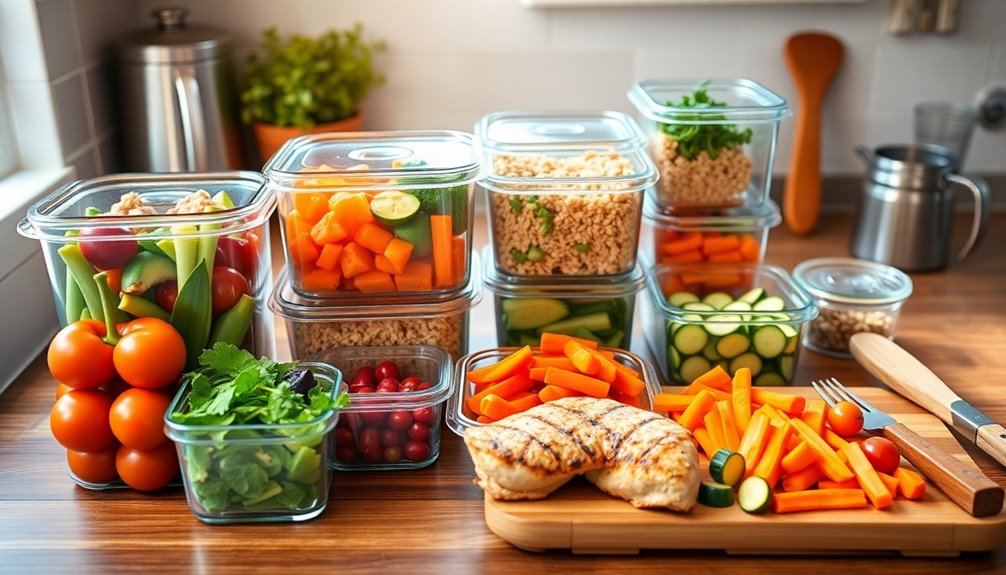
Meal prepping on a budget is an effective way to save money while maintaining a healthy diet. When you plan your meals ahead, you can cut down on last-minute takeout and reduce impulse buys, making your grocery dollars stretch further. To maximize your savings, focus on cost-saving tips like buying ingredients in bulk, choosing versatile staples, and shopping sales. Bulk purchases of grains, beans, or frozen vegetables are often cheaper and last longer, giving you more flexibility in your meal options. Additionally, sticking to store brands instead of name brands can save you a significant amount over time without sacrificing quality.
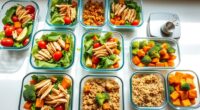
Portion control plays a vital role in keeping your meal prep budget in check. When you prepare meals, portioning out servings in advance helps prevent overeating and reduces food waste. Use containers to divide your meals into single-serving sizes, so you’re less tempted to eat more than you need. Not only does this help with weight management, but it also ensures that your ingredients last longer, saving you money in the long run. Be mindful of portion sizes—measuring out rice, pasta, or protein can prevent you from unintentionally over-serving, which adds up quickly in cost.
Another way to cut costs is by planning your meals around what’s on sale or in season. Check weekly flyers and stock up on ingredients that are discounted, then get creative with recipes that incorporate those items. Seasonal produce tends to be cheaper and fresher, making your meals both affordable and nutritious. When you plan your meals based on sales, you avoid buying expensive, specialty ingredients that may only be used once or twice. Incorporating meal planning strategies can also help you stay organized and prevent last-minute purchases that blow your budget. Being aware of shelf life and proper storage techniques will help you minimize spoilage and waste. Additionally, understanding food preservation methods can extend the usability of your ingredients and further reduce costs.
Meal prepping also means you can prep larger batches and freeze portions for later use. This strategy not only saves time but also minimizes waste and prevents you from grabbing more expensive convenience foods when you’re hungry and short on time. Make sure to store your prepped meals properly, using airtight containers to retain freshness. Regularly reviewing your inventory management helps ensure you use ingredients efficiently and avoid spoilage, further reducing your food costs. Additionally, maintaining your kitchen appliances through filter replacement and routine cleaning can improve their efficiency and longevity, which supports cost-effective meal prep.
Finally, keep your shopping list focused and avoid shopping when you’re hungry, which can lead to unnecessary purchases. Stick to your list and your planned recipes to stay within your budget. By combining these cost-saving tips with mindful portion control, you’ll find that healthy, homemade meals become more affordable, making it easier to stick to your health goals without breaking the bank.
Frequently Asked Questions
How Can I Store Prepped Meals to Prevent Spoilage?
To prevent spoilage, you should focus on proper storage. Use effective refrigeration techniques by keeping your meals at the right temperature, around 40°F (4°C). Portion control is key—divide your prepped meals into individual containers to avoid unnecessary exposure. Label and date them, then consume within 3-4 days. This way, you’ll keep your meals fresh, safe, and ready to enjoy without waste or health risks.
What Are Cost-Effective Protein Sources for Meal Prepping?
For cost-effective protein sources, you should consider plant-based proteins like lentils, chickpeas, and beans—they’re affordable and versatile. Canned legumes are especially convenient, saving you time and money. Incorporate them into your meals for added protein without breaking the bank. These options help you stay within budget while maintaining a healthy, protein-rich diet, making your meal prepping both economical and nutritious.
How Do I Customize Meals for Dietary Restrictions on a Budget?
When customizing meals for dietary restrictions on a budget, start by exploring affordable gluten-free options like rice, potatoes, or oats, which can replace pricier grains. You can also incorporate vegan substitutions such as beans, lentils, or tofu to meet plant-based needs without overspending. Planning ahead helps you buy in bulk and avoid costly processed products, making your meals both healthy and budget-friendly while accommodating your dietary needs.
Are There Specific Days Best for Bulk Shopping Discounts?
Think of your shopping week as a treasure hunt—you’ll find the best loot on specific days. Weekend deals often flood stores with discounts, making Saturday or Sunday prime for bulk shopping. Holiday sales are like fireworks, bursting with savings. Aim for these days to maximize discounts, stretch your dollar, and fill your pantry with healthy, budget-friendly options. Planning around these windows helps you shop smarter and save more.
How Can I Make Meal Prepping Quicker and Easier?
To make meal prepping quicker and easier, focus on time-saving techniques like prepping ingredients in bulk and using efficient kitchen gadgets. Invest in tools like a food processor or slow cooker to cut prep time and simplify cooking. Plan your meals ahead, so you’re organized and ready to cook without wasting time searching for ingredients. These tips help you streamline your process, making healthy eating more manageable on busy days.
Conclusion
Now that you know the secrets to affordable, healthy meal prep, imagine the possibilities. With just a little planning, you could be savoring delicious, nutritious meals all week—without breaking the bank. But what if I told you there’s an even smarter way to maximize your savings and flavor? Stay tuned, because your journey to effortless, budget-friendly eating is about to get even more exciting. The best is yet to come—are you ready?