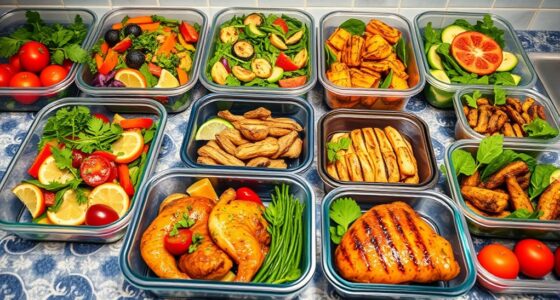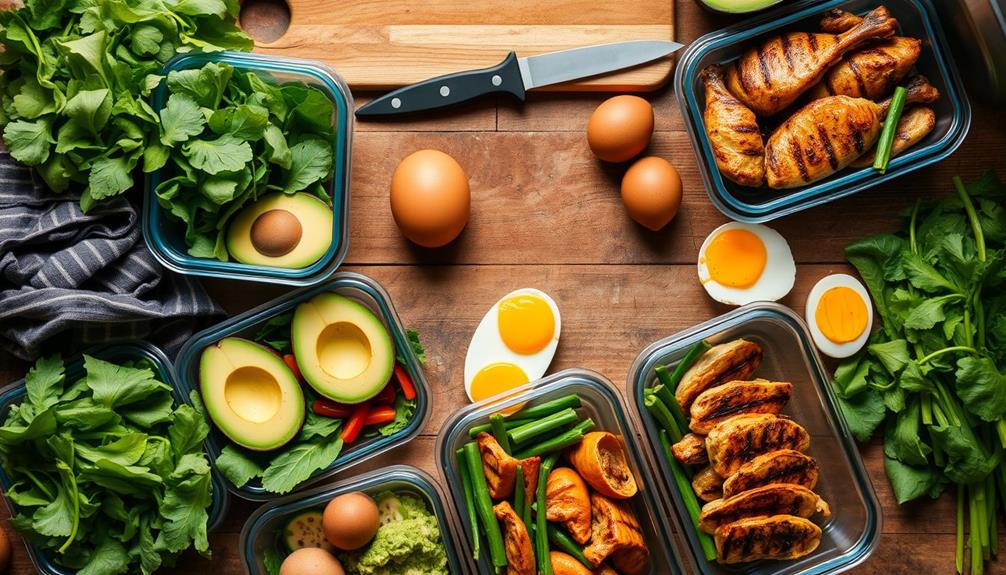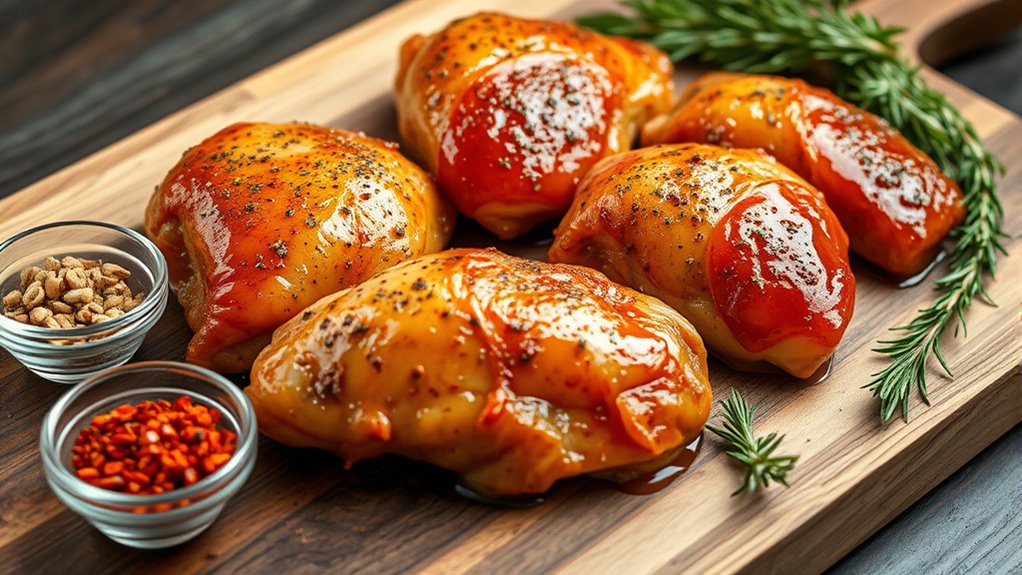

To maximize flavor in meal prep, use spice blends and herb infusions for rich, complex tastes. Rub proteins with aromatic spice mixes like smoked paprika or cumin, then finish with herb-infused oils or marinades to add freshness and depth. Infusing liquids with garlic, herbs, or citrus enhances layering and sophistication. Experimenting with different combinations keeps dishes exciting and vibrant. Keep exploring these techniques to elevate even simple ingredients—there’s a lot more to discover.
Key Takeaways
- Use pre-mixed spice blends to quickly add depth and complexity to proteins, grains, and vegetables.
- Infuse oils with herbs like garlic or rosemary to create flavorful marinades and finishing drizzles.
- Marinate proteins with aromatic spice and herb mixtures to develop layered, robust flavors over time.
- Layer flavors by combining spice blends with herb-infused liquids for more sophisticated, vibrant dishes.
- Prepare infusions and spice mixes in advance to enhance meal prep efficiency and flavor consistency.
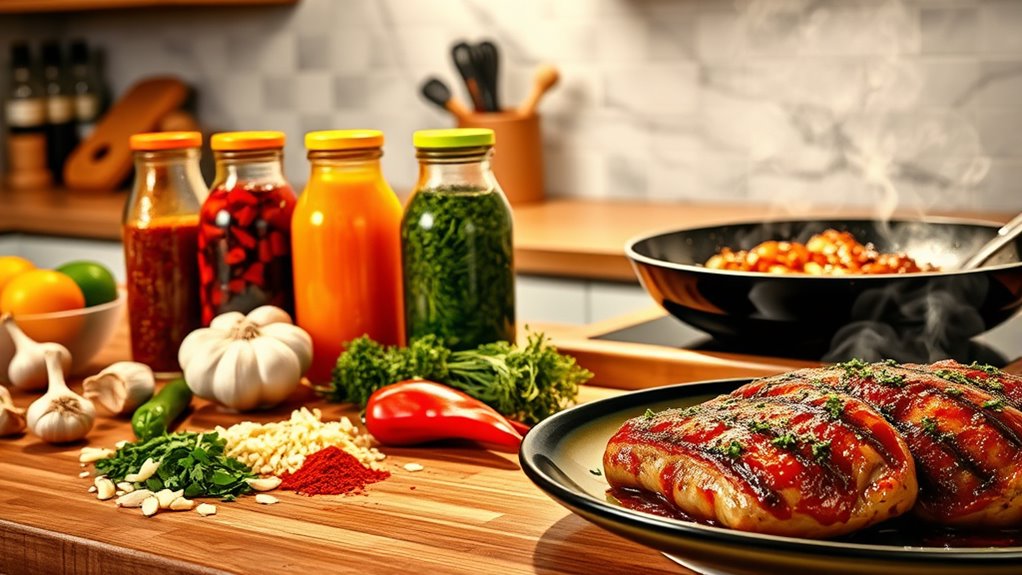
Meal prepping is a great way to save time and eat healthier, but sometimes the meals can taste bland if you don’t add the right flavors. To boost your dishes, consider incorporating spice blends and herb infusions. These are simple yet powerful tools that can turn a basic meal into something flavorful and exciting. Spice blends are combinations of dried spices and herbs that are pre-mixed to create complex flavors with minimal effort. They’re convenient because you can keep a jar handy and sprinkle them onto proteins, grains, or roasted vegetables. Whether you prefer smoky paprika, warm cumin, or zesty Italian seasoning, spice blends add depth and dimension to your meals instantly.
Herb infusions, on the other hand, involve soaking fresh or dried herbs in liquids like oils, vinegars, or broths to extract their flavors. You can use these infusions to marinate your proteins or drizzle over finished dishes for an extra burst of freshness. For example, infusing olive oil with garlic and rosemary creates a fragrant base for salads and grilled meats. These infusions allow you to build layers of flavor that develop over time, making your meal prep more sophisticated without much extra effort. Plus, they’re versatile; you can create custom blends tailored to your taste preferences or the specific dishes you’re preparing.
Using spice blends and herb infusions together can elevate your meal prep game considerably. For instance, you might rub your chicken with a curry spice blend before roasting and then finish with a drizzle of herb-infused olive oil. This combination combines robust, aromatic spices with bright herbal notes, resulting in a more complex flavor profile. Experimenting with different combinations helps prevent your meals from tasting monotonous. For example, a citrus-infused herb oil paired with a Mediterranean spice blend can give your grilled vegetables an irresistible flavor.
Frequently Asked Questions
How Long Can I Store Marinated Meals Safely?
You can store marinated meals safely in the fridge for up to 2 days. To guarantee food safety, keep the marinade refrigerated and use airtight containers. If you want to store them longer, freeze the marinated items for up to 3 months. Always thaw in the fridge and avoid leaving marinated food at room temperature. Follow these storage tips to prevent spoilage and maintain flavor.
Can I Reuse Leftover Marinade?
You shouldn’t reuse leftover marinade unless you boil it first, as marinade safety is essential. Reusable marinades can be safe if you cook them thoroughly to kill bacteria from raw meat juices. Always store used marinade separately, and bring it to a rolling boil for at least a minute before using it as a sauce or glaze. This way, you maximize flavor safely while avoiding cross-contamination.
What Are Some Quick Marinade Recipes?
For quick marinade tips, combine soy sauce, olive oil, lemon juice, and a touch of honey for a flavorful boost. Use garlic and herbs to enhance seasoning balance, and let your protein sit for at least 15-30 minutes. You can also add a splash of vinegar or hot sauce for extra zing. This simple mix gives your meal prep vibrant flavor without a long wait, making it perfect for busy days.
How Do I Prevent Over-Seasoning?
Like a seasoned coder, you gotta debug your seasoning to prevent over-seasoning. To do that, focus on balancing salt and controlling spice by adding small amounts first, then tasting as you go. Use a light hand with strong flavors, and remember, you can always add more, but you can’t take it out. Trust your palate, and you’ll keep your dishes flavorful without overpowering them.
Are There Any Seasoning Combinations to Avoid?
You should avoid seasoning combinations that cause flavor clashes, like mixing strong herbs with delicate spices or using too much salt with sweet ingredients. Steer clear of common seasoning pitfalls such as overusing garlic with onion or combining too many intense flavors that compete rather than complement. Stick to balanced, harmonious pairings, and taste as you go to prevent overpowering your dish. This way, your flavors stay well-rounded and delicious.
Conclusion
Now that you know how marinades and seasonings can elevate your meals, it’s funny how a simple sprinkle or splash can turn an ordinary dish into something extraordinary. Next time you’re prepping, remember, the secret often lies in those small, flavorful touches. Sometimes, it’s the little choices—like a dash of spice or a tangy marinade—that make all the difference. So, trust your taste buds and enjoy the delicious surprises that await in every meal.