Incorporating variety into your meal prep can be simple with a rotating menu that keeps meals fresh and interesting. By planning a set of versatile recipes and swapping ingredients based on seasonality or preferences, you’ll streamline shopping and preparation. Grouping similar meals helps boost efficiency while ensuring your diet stays balanced and colorful. Stay with us to discover how a flexible, layered approach makes healthy eating easier and more enjoyable every week.
Key Takeaways
- Rotate different protein, grain, and vegetable combinations weekly to maintain meal variety and prevent menu fatigue.
- Group similar meals (e.g., salads, stir-fries) to streamline prep and introduce diverse flavors within each category.
- Incorporate seasonal produce and ingredient swaps to keep menus fresh and aligned with availability.
- Vary cooking methods like grilling, baking, or sautéing to add texture and flavor diversity.
- Plan themed weeks or cuisine styles (e.g., Mediterranean, Asian) to add excitement and cultural variety to your menu.
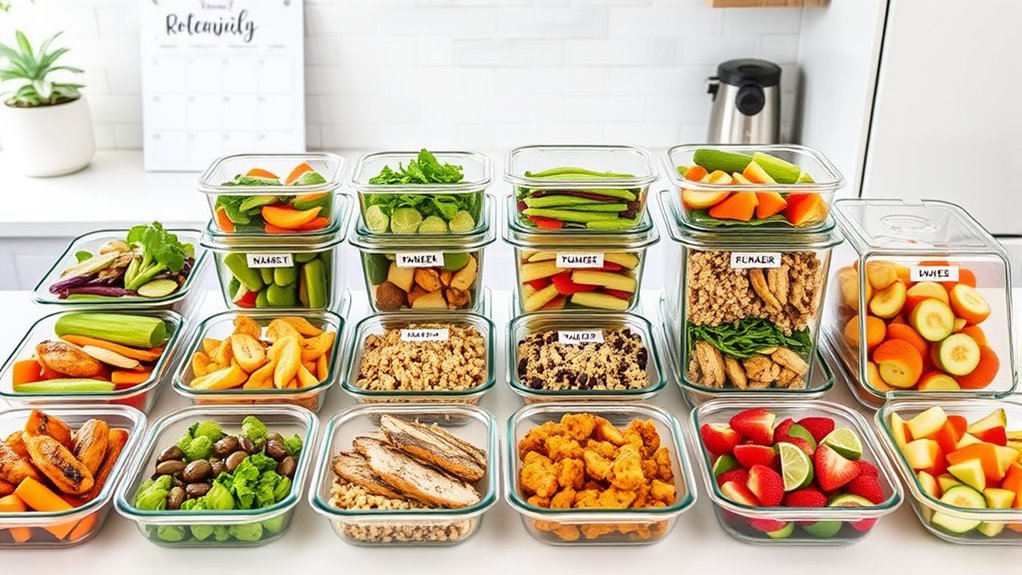
Creating a rotating meal prep menu can simplify your weekly cooking routine and save you time. When you plan your meals ahead, you eliminate the daily stress of figuring out what to cook, and you streamline your grocery shopping. A key part of making this system work smoothly is introducing variety through thoughtful meal planning. Instead of sticking to the same dishes every week, you cycle through a set of favorite recipes, ensuring you don’t get bored and that your diet stays balanced. This approach keeps things fresh without the need to overhaul your entire meal plan each week.
A rotating meal prep menu simplifies planning, reduces stress, and keeps your diet varied and exciting.
One of the biggest advantages of a rotating menu is the flexibility it offers with ingredient swaps. You can swap ingredients based on what’s in season, on sale, or what you already have in your pantry. For example, if a recipe calls for chicken but you’re craving fish, you can simply swap the protein without disrupting the entire meal plan. This not only saves you money but also helps you avoid waste. Ingredient swaps allow you to customize your meals, making your meal prep more adaptable to your tastes and dietary needs.
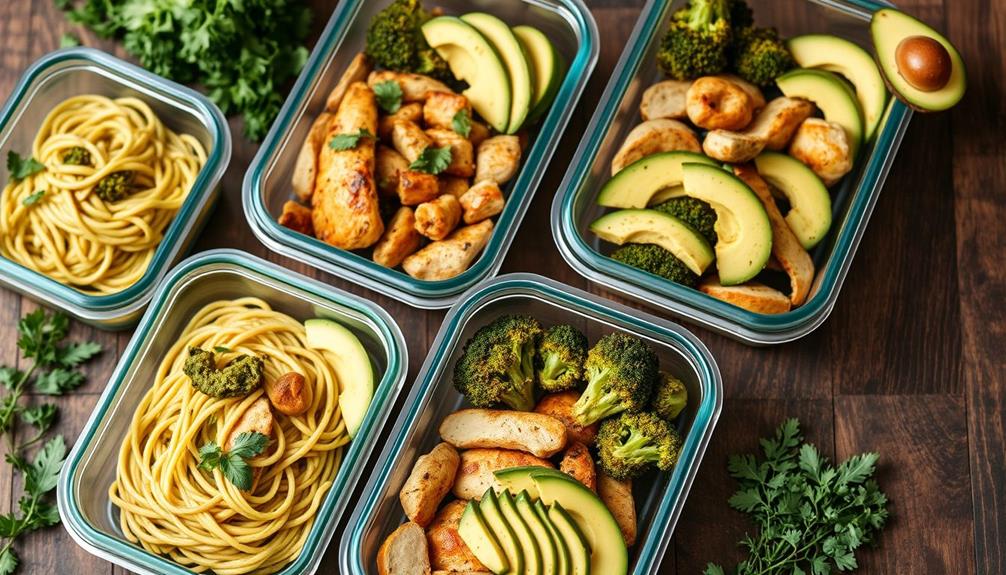
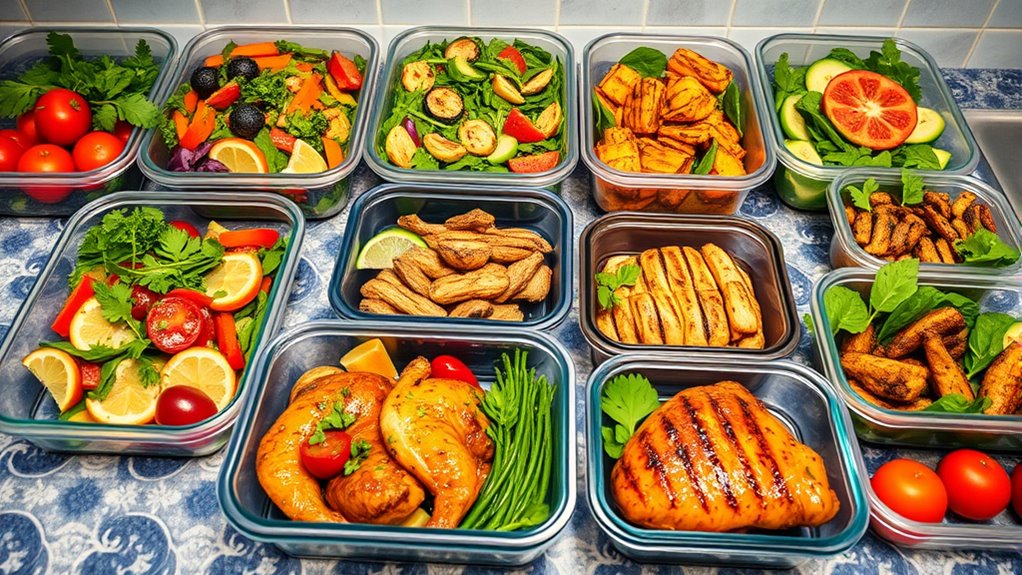
As you develop your rotating menu, think about grouping similar meals together. For instance, you could have a few different rice or pasta dishes, a handful of stir-fries, and a couple of hearty salads. By doing this, you can prepare ingredients in bulk—cooking a large batch of rice or chopping vegetables at once—and then easily assemble different meals throughout the week. This method maximizes your efficiency and keeps your meal prep straightforward. Plus, when you’re familiar with your rotation, you’ll find it easier to make quick ingredient swaps, adjusting recipes on the fly without disrupting your entire plan.
Incorporating variety in your rotating meal prep menu also encourages healthier eating habits. When you plan ahead, you’re less likely to resort to takeout or processed foods. Plus, by mixing up your recipes, you’re more likely to include a range of vegetables, proteins, and grains, ensuring a nutrient-rich diet. To keep things interesting, try experimenting with new spices or different cooking methods—grilling instead of baking, for example—and incorporate seasonal produce to add fresh flavors.
Additionally, understanding the benefits of variety in your meal planning can help maintain consistent motivation and enjoyment. Over time, you’ll discover that a rotating meal prep menu not only saves you time but also makes meal planning less stressful. You’ll develop a system that adapts to your tastes, dietary goals, and seasonal ingredients, all while maintaining a sense of variety and excitement at mealtime. With a little initial effort, your weekly routine becomes more organized, flexible, and enjoyable, making healthy eating easier and more sustainable long-term.
Frequently Asked Questions
How Often Should I Rotate My Meal Prep Menus?
You should rotate your meal prep menus every one to two weeks to guarantee meal variety and maintain dietary diversity. This approach keeps your meals interesting and helps you get a balanced mix of nutrients from different food groups. By regularly switching up your menus, you prevent boredom, encourage healthier eating habits, and make it easier to stay committed to your meal prep routine. Stay flexible and adjust based on your taste and schedule.
What Are Some Tips for Planning Diverse Meal Options?
To plan diverse meal options, focus on incorporating cultural variety and seasonal ingredients. Explore recipes from different cuisines to keep your meals interesting and flavorful. Use seasonal ingredients to make certain of freshness and variety throughout the year. Rotate your menus regularly, trying new dishes each week. Keep a list of favorite recipes and update it with new ideas. This approach keeps your meal prep exciting and ensures you enjoy a balanced, diverse diet.
How Can I Prevent Meal Boredom With Rotating Menus?
To prevent meal boredom with rotating menus, focus on flavor variety and ingredient diversity. You can switch up spices, herbs, and cooking techniques to keep flavors fresh and exciting. Incorporate a wide range of ingredients across different cuisines, and experiment with new recipes regularly. This approach guarantees your meals stay interesting, satisfying your taste buds and making meal prep enjoyable rather than monotonous.
Are There Specific Foods That Should Be Rotated More Frequently?
You should rotate seasonal produce more frequently to keep your meals interesting and fresh. Incorporate a variety of fruits and vegetables that are in season to boost culinary diversity. By doing this, you not only prevent meal boredom but also enjoy the freshest flavors and nutrients. Switching up these ingredients regularly adds excitement and helps you discover new recipes, making your meal prep more fun and healthful overall.
How Do I Balance Nutrition While Rotating Meals?
To balance nutrition while rotating meals, focus on maintaining meal variety that includes different food groups, ensuring you get a range of nutrients. Incorporate colorful vegetables, lean proteins, whole grains, and healthy fats regularly. Plan your menus so each week offers a mix of these, avoiding repetitive ingredients. This approach helps you enjoy diverse flavors and achieve nutritional balance, supporting your overall health and preventing nutrient gaps.
Conclusion
By embracing a rotating meal prep menu, you guarantee every dinner feels fresh and exciting—no more stuck in a food rut. This strategy keeps your taste buds dancing like a lively juke joint, even as you stay organized and save time. Remember, the secret’s in the variety; it’s like having your own personal chef, minus the fancy apron. So, go ahead, innovate your meals and make dinnertime your own timeless adventure.