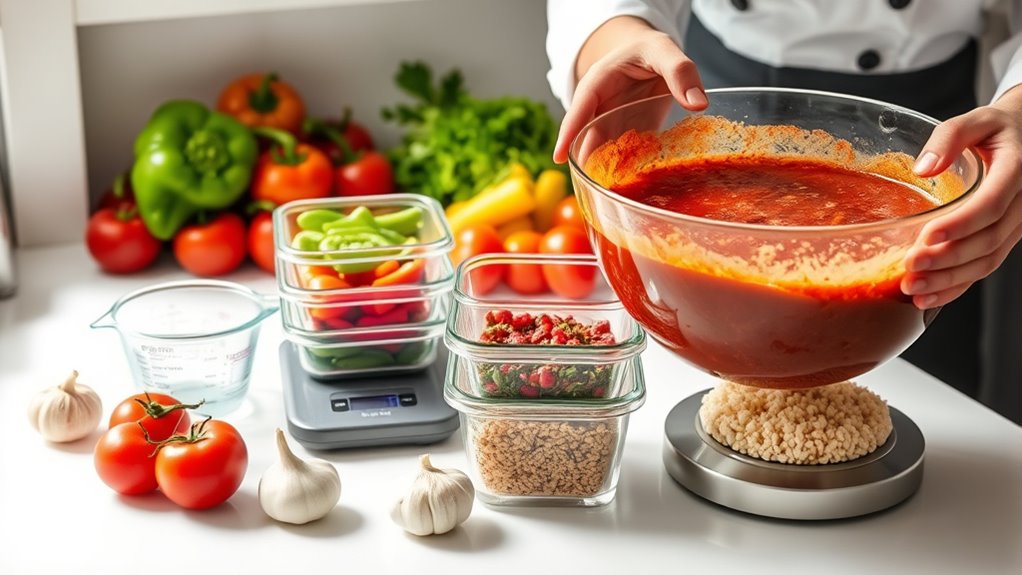

When scaling up recipes for meal prep, you should adjust ingredient quantities carefully, replacing fresh herbs with dried ones and measuring spices gradually to avoid over-seasoning. Use larger containers for storage, cool hot foods before refrigerating, and divide portions into smaller containers for quick reheating. Keep track of storage times and reheating methods to maintain flavor and quality. If you want to guarantee your dishes stay perfect at larger sizes, you’ll find helpful tips ahead.
Key Takeaways
- Adjust ingredient quantities gradually, tasting as you go, to maintain flavor balance when increasing recipe size.
- Substitute fresh herbs with dried counterparts and use garlic powder to simplify measurements at larger scales.
- Store leftovers in airtight containers, label with dates, and cool hot foods before refrigeration to keep ingredients fresh.
- Reheat large portions evenly, allowing dishes to rest and cool slightly for optimal flavor and texture preservation.
- Plan ahead for storage, reheating, and serving techniques to ensure large batches retain their original quality.

Ever wondered how to adjust a recipe to serve more people without sacrificing flavor or quality? Scaling up recipes might seem straightforward—just multiply ingredients—but it’s often more complex. To do it successfully, you need to take into account ingredient substitutions and storage tips to maintain the dish’s integrity. When increasing quantities, some ingredients may need to be swapped out or adjusted to keep the flavor balanced. For example, if a recipe calls for fresh herbs, doubling the amount might overpower the dish, so you might opt for dried herbs or reduce the quantity slightly. Similarly, certain ingredients like spices or salt should be increased gradually, tasting as you go, because their potency can vary with larger batches. This careful calibration ensures your dish remains flavorful and true to the original.
Ingredient substitutions become especially important when scaling recipes because not all ingredients scale linearly in flavor or texture. For instance, if you’re making a large batch of a sauce that relies on fresh garlic, using garlic powder might be more practical and easier to measure accurately. When it comes to oils or liquids, be mindful of the container sizes—you might need to buy larger bottles or measure out multiple smaller amounts. The key is to keep the proportions consistent to avoid over-seasoning or diluting the flavors. Also, think about the type of ingredients that lose their quality over time; this brings us to storage tips. Proper storage is vital when preparing larger quantities. Use airtight containers to keep leftovers fresh and prevent spoilage. Label everything clearly with dates so you can keep track of freshness, especially when preparing meals in advance for meal prep. Additionally, understanding sound design techniques like layering and manipulation can help you optimize how you reheat or serve larger portions, ensuring the dish maintains its original flavor profile.
In addition, think about how you’ll reheat or serve larger portions. Some dishes, like casseroles or stews, often taste better after sitting for a bit, which makes them suitable for batch cooking. When storing, let hot foods cool down before refrigeration to prevent bacterial growth, and divide large portions into smaller containers for quicker cooling and easier reheating. This not only preserves flavor but also extends shelf life. As you scale recipes, always keep in mind that the process isn’t just about multiplying ingredients but also about adjusting techniques and storage practices to ensure your meal maintains its quality. With a little planning and attention to detail, you can confidently prepare large quantities without sacrificing the taste or texture you love, making meal prep more efficient and enjoyable.
Frequently Asked Questions
How Do I Adjust Seasoning When Scaling Recipes?
When scaling recipes, you should adjust seasoning gradually to maintain flavor consistency. Start by increasing seasonings proportionally, then taste as you go. Remember, flavors can intensify or mellow when cooking larger batches, so make small flavor adjustments to keep the seasoning balanced. Always taste and tweak your seasonings at the end to ensure the flavor remains consistent and delicious, avoiding over-seasoning or under-seasoning your dish.
What Are Common Mistakes When Increasing Recipe Portions?
Growing a recipe is like steering a ship; small missteps can veer you off course. A common mistake is neglecting portion control, leading to overly large servings or waste. Also, rushing ingredient substitution without considering flavor balance can throw off the dish. To avoid these pitfalls, measure carefully, stick to original proportions, and choose substitutions wisely. This keeps your meal consistent and prevents costly errors.
How Do I Modify Cooking Times for Larger Batches?
When batch cooking larger quantities, you should extend cooking times gradually and monitor your dish closely to maintain recipe consistency. Use a food thermometer to check doneness, especially for meats and grains. Keep in mind that larger batches may require lower heat or longer simmering. Stir regularly to prevent sticking or uneven cooking, and always taste-test to guarantee flavors stay balanced as you scale up your recipe.
Can I Freeze Scaled-Up Recipes Without Affecting Quality?
Freezing scaled-up recipes is like tucking your favorite stories into a cozy book. You can absolutely do it without losing quality by using proper freezing techniques and sturdy storage containers. Make sure to cool your dishes completely before sealing them tight. Use airtight containers or freezer bags to prevent freezer burn. Label each one with the date, so you enjoy your meal prep stories fresh and flavorful, ready whenever you are.
What Tools Are Best for Measuring Larger Quantities Accurately?
You should use high-quality measuring equipment like large liquid measuring cups, sturdy kitchen scales, and graduated measuring spoons for accuracy. Portion control tools, such as divided containers or portion scoops, help you divide large batches precisely. By combining precise measuring equipment with effective portion control tools, you guarantee your scaled-up recipes are accurate, consistent, and easy to portion, making meal prep more efficient and reliable.
Conclusion
Just like a seed grows into a mighty tree, your meal prep can flourish when you master scaling recipes. Think of each adjusted portion as a branch reaching out, nourishing more lives. With these skills, your kitchen becomes a garden of abundance, where every dish bears the fruit of your effort. Remember, the right proportions are the roots that anchor your culinary masterpiece—grow your confidence, and watch your meals flourish beyond expectations.