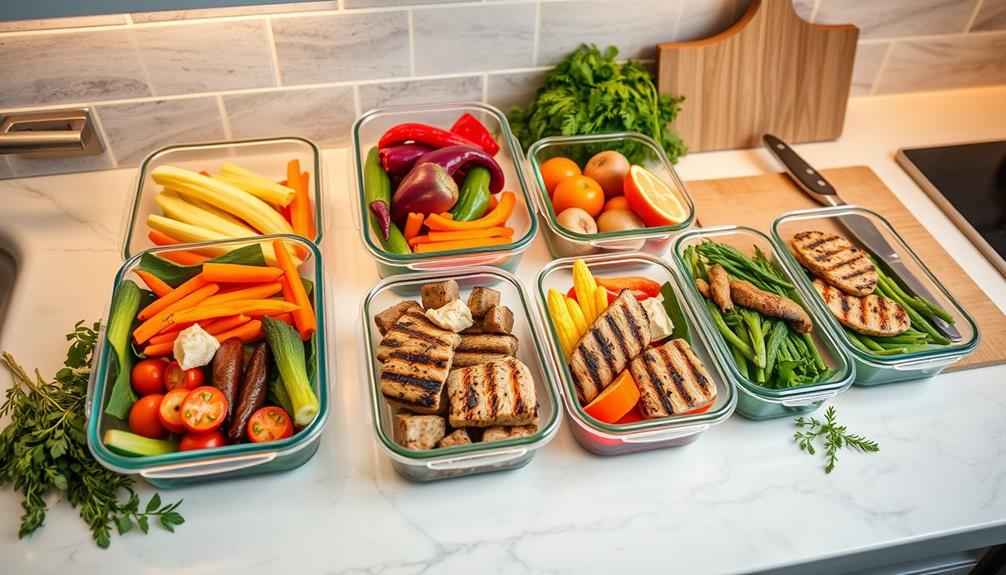
To prepare a weekly vegetarian meal plan, focus on versatile ingredients like grains, beans, and seasonal veggies. Batch cook staples such as rice, quinoa, or lentils and create snack options like energy balls or veggie sticks. Use quality containers to store prepped foods and label them for freshness. Mix and match ingredients to keep meals exciting without extra effort. Keep exploring for tips to make your plant-based plan even more efficient and delicious.
Key Takeaways
- Plan diverse, balanced meals featuring leafy greens, vegetables, and plant proteins to ensure nutritional variety throughout the week.
- Batch cook staples like grains, beans, and roasted vegetables to streamline meal assembly and reduce daily prep time.
- Prepare portable plant-based snacks such as energy bites, trail mix, and veggie sticks for convenient, nutrient-rich options.
- Use labeled, airtight containers for storing prepped ingredients and meals, ensuring freshness and easy access.
- Incorporate herbs and spices to keep meals flavorful and exciting, encouraging consistency in a vegetarian meal plan.
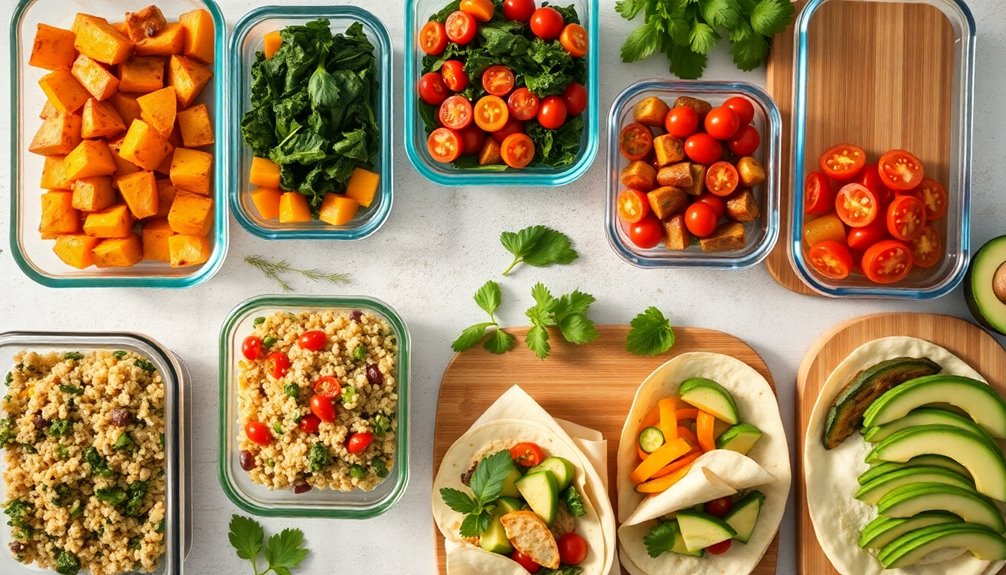
Are you looking for a way to save time and eat healthier? Meal prepping is the perfect solution, especially when you focus on plant-based snacks and meals. With a little planning, you can streamline your week and ensure you always have nourishing, delicious options ready to go. To get started, incorporate some effective meal prep tips that keep things simple and efficient. Begin by choosing versatile ingredients like grains, beans, and seasonal vegetables that can be used in multiple dishes. Cook larger batches of staples such as quinoa, rice, or lentils at the start of the week, so you can quickly assemble meals or snacks later. Invest in quality containers that seal well and are easy to transport, making it simple to carry your prepped meals to work or school.
One of the most effective meal prep tips is to prepare a variety of plant-based snacks in advance. Think beyond just raw veggies and hummus—try making energy balls, roasted chickpeas, or homemade trail mix with nuts, seeds, and dried fruits. These snacks are not only convenient but also packed with nutrients and energy, helping you stay full between meals. Including options like sliced fruit, veggie sticks, or veggie wraps ensures you have a colorful array of choices that satisfy different cravings and keep your diet interesting. Regularly checking the freshness of your stored foods helps prevent waste and ensures optimal quality. Incorporating nutrient-dense ingredients like superfoods can elevate your meals and provide additional health benefits. Additionally, meal prep can be a fun way to experiment with new recipes and flavors, keeping your diet exciting and sustainable. Furthermore, understanding food safety guidelines when storing prepared meals can help maintain their quality and prevent foodborne illnesses.
When planning your weekly menu, aim for balance and diversity. Incorporate leafy greens, colorful vegetables, and plant-based proteins like tofu, tempeh, or chickpeas into your main dishes. Batch cook hearty meals such as vegetable stir-fries, chili, or grain bowls that can be easily reheated or enjoyed cold. Use herbs, spices, and flavorings to keep meals exciting without extra effort each day. Remember, the key is to keep things simple—focus on preparing ingredients that can be mixed and matched to create different meals, saving you time and mental energy.
Finally, don’t forget to label your prepped items clearly with dates, so you consume them at their freshest. Sticking to a routine of weekly meal prep not only makes healthy eating easier but also helps you develop better habits and reduces daily stress around what to eat. With these meal prep tips and a stash of plant-based snacks, you’ll find it easier than ever to maintain a nutritious vegetarian lifestyle, even on your busiest days.
Frequently Asked Questions
How Do I Ensure Balanced Nutrition in Plant-Based Meal Prep?
To guarantee balanced nutrition, focus on nutrient diversity by including a variety of colorful vegetables, fruits, whole grains, nuts, and legumes in your meals. Pay attention to meal timing, spreading out your intake throughout the day to maintain energy levels and support digestion. This approach helps you get essential vitamins, minerals, and protein, making your plant-based meal prep both nutritious and satisfying.
What Are the Best Portable Vegetarian Meals for Busy Weekdays?
You look for portable vegetarian meals that fit busy weekdays, so consider snack options like trail mix, veggie sticks with hummus, or fruit. Pack these in sturdy meal prep containers to keep everything fresh and organized. Opt for hearty salads with grains, beans, and veggies, or veggie wraps that are easy to grab and eat on the go. These choices guarantee you stay fueled without sacrificing convenience.
How Can I Incorporate More Protein Into Vegetarian Meal Prep?
To incorporate more protein into your vegetarian meal prep, explore tofu’s versatility by grilling, scrambling, or adding it to stir-fries. Also, include a variety of legume options like chickpeas, lentils, and black beans, which are easy to prepare in bulk. These methods boost your protein intake and add flavor and texture to your meals, making them more satisfying and nutritious for busy weekdays.
What Are Quick Vegetarian Recipes for Meal Prep Beginners?
Did you know that 80% of meal prep beginners find quick recipes more sustainable? To start, try meal prep shortcuts like overnight oats or chickpea salads. For vegetarian snack ideas, whip up energy balls or veggie wraps that require minimal time. These options are easy, nutritious, and perfect for busy weekdays, helping you stay on track with your plant-based goals without spending hours in the kitchen.
How Do I Store and Reheat Vegetarian Meals Safely?
When it comes to food storage and reheating safety, you should store your vegetarian meals in airtight containers and refrigerate within two hours of cooking. Label your containers for easy identification. To reheat safely, guarantee your meals reach an internal temperature of 165°F (74°C). Use microwave or stovetop methods, stirring evenly to prevent cold spots. Proper food storage and reheating safety help keep your meals fresh and safe to enjoy.
Conclusion
Now that you’ve got your vegetarian meal prep plan, you’re like a chef with a well-stocked pantry, ready to create delicious, plant-based meals all week. With a little prep, you’ll find cooking becomes as smooth as a well-choreographed dance, making healthy eating effortless and enjoyable. Remember, every meal is a step toward a healthier you and a happier planet. So go ahead—embrace this plan and enjoy the vibrant flavors waiting in your kitchen!