
On a keto diet, you should aim to keep your carb intake below 50 grams per day. For better results, target 20-30 grams of net carbs. To calculate net carbs, subtract fiber and half of sugar alcohols from total carbs. This helps you maintain ketosis, which is key to reaping the benefits of the diet. Focus on high-fat, low-carb foods like avocados, nuts, and leafy greens while avoiding grains, sugary treats, and starchy vegetables. Keeping track of your intake makes a significant difference. If you stick around, you'll discover more tips for successfully steering your keto journey.
Key Takeaways
- Daily carbohydrate intake on a keto diet should be below 50 grams to achieve and maintain ketosis.
- Focus on net carbs, calculated by subtracting fiber and half of sugar alcohols from total carbohydrates.
- Aim for a common net carb limit of 20-30 grams daily for optimal results.
- Include high-fat, low-carb foods like avocados, nuts, and fatty meats while avoiding grains and sugary foods.
- Regularly monitor carb intake and adjust as needed to maintain weight loss or ketosis status.
Understanding Carbohydrate Limits
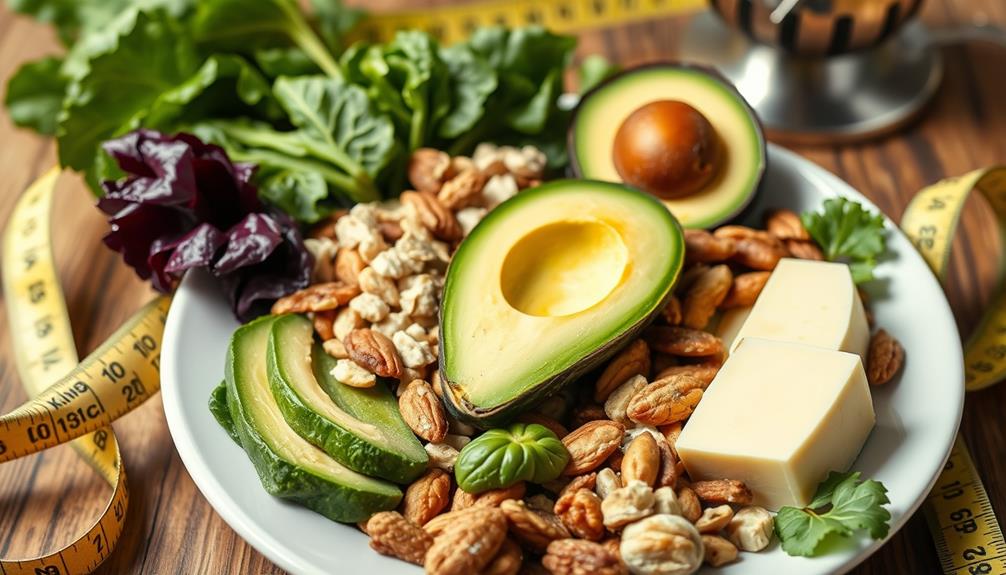
Understanding carbohydrate limits is essential for anyone starting on a ketogenic diet. To achieve and maintain ketosis, you typically need to keep your total carbohydrate intake below 50 grams per day. This significant reduction in carb intake is fundamental, as it often represents less than 10% of your total daily calorie intake.
Additionally, consuming foods rich in antioxidants, such as celery juice, may offer health benefits while on a low-carb regimen.
While total carbohydrate amount is important, many keto dieters focus on net carbs, which you calculate by subtracting fiber and half of sugar alcohols from the total carbs. For many, a common daily limit is around 20-30 grams of net carbs. This approach helps you manage your carb intake more effectively and stay in ketosis.
You'll need to be mindful of the foods you choose, avoiding high-carb options like grains, sugars, and starchy vegetables to stay within these limits.
Monitoring your carbohydrate intake through food labels and careful meal planning is essential for success on this diet and achieving your health goals. By understanding your carbohydrate limits, you set yourself up for a smoother shift into the ketogenic lifestyle and better results in your health journey.
Total Carbs Vs. Net Carbs
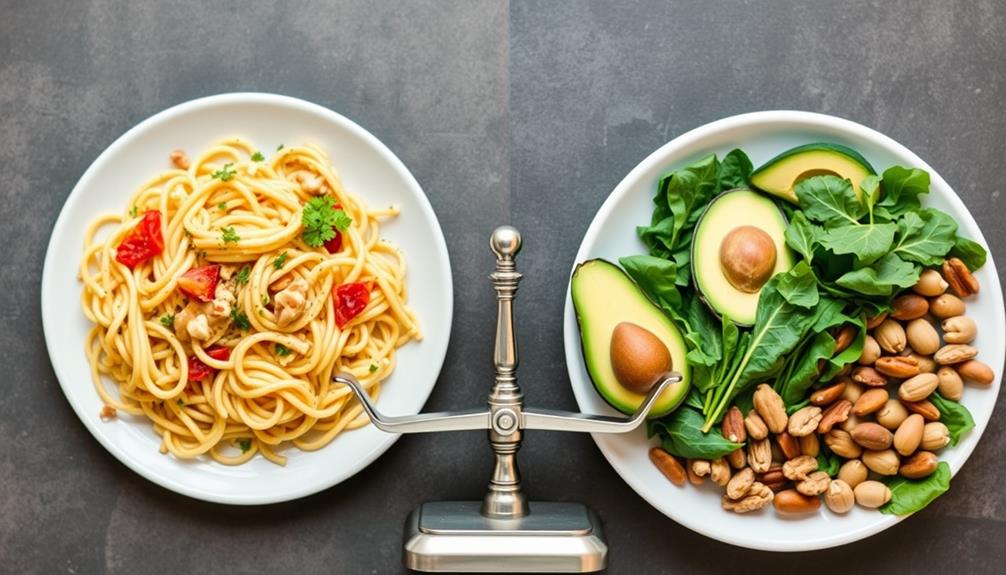
When following a ketogenic diet, distinguishing between total carbs and net carbs plays a significant role in your meal planning. Total carbs include all carbohydrates in a food item, but net carbs are what really matter for your carbohydrate intake.
To calculate net carbs, subtract dietary fiber and half of sugar alcohols from the total carbs. This approach allows for better management of your dietary choices, similar to how one would set savings goals for personal finance.
For instance, if you come across a food item with 20 grams of total carbs, 8 grams of fiber, and 5 grams of sugar alcohols, the net carbs would be 7 grams (20 – 8 – 2.5). This calculation is essential since only digestible carbs impact your blood sugar levels.
Typically, the daily limit for net carbs on a ketogenic diet is set at 50 grams or less to help you achieve and maintain ketosis. By accurately tracking net carbs, you can guarantee adherence to your keto goals while making informed choices during meal prep.
Understanding the difference between total and net carbs will empower you to effectively manage your carbohydrate intake and stay on track with your ketogenic lifestyle.
Foods to Include on Keto

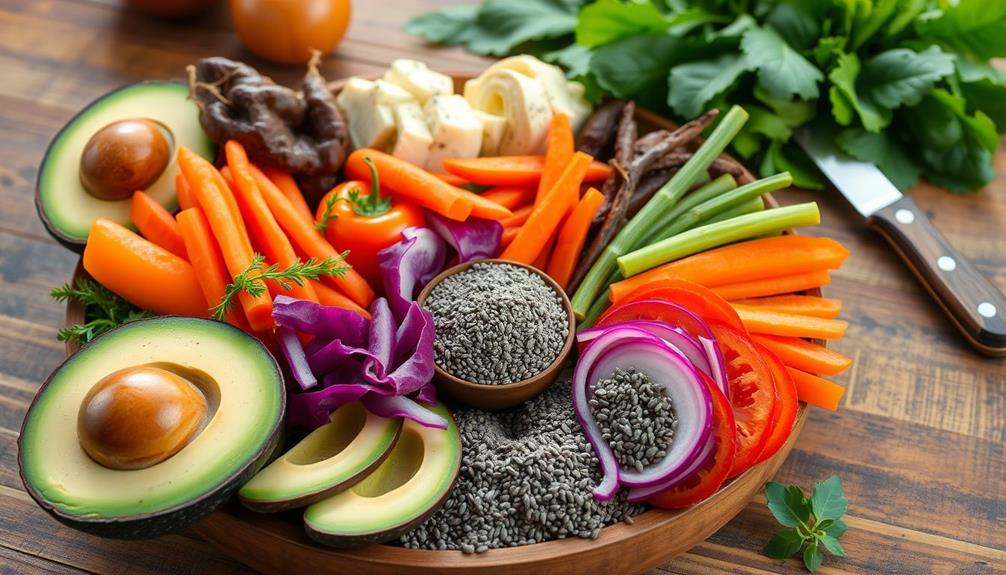
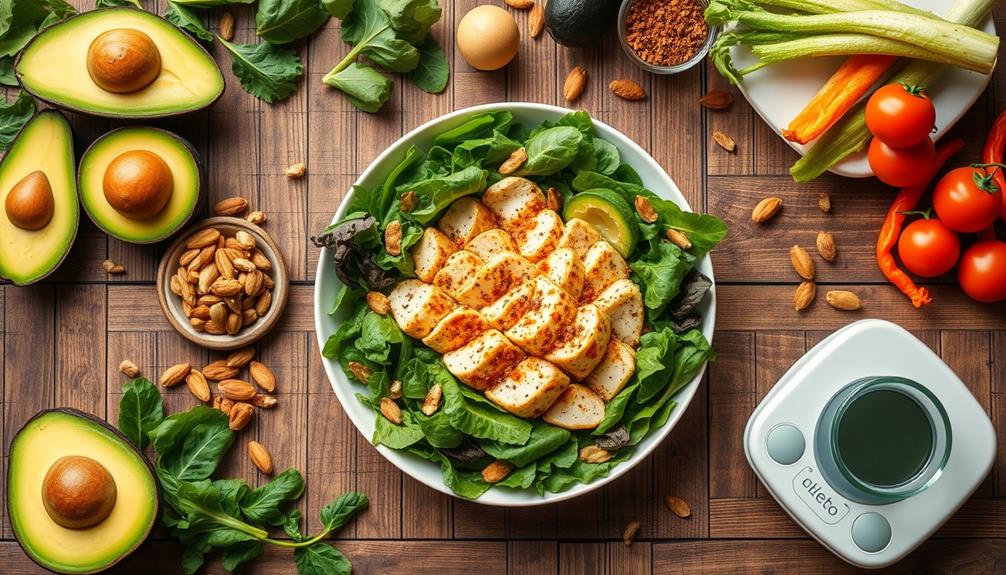
A successful ketogenic diet revolves around incorporating high-fat, low-carb foods that support your health goals. To achieve the ideal fat intake of 70-80%, focus on options like avocados, nuts, seeds, and healthy oils such as olive and coconut oil. These foods are crucial for maintaining your high fat diet while keeping carbs at bay.
Additionally, consider the potential benefits of natural remedies alongside conventional methods to enhance your overall well-being during your dietary journey.
When it comes to protein, choose fatty cuts of meat, poultry, and fish, like ribeye steak, salmon, and chicken thighs. Aim for a moderate intake of 10-20% of your total calories from these sources.
Don't forget about non-starchy vegetables! Leafy greens like spinach and kale are fantastic choices, typically containing only 1-4 grams of net carbs per serving. They provide essential nutrients without compromising your carb limit.
You can also include full-fat dairy products in moderation. Options like cheddar cheese and heavy cream offer fat and protein with minimal carbohydrates — cheddar, for instance, has around 1 gram of net carbs per ounce.
Foods to Avoid on Keto

Avoiding high-carb foods is essential for staying in ketosis on a keto diet. Consuming foods high in carbohydrates can quickly push you over the daily limit of 50 grams, disrupting your progress. Here's a quick reference table to help you identify foods to avoid:
| Food Type | Examples | Reason to Avoid |
|---|---|---|
| Grains | Wheat, Rice, Oats | High in carbs |
| Sugary Foods | Candy, Soda, Desserts | High sugar content |
| Starchy Vegetables | Potatoes, Corn, Carrots | High carb levels |
Additionally, most fruits should be limited due to their sugar content. While avocados and berries can be acceptable in moderation, steer clear of legumes like beans, lentils, and chickpeas as they also contain high amounts of carbs. By avoiding these foods, you'll find it easier to maintain the macronutrient ratios necessary for a successful ketogenic diet. Stick to low-carb options to keep your body in ketosis and support your weight loss goals.
Importance of Fiber Intake

Maintaining digestive health is essential on a keto diet, and adequate fiber intake plays a vital role in this process. Since the ketogenic diet limits total carbohydrate consumption to less than 50 grams daily, it's important to focus on high-fiber foods to meet your fiber needs.
Understanding the importance of financial considerations for elderly care can help you plan meals that support overall well-being. Leafy greens, avocados, and nuts are excellent choices that help maintain regular bowel movements and prevent constipation.
The recommended daily fiber intake is about 25 grams for women and 38 grams for men. Achieving this can be challenging on a keto diet, but it's necessary for overall health.
Remember, net carbs—total carbohydrates minus fiber—are what you should monitor to stay within your carb limit while still enjoying sufficient fiber.
Incorporating high-fiber foods not only supports digestive function but also contributes to feelings of fullness. This can help you manage your appetite and achieve your weight loss goals more effectively.
Monitoring Your Carb Intake

Monitoring your carb intake is vital to succeeding on a keto diet. To achieve and maintain ketosis, you need to limit your total carbohydrate intake to less than 50 grams per day. Start by calculating your net carbs, which are determined by subtracting fiber and half of sugar alcohols from the total carbohydrates listed on food labels. This method gives you a clearer picture of the carbs that affect your body.
Understanding the importance of educational resources for investors can also help you navigate your dietary choices effectively.
Keeping a food diary can be incredibly useful. It helps you track your daily carb intake and guarantees you adhere to the keto diet's low-carb requirements. Additionally, consider using ketone testing strips regularly; they provide feedback on whether you're in ketosis based on your body's ketone levels.
Meal planning and preparation are also essential for managing your carb intake. By planning meals ahead of time, you can avoid hidden carbohydrates often found in processed foods. Staying aware of what you eat helps you stick to your carb goals and enjoy the benefits of a ketogenic lifestyle.
Adjusting Carb Levels Over Time

As you settle into the ketogenic lifestyle, you might find it beneficial to adjust your carb levels over time. Initially, you'll start with a carb intake of 20-50 grams of net carbs per day to achieve ketosis. However, as your body adapts, you may consider gradually increasing your carb intake to 50-100 grams while still aiming to maintain weight loss or ketosis.
It's important to remember the significance of risk management strategies in any dietary change, as they can help you navigate the adjustments effectively.
Monitoring blood ketone levels is essential during this adjustment phase. It helps you assess how your body responds to the changes in carb levels and identifies your personal threshold for staying in ketosis. This way, you can enjoy a bit more flexibility without sacrificing your progress.
Once you've reached your health or weight loss goals, you might explore a cyclical ketogenic diet. This approach allows you to alternate between low-carb and higher-carb days, promoting metabolic flexibility while still enjoying the benefits of a low-carb lifestyle.
Regularly tracking your food intake and being mindful of how carb adjustments impact your energy levels and hunger will also support your journey. By fine-tuning your carb levels, you can optimize your ketogenic experience over time.
Common Misconceptions About Carbs

You might think that all carbs are the enemy when it comes to weight loss, but that's a common misunderstanding.
Understanding net carbs is essential for a successful keto diet, as not all carbs impact your body the same way.
For instance, just like diversifying your retirement portfolio with options like a Gold IRA can protect against inflation, managing your carb intake wisely can help maintain stable energy levels.
Let's clear up these misconceptions so you can effectively manage your carb intake and reach your goals.
Misunderstanding Net Carbs
Understanding net carbs is essential for anyone steering through a ketogenic diet, yet many people fall victim to common misconceptions about carbohydrates. It's vital to differentiate between total carbs and net carbs. Total carbs include all carbohydrates, while net carbs focus on those that impact blood sugar levels.
Here's a simple breakdown:
| Type of Carbs | Calculation | Impact on Blood Sugar |
|---|---|---|
| Total Carbs | All carbs in a food item | Yes |
| Fiber | Not counted in net carbs | No |
| Sugar Alcohols | Half is subtracted from total | Varies |
A common myth is that all carbs are equal, but this isn't true. For instance, high-fiber foods can fit into your keto plan since fiber doesn't count toward net carbs. However, hidden carbs in processed foods can sabotage your efforts. Remember, the ketogenic diet typically allows for a maximum of 50 grams of net carbs per day to maintain ketosis. So, stay aware of what you're consuming, and make educated choices about your carb intake!
Carbs and Weight Loss
Over the years, many misconceptions about carbohydrates and weight loss have persisted, leading to confusion for those trying to follow a ketogenic diet. You might think all carbs lead to weight gain, but that's not entirely true.
The ketogenic diet emphasizes reducing high-glycemic carbs that spike blood sugar levels while allowing for low-carb vegetables. This approach helps you stay within a daily limit of under 50 grams of carbs per day, promoting ketosis—a state where your body burns fat for fuel.
Additionally, focusing on a balanced diet rich in fruits and vegetables can complement your ketogenic strategy by providing essential nutrients.
Understanding the difference between net carbs and total carbs is essential. Net carbs are calculated by subtracting fiber and certain sugar alcohols from total carbs, making it easier for you to track your intake without sacrificing essential nutrients.
Research shows that those on a ketogenic diet often experience greater weight loss and reduced triglyceride levels compared to traditional low-fat diets. By focusing on the right types of carbs, you can stabilize your blood sugar levels and reduce hunger, ultimately supporting your weight loss journey.
Don't let misconceptions hold you back—embrace the potential of a well-structured ketogenic diet!
Health Benefits of Low Carbs

Low-carb diets, like the ketogenic diet, offer a range of health benefits that extend beyond weight loss. Research shows that following a low carbohydrate diet can lead to significant weight loss—one study reported a 13% mean reduction in just eight weeks among obese adults.
Additionally, for those looking to diversify their investment strategies, Gold IRAs can serve as a stable financial asset, paralleling the stability that low-carb diets can provide for health.
Beyond shedding pounds, you'll find that improved insulin resistance is a major perk, especially if you're managing type 2 diabetes. This means better blood sugar control, which is essential for your overall health.
You might also notice reduced hunger levels while on a ketogenic diet. This can make it easier for you to stick with your plan and maintain your weight loss over time.
Additionally, a meta-analysis indicates that those on ketogenic diets experience greater reductions in triglycerides, enhancing cardiovascular health compared to low-fat diets.
Frequently Asked Questions
How Many Carbs Can I Eat and Stay in Ketosis?
To stay in ketosis, you'll generally limit your daily carb intake to under 50 grams. Some aim for as low as 20 grams. Always check labels for hidden carbs to avoid exceeding your limit.
Can You Lose Weight on 50 Carbs a Day?
Yes, you can lose weight on 50 carbs a day. Many people experience significant weight loss by limiting carbs, as this approach helps reduce hunger and promotes fat-burning, making it easier to stick to your diet.
What Do 50 Grams of Carbs Look Like on Keto?
Imagine a plate filled with vibrant veggies. You'll find 50 grams of carbs in just one medium banana or a few tablespoons of hummus, reminding you how quickly those carbs can accumulate in your diet.
Is 100 Carbs a Day Low Carb?
Yes, 100 grams of carbs a day is considered low carb for general diets, but it's too high for achieving ketosis. If you're aiming for that, you'll need to reduce your intake considerably.
Conclusion
To conclude, sticking to a low-carb intake is key for a successful keto diet. Did you know that by reducing your carbs to around 20-50 grams a day, you can shift your body into ketosis, where it burns fat for fuel instead of glucose? Imagine dropping the weight of a bowling ball as you shed excess fat! Embrace the journey, keep an eye on your carb levels, and enjoy the health benefits that come with this lifestyle.