

To manage keto side effects, start by staying well-hydrated and replacing electrolytes with salty foods or supplements to prevent dehydration and cramps. For keto breath, practice good oral hygiene and stay hydrated; it usually improves over time. To ease digestive issues, increase fiber-rich vegetables and consider magnesium supplements. If you balance hydration and electrolytes, you’ll feel more comfortable during your progression. Keep exploring for more tips to make this journey smoother.
Key Takeaways
- Maintain electrolyte balance by consuming sodium, potassium, magnesium, and calcium-rich foods or supplements to reduce symptoms like cramps and fatigue.
- Stay well-hydrated by drinking plenty of water and using electrolyte beverages to prevent dehydration and ease keto flu symptoms.
- Increase fiber intake through low-carb vegetables to support digestion and alleviate constipation or gastrointestinal discomfort.
- Practice good oral hygiene and stay hydrated to manage temporary bad breath caused by ketone production.
- Allow your body time to adapt, as many side effects like keto breath and digestive changes typically improve with continued ketosis.
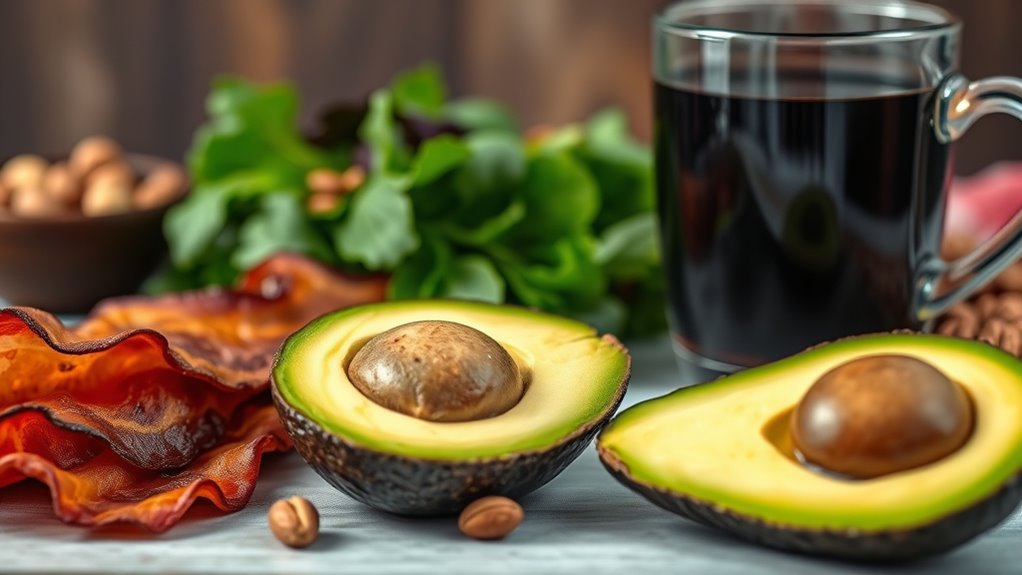
Are you experiencing unwanted side effects while starting the keto diet? If so, you’re not alone. Many beginners face challenges like fatigue, headaches, or muscle cramps during the initial phase. These symptoms are often linked to what’s called the keto flu, a temporary set of symptoms that can occur as your body adjusts to burning fat instead of carbs. One of the main culprits behind the keto flu is an imbalance in electrolytes—sodium, potassium, magnesium, and calcium—that your body relies on to keep you energized and functioning properly. When you drastically reduce carbohydrate intake, your kidneys excrete more water and electrolytes, leading to dehydration and deficiencies that contribute to fatigue and muscle cramps. To combat this, it is crucial to focus on maintaining electrolyte balance. You can do this by increasing your intake of salty foods, drinking electrolyte-rich beverages, or taking supplements formulated for keto dieters. Staying well-hydrated also helps prevent dehydration, which exacerbates the keto flu symptoms.
As you continue with the diet, you might notice changes in digestion. Some people experience constipation or diarrhea as their gut adjusts to higher fat and lower carbohydrate intake. This is common because the gut microbiome adapts to the new diet, and your fiber intake might change considerably. To ease digestive issues, consider increasing your intake of low-carb, fiber-rich vegetables like leafy greens or adding a supplement like magnesium to promote regularity. Drinking plenty of water and avoiding processed, low-fiber foods can also support a healthy digestion process. Additionally, balancing your electrolytes can help reduce cramping and bloating, common discomforts during this period. Regular consumption of diverse, fermentable fibers can also help support a healthy gut microbiome, which is essential during dietary transitions.
You might also notice bad breath, often described as a fruity or metallic smell, which is caused by the production of ketones—specifically acetone—that are expelled through your breath. This is a normal part of ketosis and usually diminishes as your body adapts. To manage it, maintain good oral hygiene, stay hydrated, and chew sugar-free gum or mints to freshen your breath temporarily.

Dr. Berg Electrolyte Capsules – Electrolyte Supplements for Supporting Energy, Endurance, and Hydration – Sugar Free, No Maltodextrin, Keto Friendly – 160 Caps
𝗢𝗡𝗟𝗬 𝟮 𝗣𝗘𝗥 𝗗𝗔𝗬 – These electrolyte capsules will help replenish your electrolytes and trace minerals. They're also…
As an affiliate, we earn on qualifying purchases.
As an affiliate, we earn on qualifying purchases.
Frequently Asked Questions
Can Keto Side Effects Affect Mental Clarity or Focus?
Yes, keto side effects can affect your mental clarity and focus. You might experience brain fog or mental fatigue as your body adjusts to burning fat instead of carbs. These symptoms often happen during the initial shift but usually improve over time. Staying well-hydrated, eating enough electrolytes, and giving your body time to adapt can help reduce these effects and restore your mental sharpness.
Are There Natural Remedies for Keto Flu Symptoms?
Yes, there are natural relief options for keto flu symptoms. You can try keto flu remedies like staying well-hydrated with water and electrolytes, consuming bone broth, and eating nutrient-dense, whole foods to replenish lost minerals. Rest is essential, and gentle stretching or light activity can help. These natural remedies support your body’s adjustment, easing symptoms and helping you feel better faster as you adapt to the keto lifestyle.
How Long Do Digestive Issues Typically Last on Keto?
Digestive issues on keto often last from a few days to a couple of weeks, but this varies widely. Your body needs time for digestive adaptation, and some people experience quicker relief. If you’re concerned about duration, focus on staying hydrated, eating fiber-rich foods, and gradually easing into keto. Usually, these symptoms resolve once your system adjusts, and you can enjoy the benefits of your new diet without ongoing discomfort.
Is It Safe to Take Supplements for Keto Side Effects?
Yes, taking supplements for keto side effects can be safe if you choose reputable options. Always check for keto supplement safety and consult your healthcare provider before starting new supplements. Natural remedy effectiveness varies, so focus on evidence-based options like magnesium for constipation or electrolytes for imbalances. Supplements can help ease symptoms, but they aren’t a substitute for proper hydration, balanced eating, and listening to your body’s signals.
Can Keto Cause Long-Term Health Problems?
Keto can pose long-term risks if not managed carefully, especially regarding metabolic concerns like nutrient deficiencies and liver health. While many people experience benefits, you should monitor your health closely and consult your doctor regularly. Prolonged keto may increase risks for heart issues or bone health problems. Stay informed, maintain a balanced diet, and consider periodic check-ups to minimize potential long-term problems associated with sustained ketosis.

PUR Gum | Aspartame Free Chewing Gum | 100% Xylitol | Natural Spearmint Flavored Gum, 55 Pieces (Pack of 1)
SPEARMINT: This sugar free gum is refreshing & has a minty flavor to liven your taste buds. Keep…
As an affiliate, we earn on qualifying purchases.
As an affiliate, we earn on qualifying purchases.
Conclusion
As you navigate the keto journey, remember that these side effects often fade when you tweak your approach. Coincidentally, many find that staying hydrated or adjusting their fat intake makes all the difference—just like how some discover their breath improves after a few days. So, keep experimenting and listening to your body. Before long, you might realize those initial challenges are just small hurdles on your way to lasting health and wellness.

Metamucil Fiber Gummies for Adults, No Sugar Added Orange Flavor, 5g Prebiotic Plant Based Fiber Supplement Blend, 120 Count
GREAT TASTING GUMMY FORMULA: orange flavored fiber gummies for adults with no sugar added
As an affiliate, we earn on qualifying purchases.
As an affiliate, we earn on qualifying purchases.

Nutricost Magnesium BHB Salts (250 Grams, Unflavored) – Exogenous Ketone Supplement, 6.5g Beta-Hydroxybutyrate Per Serving
6.5 Grams of Beta-Hydroxybutyrate Per Serving
As an affiliate, we earn on qualifying purchases.
As an affiliate, we earn on qualifying purchases.