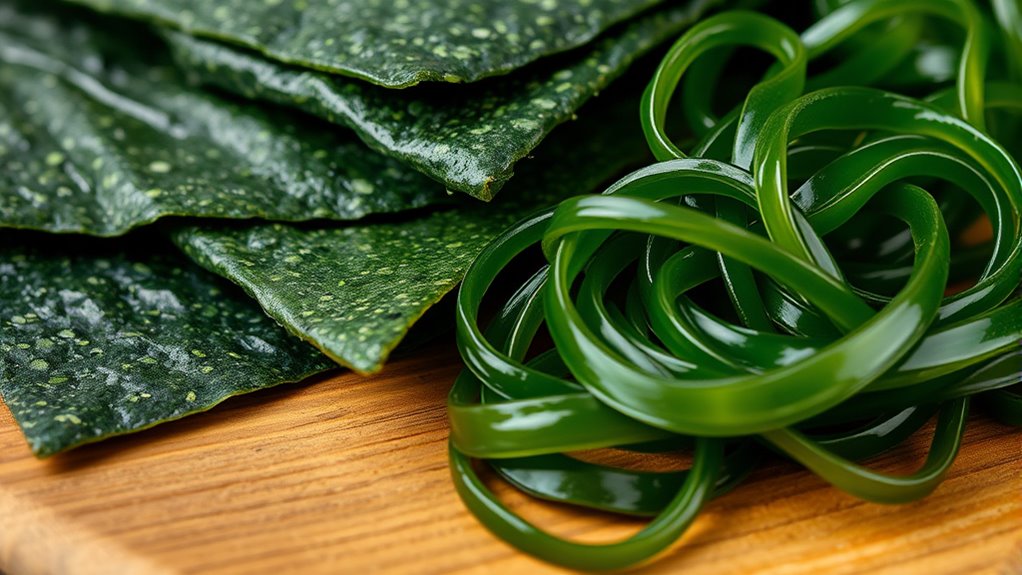

Seaweed like nori and kelp noodles are excellent low-carb options that fit well into a keto diet. They’re rich in essential nutrients such as iodine, magnesium, and calcium, while their natural saltiness enhances flavor without added salt. Sustainable and eco-friendly, they help support marine ecosystems. Nori sheets can be used as wraps or sprinkled on dishes, while kelp noodles provide a satisfying, chewy alternative to traditional pasta. Keep exploring to discover even more ways to incorporate these nutritious seaweeds into your meals.

Get kitchen staples and gadgets delivered free with Prime
- Fast, free delivery on millions of items
- Prime Video, Amazon Music and more included
- Member-only deals all year
Key Takeaways
- Nori and kelp noodles are low-carb seaweed options ideal for keto diets.
- They provide essential nutrients like iodine, magnesium, and calcium while maintaining low carbohydrate content.
- Kelp noodles have a chewy texture and absorb flavors, making them a versatile pasta alternative.
- Nori sheets can be sliced or crumbled into dishes, offering a natural umami flavor and saltiness.
- Using seaweed noodles supports sustainable, eco-friendly practices and diversifies keto meal options.
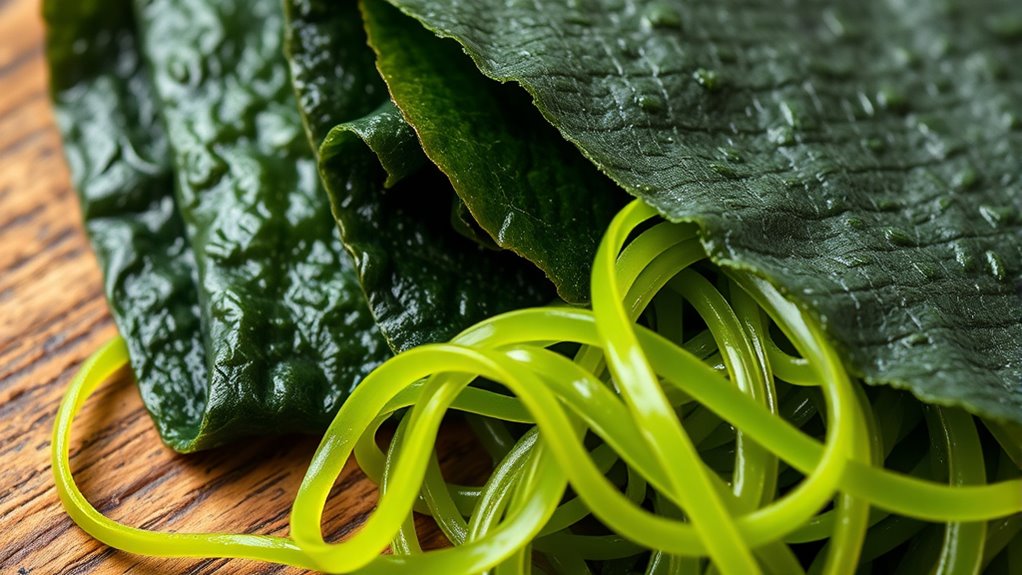
If you’re following a keto diet, incorporating seaweed can be a smart move. Not only is it low in carbs, but it also packs a punch of essential nutrients like iodine, magnesium, and calcium. One of the reasons seaweed is gaining popularity among keto enthusiasts is because of its sustainable harvesting. Unlike land crops that require extensive land use and water, seaweed is harvested from the ocean, where it grows naturally and abundantly. Responsible harvesting practices ensure that seaweed populations aren’t depleted, maintaining healthy marine ecosystems. By choosing seaweed sourced through sustainable methods, you support environmentally friendly practices that help preserve ocean life and ensure a steady supply for future use.
Sustainable seaweed harvesting supports ocean health and provides a nutrient-rich, eco-friendly keto ingredient.
Seaweed isn’t just a nutritious addition; it also serves as a versatile ingredient that enhances flavor in many keto-friendly dishes. Its umami-rich profile adds depth and complexity, making meals more satisfying without adding carbs. For example, you can incorporate nori sheets into salads, wraps, or snack plates to boost flavor. Kelp, on the other hand, can be blended into broths or used as a seasoning powder. This flavor enhancement makes seaweed a valuable ingredient for keeping your meals interesting and delicious, especially when you’re trying to stick to a strict low-carb regimen. Plus, its natural saltiness can diminish the need for added salt, further supporting your health goals.
When it comes to noodles, nori and kelp offer excellent low-carb alternatives to traditional pasta. Nori sheets can be sliced into strips or crumbled over dishes, providing a crunchy texture and a rich umami flavor. Kelp noodles are another fantastic option—they’re made from kelp extract and are naturally low in carbs and calories. These noodles have a chewy, satisfying texture that mimics traditional pasta but without the carb load. Preparing kelp noodles is simple: rinse them thoroughly, then toss them in your favorite keto sauces or broths. Their neutral flavor allows them to absorb the flavors of whatever dish you’re making, while their firm texture adds a satisfying bite.
Incorporating seaweed into your keto routine isn’t just about health benefits; it’s about making smarter, sustainable choices that also enhance your culinary experience. By selecting seaweed that’s harvested sustainably, you’re supporting ocean health and ensuring your supply remains plentiful. Its natural flavor enhancement can elevate simple dishes into gourmet meals, making your keto journey more enjoyable and varied. Whether you’re adding nori to wraps, blending kelp into broths, or using kelp noodles as a pasta substitute, seaweed offers a low-carb, nutrient-dense, and environmentally conscious way to diversify your diet.
As an affiliate, we earn on qualifying purchases.
Frequently Asked Questions
Are Seaweed Products Safe for Daily Consumption?
Seaweed products are generally safe for daily consumption, but you should watch out for seaweed safety concerns like excessive iodine intake. Their mineral content can benefit your health, providing nutrients like iodine, calcium, and magnesium. However, consuming large amounts might lead to thyroid issues or heavy metal buildup. Stick to moderate portions and choose reputable sources to enjoy seaweed’s benefits without risking your health.
How Do Seaweed Noodles Compare in Carbs to Traditional Pasta?
Seaweed noodles have markedly fewer carbohydrates than traditional pasta, making them a great low-carb alternative. While regular pasta contains around 40 grams of carbs per serving, seaweed noodles typically have just 1-5 grams. This stark difference in carbohydrate content makes seaweed noodles ideal for keto or low-carb diets, providing a pasta comparison that helps you enjoy your favorite dishes without the carb overload.
Can Seaweed Help Meet Electrolyte Needs on Keto?
Yes, seaweed can help meet your electrolyte needs on keto. It’s rich in essential minerals like magnesium, potassium, and sodium, which support electrolyte balance. Incorporating seaweed into your diet boosts mineral content, helping prevent imbalances that often occur on a low-carb or ketogenic diet. Eating seaweed snacks or adding kelp to meals provides natural electrolytes, making it an excellent, tasty way to stay hydrated and maintain proper mineral levels.
Are There Any Potential Allergen Concerns With Seaweed?
Are you aware that seaweed allergies do exist? If you have a seafood sensitivity or allergies to shellfish, you should approach seaweed cautiously, as it can trigger similar reactions. While rare, some individuals may experience allergic responses to certain types of seaweed. Always consult with a healthcare professional before adding new foods to your diet, especially if you have known allergies or sensitivities.
How Should Seaweed Be Stored to Maintain Freshness?
To keep seaweed fresh, you should store it in an airtight container or resealable bag in a cool, dry place away from sunlight. For longer preservation, consider refrigeration, which helps maintain its texture and flavor. Avoid moisture and humidity, as they can cause spoilage. Proper storage tips like these will guarantee your seaweed stays fresh, flavorful, and ready for use whenever you need it.
As an affiliate, we earn on qualifying purchases.
Conclusion
So, next time you reach for a snack or add some greens to your plate, consider seaweed like nori and kelp noodles. It’s funny how these ocean treasures fit so perfectly into your keto plan, making healthy eating feel effortless. Who knew that the secret to staying low-carb could come straight from the sea? Embrace these options—you might find that they become your new go-to for flavor and nutrition, almost by coincidence, but truly by choice.
As an affiliate, we earn on qualifying purchases.
As an affiliate, we earn on qualifying purchases.
NFL season / tailgating Picks
team gear
As an affiliate, we earn on qualifying purchases.