TL;DR

Get kitchen staples and gadgets delivered free with Prime
- Fast, free delivery on millions of items
- Prime Video, Amazon Music and more included
- Member-only deals all year
A Good Housekeeping report describes seven ways to reuse or redirect old dish towels, including making cleaning rags, protecting stored dishes and wrapping gifts. The suggestions are practical reuse ideas, not a formal waste-reduction study; textile recycling options vary by location, and towels should be checked for suitability before reuse.
Good Housekeeping has outlined seven ways to give old dish towels another use, from padding stored dishes and cutting towels into cleaning rags to making a braided dog toy or using a towel as gift wrap. The suggestions offer households alternatives to throwing towels away, while the report notes that textile collection options depend on local programs and retailers.
Several ideas use the towels as they are. The report recommends placing them between stacked plates and serving dishes to cushion items in storage, and stuffing two or three into an empty purse to help it hold its shape. Towels in better condition can also be tied around gifts, such as a bottle of olive oil or a loaf of bread. Lizzie Horvitz, founder of sustainability company Finch, suggests using a Japanese furoshiki-style wrap by setting the gift in the center, tying opposite corners and tucking in the ends.
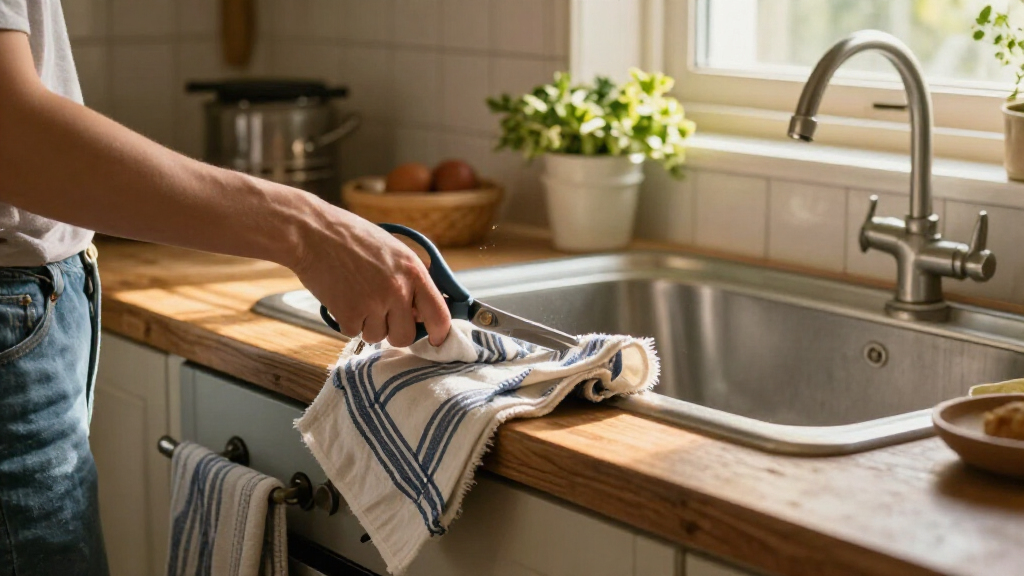
For cleaning, the article suggests cutting worn towels into hand-sized squares for dusting, spills, bathroom cleaning or garage work. Horvitz says the cloths can replace paper towels for some jobs and recommends pinking shears to reduce fraying. Another sewing project is a patchwork pot holder: cut around damaged areas, join usable scraps, then place heat-resistant batting between fabric layers. Carly Olds, an education specialist at Singer, advises cutting the assembled fabric into uniform squares and stitching around the edge.
The remaining ideas are a braided tug toy and donation or recycling. Horvitz suggests cutting two or three towels into strips about two inches wide, knotting and tightly braiding them. The report says thicker cotton towels may be more suitable and the toy can be washed, but it gives no durability or pet-safety testing. For towels no longer useful at home, it says some cities and retailers accept worn textiles, while larger towels may be donated to animal shelters.
Practical Uses Before Disposal
The list gives readers ways to extend the use of household textiles rather than discarding them as soon as they become stained or faded. Some ideas require no tools, such as cushioning dishes or filling a handbag; others involve cutting and sewing. Reusing a towel may also reduce the need for disposable cleaning sheets or new gift wrap in those particular situations, though the report does not quantify savings or environmental effects.
The suggestions have limits. A towel used between dishes must be clean and dry, and a pot holder needs appropriate heat-resistant batting and secure stitching to handle hot cookware safely. A homemade dog toy should be checked for loose strips or damage, and a pet should be supervised while playing. Recycling and donation are not guaranteed options: acceptance depends on local collection rules and the condition and size of the textile.
Products Worth Considering

KitchenAid 5.5-Qt Bowl-Lift Stand Mixer, Porcelain White (KSM55SXXX)

Cuisinart Brew Central 12-Cup Programmable Coffeemaker, Brushed Chrome

Instant Pot Rio Wide 7.5 Qt 7-in-1 Electric Pressure Cooker, WhisperQuiet
As an affiliate, we earn on qualifying purchases.
From Kitchen Cloth to Reuse
The supplied source is a Good Housekeeping article by lifestyle journalist Wendy Rose Gould. It presents reuse ideas and includes advice attributed to Horvitz and Olds. It does not identify a new recycling policy, a product launch or a study measuring the impact of textile reuse; the development is the publication of a practical list.
The suggestions cover different stages of a towel’s condition. Relatively presentable designs can serve as reusable gift wrap, while damaged sections can be removed for patchwork or cleaning cloths. Towels too worn for household use may still be accepted by some textile programs or animal shelters, according to Horvitz as quoted in the report. Readers need to check directly with local organizations before dropping anything off.
“Be sure to cut the patchwork fabric into uniform squares. I recommend using an existing potholder as a guide.”
— Carly Olds, education specialist at Singer, as quoted by Good Housekeeping
Limits of the Reuse Advice
The supplied material does not give the article’s publication date, identify specific textile recycling locations, or list which retailers accept worn towels. It also does not establish how much waste or paper-towel use any household could avoid through these ideas. Horvitz’s recycling advice is general, so readers should verify accepted materials and drop-off requirements with the relevant city or retailer.
The source offers no testing of homemade pot holders or dog toys. It does not specify batting ratings, seam strength, or how to assess a toy for wear, so those projects require ordinary care and should not be treated as certified safety products. Whether a shelter accepts towels, and what condition it requires, is also not specified.
Check Local Reuse Options
The next step for readers is to match each towel to its condition: keep intact pieces for storage or wrapping, cut usable fabric into cleaning squares, and reserve scraps for sewing projects. Anyone making a pot holder should use heat-resistant batting and sound stitching; pet owners should inspect and supervise a homemade toy.
For towels that are no longer useful, contact a municipal textile program, participating retailer or animal shelter before donating. The source provides no announced follow-up or policy change; practical next steps depend on local acceptance rules.
Key Questions
What are the seven suggested uses for old dish towels?
The report suggests using them to cushion stored dishes, cut them into cleaning rags, sew a patchwork pot holder, braid a dog toy, stuff a purse, wrap a gift or send them to textile recycling or an animal shelter.
How should a towel be turned into cleaning rags?
Horvitz recommends cutting towels into hand-sized squares. The report says pinking shears can help limit fraying and suggests keeping the cloths somewhere easy to reach.
Can any old towel be used as gift wrap?
The report recommends choosing a towel in better condition, such as a design the owner no longer wants. It describes tying opposite corners over a gift and tucking in the ends.
Where can worn dish towels be recycled or donated?
Horvitz says some cities and retailers collect worn textiles, and larger towels may be suitable for animal shelters. Availability and acceptance rules vary, so contact the program or shelter before taking towels there.
Is a homemade dish-towel dog toy tested for safety?
The source provides braiding instructions but reports no safety testing. Check the toy for loose or damaged strips, supervise the dog, and remove it if it begins to come apart.
Source: goodhousekeeping.com