
🔍 Read the full analysis: Panforte Di Siena: The Medieval Spice Cake Still Ruling Christmas on Mad Tasting

Get kitchen staples and gadgets delivered free with Prime
- Fast, free delivery on millions of items
- Prime Video, Amazon Music and more included
- Member-only deals all year
TL;DR
Panforte di Siena is a dense Tuscan cake made with honey, nuts, candied fruit, flour, sugar and spices, and it remains strongly associated with Christmas in Siena. Panforte nero is generally darker and more boldly spiced than the lighter, icing-sugar-dusted margherita. The cake’s medieval connections are part of its tradition, but its exact origin and first recipe are uncertain.
Panforte di Siena, the dense Tuscan cake made with honey, nuts, candied fruit and spices, remains closely linked to Christmas in Siena, though it is sold and eaten throughout the year. A current guide from Mad Tasting describes its two familiar styles—darker, spicier panforte nero and lighter panforte margherita—while stressing that the cake’s medieval associations do not establish a precise origin date or an unchanged original recipe.
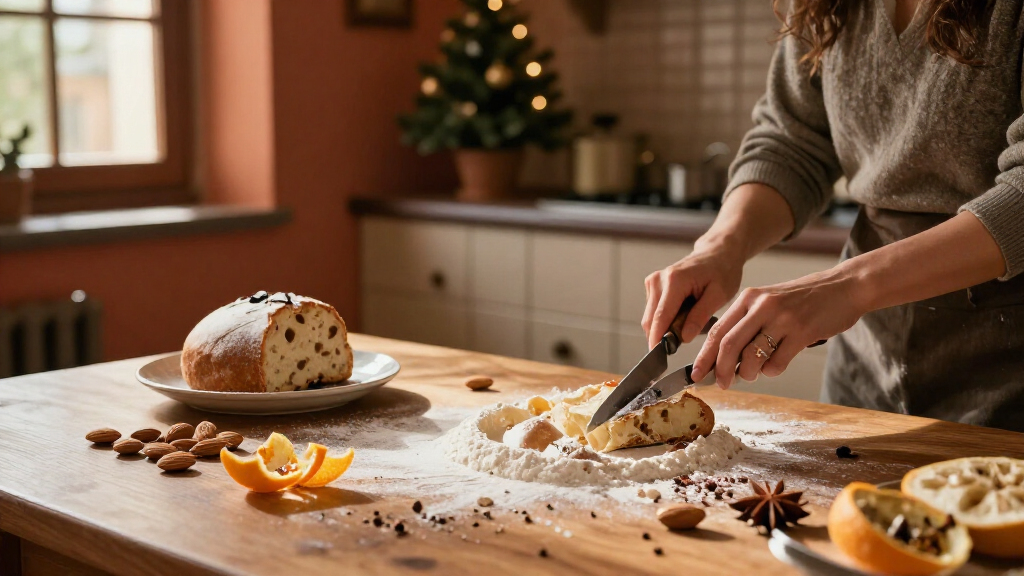
Panforte is usually made as a compact round, with ingredients bound into a dense, chewy cake rather than a light, risen loaf. Common ingredients include almonds, candied citrus, honey, flour, sugar and spices; some recipes use hazelnuts, melon or other fruit. The name means “strong bread,” a description of its concentrated flavor, not an indication that the cake contains yeast or is baked to rise.
The balance differs from baker to baker. A round with more nuts may taste firmer and more toasted, while a higher proportion of fruit and syrup can make it stickier and sweeter. Traditional versions may rest on edible wafer paper and be pressed relatively thin, though modern cakes can be thicker. A narrow wedge is often enough, particularly alongside coffee.
Panforte nero is generally darker and more assertively spiced; some recipes include black pepper and sometimes cocoa. Panforte margherita is usually lighter in appearance and flavor and is commonly dusted with icing sugar. These are broad descriptions, not guarantees: ingredients and proportions vary, so the label alone cannot predict every baker’s version.
The medieval spice cake still ruling Christmas
Dense with honey, nuts, candied fruit and spices, panforte remains closely tied to Christmas in Siena. Its medieval associations are part of the tradition, while its exact origin remains uncertain.
Two familiar styles
Recipes and flavor balances vary from baker to baker.
- Generally darker and more boldly spiced
- Some versions include black pepper or cocoa
- Usually lighter and milder
- Commonly dusted with icing sugar
A dense, shareable cake
Honey binds nuts, candied fruit, flour, sugar and spices into a compact, chewy round.
Rich and compact
A thin wedge is often enough, and the cake is easy to portion for sharing.
Room temperature
Try a small wedge with coffee; sweet wine may suit some spicier nero versions.
Christmas tradition, year-round cake
Its strongest seasonal association is in Siena, though panforte is sold and eaten throughout the year.
Find out how their recipe balances citrus, nuts and spices.
Nero may suit a sharper spice profile; margherita offers a gentler option.
Keep the cake wrapped between servings and follow the product label for storage guidance.
Medieval links, uncertain origins
Siena’s food tradition connects panforte with medieval convents, apothecaries and the spice trade.
- Stories often place its development in the 13th century.
- No precise first date, first baker or original recipe is established.
- “Strong bread” describes its concentrated flavor, not a yeast-raised loaf.
Why Siena’s Christmas Cake Endures
Panforte’s seasonal importance is tied to both its flavor and its practicality. Its dense texture makes it easy to portion into small wedges for a gathering, and the cake can be kept wrapped between servings. That makes it suited to sharing and gifting, especially at a time of year when food traditions center on visitors and holiday tables.
The ingredients also help explain its place as a celebratory sweet. Honey, nuts, candied fruit and spices create a rich combination that differs from everyday bread or a simple cake. The source describes the ingredients as costly in the medieval setting associated with panforte, helping explain why it became linked with special occasions. Today, its compact richness remains part of the appeal: a small piece can offer several flavors at once, from citrus to toasted almond and spice.
For visitors, the cake offers a direct way to encounter a local food tradition without treating every historical story as settled fact. Asking a baker about the fruit, spice level and recipe provides a more useful guide to a particular round than assuming all panforte tastes the same. At home, its distinct styles also make it a flexible holiday choice: nero may suit people who enjoy a sharper spice profile, while margherita offers a gentler option.
Products Worth Considering

KitchenAid Artisan 5-Quart Tilt-Head Stand Mixer, Almond Cream

Weber Lumin Portable Electric Grill, Black

Vitamix Touch & Go Advance 32-Ounce Bar Blender, White
As an affiliate, we earn on qualifying purchases.
Medieval Links, Uncertain Origins
Siena’s food tradition connects panforte with medieval convents, apothecaries and the spice trade. Stories often place its development in the 13th century, when honey, almonds, dried fruit, candied peel and imported spices could make a sweet an expensive treat. Those associations help explain why the cake is connected with celebrations and gifts, but they do not identify a verified first baker or establish a single date for its creation.
The explanation of the name is also not a settled account of its beginning. One story links “strong bread” to older sweet breads that could turn sour as they fermented, with panforte distinguished by its intense flavor. That is an interpretation, not proof of the cake’s exact development. The historical record and later legends give the tradition meaning, but the available account does not establish that today’s recipe is unchanged from a medieval version.
Christmas remains panforte’s strongest seasonal moment in Siena, even though shops may sell it year-round. Its link to the holiday is therefore a living custom as well as a historical association: the cake is made, bought, shared and adapted in the present, with different bakers setting their own balance of nuts, fruit and spice.
““Its name means ‘strong bread,’ a nod to its concentrated flavor.””
— Mad Tasting
What the Historical Record Cannot Settle
The precise date panforte was first made, who made it and what its earliest recipe contained remain uncertain in the source material. References to convents, apothecaries and medieval trade are historical associations, while stories about a 13th-century beginning or the origin of the name should not be treated as proof of one definitive account.
There is also no single fixed formula presented for the modern cake. Ingredients and proportions vary, including the amount of nuts, fruit, honey and spice, and descriptions of nero and margherita are general rather than universal. A specific product’s recipe, flavor balance and storage life cannot be established from the style name alone.
Choosing and Serving a Round
There is no announced next milestone or breaking development in the source; the report describes an established food tradition. For a first taste, Mad Tasting recommends cutting a thin wedge and serving it at room temperature, when the honey and spices are easier to distinguish. Coffee is a straightforward pairing, while the stronger spice of some nero versions may suit a sweet wine.
When buying panforte in Siena, ask the baker how their recipe balances citrus, nuts and spices, and whether the round is nero or margherita. At home, keep the cake wrapped between servings, as its compact texture lends itself to portioning over time. The source does not specify a tested storage duration, so follow any storage guidance provided on the product’s label.
Key Questions
What is Panforte di Siena?
It is a dense Tuscan cake commonly made with honey, nuts, candied fruit, flour, sugar and spices. Despite its name, it is not a yeast-raised loaf.
What is the difference between panforte nero and margherita?
Nero is usually darker and more boldly spiced; some versions include black pepper or cocoa. Margherita is generally lighter and milder and is often dusted with icing sugar. Recipes vary by baker.
Is panforte only eaten at Christmas?
No. It has its strongest seasonal association with Christmas in Siena, but it is also sold and eaten throughout the year.
Does panforte have a confirmed medieval origin?
The cake is associated with Siena’s medieval food culture, but the source does not establish a precise first date, first baker or original recipe. Popular origin stories should be treated as tradition rather than settled fact.
How should panforte be served?
Cut a small, thin wedge and serve it at room temperature. Coffee is one suggested pairing; a sweet wine may complement the stronger spices in some nero versions.
Source: Mad Tasting