
🔍 Read the full analysis: Agnolotti Del Plin: Piedmont's Pinched Pasta, Step By Step on Mad Tasting

Get kitchen staples and gadgets delivered free with Prime
- Fast, free delivery on millions of items
- Prime Video, Amazon Music and more included
- Member-only deals all year
TL;DR
Agnolotti del plin are small filled pasta associated with Piedmont’s Langhe, Roero and Monferrato. The guide explains how to make a moist but firm filling, roll and pinch the dough, cook the parcels briefly, and serve them with roast juices, butter and sage, or broth.
Mad Tasting has published a step-by-step guide to making agnolotti del plin, the small filled pasta associated with Piedmont’s Langhe, Roero and Monferrato. It describes how to prepare a firm, moist filling, roll egg dough thin, and seal each parcel with the pinch that gives the pasta its name.
The guide recommends using cooked meat such as beef, pork or rabbit, often with vegetables and some cooking juices. For its practical home method, it suggests finely chopping leftover braised meat and adding cooled juices a little at a time. The filling should clump together without becoming wet; it should be fully cool before it is placed on the dough. Recipes and seasonings vary by household, so the guide presents this as a regional approach, not a single definitive formula.
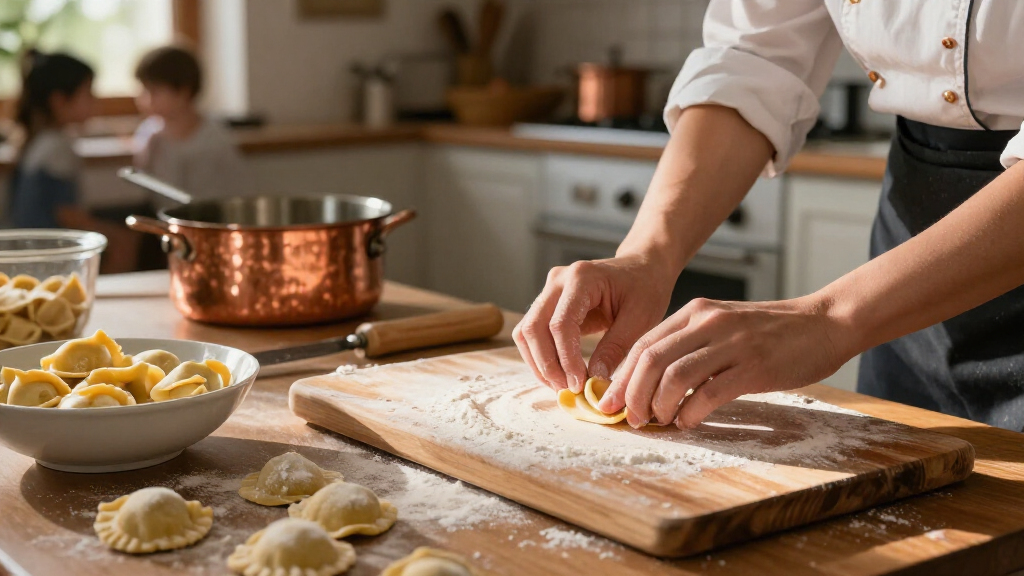
For the dough, the guide calls for wheat flour and eggs, kneaded until smooth and elastic, then wrapped and rested. Roll it thin enough for the filling to show through without tearing the sheet. Place small mounds in a line, fold the dough over them, press out air around the filling, pinch between the mounds, and cut the parcels apart. Keeping unused dough covered helps prevent it from drying and cracking as you work.
Cook the fresh parcels briefly in boiling water and serve them with roast juices, butter and sage, or broth. The guide favors a light dressing that lets the filling remain prominent. It does not give a single fixed cooking time or exact ingredient ratios, which can depend on the dough, filling and size of the parcels.
Agnolotti del Plin Pinched pasta, step by step
This small filled pasta from Langhe, Roero and Monferrato gets its name from the pinch that seals each parcel. Make a firm, moist filling, shape carefully and finish with a light accompaniment.
Build the filling
Use cooked meat and cooled juices to make a filling that holds its shape.
Meat and vegetables
Beef, pork or rabbit may be combined with vegetables and cooking juices. Household recipes vary.
Moist but firm
Add cooled juices a little at a time until the chopped meat clumps without becoming wet. Cool fully before shaping.
Make and shape the dough
Egg dough should be smooth, rested and thin enough for the filling to show through without tearing.
Knead wheat flour and eggs until smooth and elastic, wrap and rest.
Lay filling in a line, fold dough over it and press out air around each mound.
Pinch between the mounds to seal, then cut parcels apart. Keep unused dough covered so it does not dry and crack.
Cook and serve
Cook fresh parcels briefly in boiling water; the source gives no fixed cooking time.
- Roast juices
- Butter and sage
- Broth
- Let the filling remain prominent.
- Adjust cooking to parcel size and dough.
- Keep cooked meat refrigerated; do not leave it at room temperature for more than two hours.
A regional tradition
“Plin” means “pinch” in Piedmontese, describing the finger motion that seals the pasta. The guide treats its method as a regional framework, since recipes vary by family and locality.
A Pinch Defines the Pasta
The method matters because the defining feature is not simply that the pasta is filled: it is the small shape and hand-pinched seal. In Piedmontese, *plin* means “pinch,” referring to the finger motion used to separate and close the parcels. The guide gives home cooks a way to reproduce that shape while explaining why careful sealing matters: trapped air or a weak join can allow parcels to open during cooking.
The recipe also connects fresh pasta to a practical use for cooked meat. Turning roast or braise leftovers into filling can make a new meal from food already prepared, while a modest sauce avoids overwhelming the parcels. These are practical implications of the method; the source does not claim a measured effect on food waste or offer nutritional comparisons.
Products Worth Considering

KitchenAid Artisan 5-Qt Tilt-Head Stand Mixer – Black Matte (KSM150PS)

Ninja Foodi 6-in-1 DualZone FlexBasket Air Fryer, 7-Qt MegaZone, Black, DZ071

Ninja CM371 Hot & Iced XL Coffee Maker with Rapid Cold Brew
As an affiliate, we earn on qualifying purchases.
Piedmont’s Regional Pasta Tradition
Agnolotti is a broader name for Piedmontese filled pasta; “del plin” identifies the small parcels made with the characteristic pinch. The guide associates them especially with the Langhe, Roero and Monferrato. It describes meat-based fillings as common, while noting that ingredients and proportions differ among towns and families.
One account links the pasta’s history to cooks repurposing leftover roast meat. The guide presents that as a useful origin account, not a firmly established history: the precise origin and date are difficult to establish. Its home recipe is therefore framed as a way to honor a regional practice, rather than a claim to reproduce one universal or historically exact version.
““plin” means “pinch” in Piedmontese.”
— Mad Tasting guide
Recipes and Origins Vary
The guide does not establish a single authoritative filling recipe, exact flour-to-egg ratio, or precise boiling time. It says these can vary with household practice, ingredient sizes and conditions in the kitchen. Its account of using leftover cooked meat is presented as one origin explanation, while the precise history and date remain uncertain.
The source provides a method rather than a tested recipe with measured quantities, yield, or timing for each step. It also does not compare the results of hand-rolling with a pasta machine or give a separate, detailed vegetarian recipe. Readers should treat any vegetable-based filling as a variation, not as the classic meat preparation described in the guide.
From Filling to Final Plate
The next steps for a home cook are to prepare and cool the filling, make and rest the dough, then shape and cook the parcels. Keep cooked meat refrigerated while preparing the dough; the guide advises against leaving it at room temperature for more than two hours. Work with manageable pieces of dough and cover those not in use, then cook the freshly shaped pasta and serve it with one of the suggested light accompaniments.
There is no announced follow-up or additional event in the source material. The guide leaves cooks to adjust quantities and cooking time to their ingredients and parcel size, while recognizing that local and family recipes differ.
Key Questions
What does “plin” mean?
Plin means “pinch” in Piedmontese. It describes the finger motion used to seal the pasta between filling mounds.
What filling is used in agnolotti del plin?
The guide describes fillings based on cooked beef, pork or rabbit, sometimes combined with vegetables and cooking juices. Recipes vary by household and locality.
How do you stop the parcels from opening?
Use filling that is moist but not wet, fold the dough over small mounds, press air out around each mound, and pinch the dough firmly between them. A dry sheet can crack, so keep unused dough covered.
How should agnolotti del plin be served?
The guide suggests roast juices, butter and sage, or broth. It recommends a light dressing rather than a heavy sauce.
Can the filling be made ahead?
Yes. Cool the cooked filling and store it covered in the refrigerator. The guide says not to leave cooked meat at room temperature for more than two hours; keep the filling chilled while preparing the pasta.
Source: Mad Tasting