
🔍 Read the full analysis: Fonduta Valdostana: Alpine Cheese Melt For Truffle Shavings on Mad Tasting

Get kitchen staples and gadgets delivered free with Prime
- Fast, free delivery on millions of items
- Prime Video, Amazon Music and more included
- Member-only deals all year
TL;DR
Fonduta Valdostana is a warm, spoonable cheese dish from Valle d’Aosta, traditionally made with Fontina Valdostana and often egg yolks. A recipe guide from Mad Tasting describes soaking the cheese in milk and melting it gently; truffle shavings are an optional finishing touch, not a required ingredient.
Mad Tasting has published a guide to Fonduta Valdostana, the warm cheese dish associated with Valle d’Aosta in northwestern Italy, explaining how to make a smooth Fontina-based melt and when to add optional truffle shavings. The guide’s practical point is that low, steady heat matters: boiling the cheese can leave the mixture oily or grainy.
The dish centers on Fontina Valdostana, a semi-soft cow’s-milk cheese with buttery, gently nutty notes. The source says recipes often use egg yolks to give the fonduta body, though household versions differ: some include butter, while others rely on cheese and milk. The result is intended to be thick enough to coat bread while remaining spoonable.
The method described begins by cutting or grating the cheese into even pieces and covering it with milk. The cheese can be left to soften for several hours or overnight in the refrigerator. It is then warmed gently with the milk, with frequent stirring; egg yolks are incorporated near the end over low heat. The guide advises stopping before the mixture simmers and serving it promptly, since it thickens as it cools.
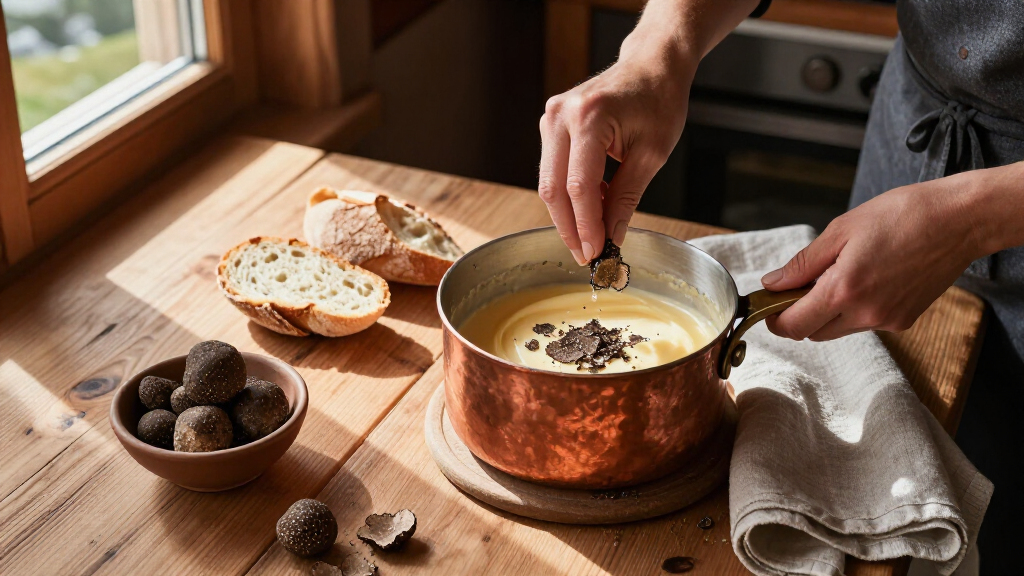
Truffle is optional, rather than a defining ingredient. Mad Tasting recommends shaving fresh black or white truffle over the hot fonduta just before serving, using a light amount so its aroma complements rather than overwhelms the cheese. Toasted bread, boiled potatoes and vegetables are suggested accompaniments, including for diners who do not have truffle.
Valle d’Aosta · Alpine kitchen guide
Fonduta Valdostana: Alpine Cheese Melt for Truffle Shavings
A warm, spoonable regional dish built around Fontina Valdostana. Gentle heat creates a glossy melt; fresh truffle can finish it, but the cheese stands on its own.
01 / Regional context
A regional dish, not just a dip
Fonduta Valdostana turns a local Alpine cheese into a shareable meal. Its ingredient balance differs from many familiar Swiss-style fondues, though household recipes vary.
01 · Place
Valle d’Aosta
In northwestern Italy, Alpine pastures and dairy traditions shape the regional food story behind this warm cheese preparation.
02 · Main ingredient
Fontina Valdostana
Semi-soft cow’s-milk cheese with buttery, gently nutty notes. The Fontina Valdostana DOP label signals production under defined regional rules.
03 · Varies by home
Egg yolks & butter
Egg yolks often add body. Some versions include butter, while others rely on cheese and milk; there is no single fixed ratio in the guide.
02 / The method
From firm cheese to glossy fonduta
Prepare the dippers first and serve promptly. The mixture thickens as it cools, so keep the heat gentle and the spoon moving.
Cut & soak
Cut or grate cheese evenly, cover with milk, and soften for several hours or overnight in the refrigerator.
Warm gently
Heat the cheese with its milk over low heat, stirring frequently until the mixture melts smoothly.
Enrich & stop
Stir in egg yolks near the end over low heat. Stop before simmering; remove the pan if bubbles form at the edges.
Serve warm
Bring it to the table while glossy and spoonable. Add a little warm milk if it becomes too thick.
Truffle is optional. Shave a light amount of fresh black or white truffle over the hot fonduta just before serving, if using.
Easy accompaniments: Toasted bread, boiled potatoes, and vegetables keep the cheese at the center of the meal.
03 / A broad comparison
Two fondue traditions
These are general distinctions from the guide, not rules for every regional or household recipe.
| Feature | Fonduta Valdostana | Many familiar Swiss-style recipes |
|---|---|---|
| Cheese profile | ● Fontina Valdostana | Varies by recipe and cheese blend |
| Common additions | ~ Milk; often egg yolks; butter in some homes | Often wine and starch |
| Truffle | ~ Optional garnish | Not identified as a defining feature |
| Recipe certainty | Household ratios and ingredients vary | Ingredients and proportions also vary |
04 / Serving balance
Let the cheese lead
Truffle adds an aromatic flourish. A modest amount complements the fonduta; bread, potatoes, and vegetables work just as well without it.
Optional means optional
The guide gives no required truffle variety or quantity. Treat the garnish as a personal finishing choice rather than part of the dish’s definition.
05 / Trace the meal
From pasture to table
Regional cheese, patient preparation, and simple accompaniments make a complete serving ritual.
01 · Source
Alpine dairyValle d’Aosta’s mountain food tradition02 · Select
FontinaButtery, gently nutty, made to melt03 · Prepare
Milk soakGive evenly cut cheese time to soften04 · Melt
Low heatStir often and avoid a simmer05 · Finish
Serve warmAdd truffle only if desired06 / Reader questions
Quick answers
The guide is practical rather than prescriptive: proportions, cooking times, and household choices can differ.
What is Fonduta Valdostana?
A warm, spoonable cheese dish associated with Valle d’Aosta, traditionally based on Fontina Valdostana and often made with egg yolks.
Does it have to include truffle?
No. Truffle is an optional garnish. Bread, potatoes, and vegetables are practical accompaniments on their own.
How can I avoid an oily or grainy result?
Soften the cheese in milk, warm it slowly, and stir often. Avoid boiling; if edge bubbles appear, remove the pan from heat and keep stirring.
How does it differ from Swiss-style fondue?
The guide describes Fontina and often egg yolks in the Valdostan style, while many familiar Swiss-style recipes use wine and starch. Recipes vary.
What allergens should diners check?
The described dish contains milk and egg. Bread may contain wheat or other allergens; check labels and preparation details.
What about leftovers?
Keep dairy and egg dishes under appropriate temperature control, refrigerate perishable leftovers promptly, and reheat thoroughly. The source gives no storage duration.
A Regional Dish, Not Just a Dip
The guide presents fonduta as a way to serve a regional Italian cheese in a simple, shareable meal. Its approach may be useful to home cooks because it distinguishes the Valdostan preparation from other cheese fondues and points to a common source of failure: excessive heat. For anyone preparing it, that is the difference between a glossy, spoonable sauce and a mixture that separates.
The ingredient distinction also matters. A pot made with Fontina and milk, often enriched with egg yolks, is not necessarily interchangeable with a wine-based fondue recipe. The source describes many Swiss-style versions as using wine and starch, while noting that recipes vary. The comparison is a broad guide, not a rule for every household or regional preparation.
Truffle can make the serving feel more elaborate, but the dish does not depend on it. Bread, potatoes or vegetables remain practical dippers, allowing the cheese itself to stay at the center of the meal.
As an affiliate, we earn on qualifying purchases.
Fontina and Valle d’Aosta
Valle d’Aosta is in northwestern Italy, in the Alps, and the source links the local cooking tradition to mountain pastures and dairy. Fontina is described as a semi-soft cow’s-milk cheese suited to melting, with a buttery flavor and mild nuttiness. The guide points readers to the Fontina Valdostana DOP label as an indication that the cheese is produced under defined regional rules.
Fonduta Valdostana shares the basic idea of melted cheese served for dipping with other fondues, but the guide says it often has a different ingredient balance. Fontina and egg yolks are common in the Valdostan preparation; familiar Swiss-style recipes often use wine and starch. These are general distinctions only, and the source notes that recipes and proportions vary between households.
“The secret is less about fancy equipment than patience: let the cheese soften in milk, warm it slowly, and keep the spoon moving.”
— Mad Tasting
As an affiliate, we earn on qualifying purchases.
Recipes Vary by Household
The source does not give a single fixed ingredient ratio or cooking time, and it notes that recipes vary, including whether butter is added. It also does not identify a particular truffle variety as necessary or provide a required quantity. Readers should treat the suggested method as a practical guide rather than a universal recipe.
The article’s source material does not provide a publication date, so the timing of the guide cannot be established here. It also does not specify a final internal temperature or a food-storage schedule for leftovers.
As an affiliate, we earn on qualifying purchases.
Serve While the Fonduta Is Warm
Mad Tasting’s instructions point to serving the fonduta promptly after it becomes glossy and spoonable. Cooks can prepare the accompaniments first, then shave truffle over the hot cheese at the table if using it. If the mixture becomes too thick, the guide suggests stirring in a little warm milk; if bubbles appear at the edges, it advises removing the pan from the heat and stirring while it cools.
For food safety, keep the mixture and accompaniments under appropriate temperature control, refrigerate perishable leftovers promptly, and reheat them thoroughly rather than leaving dairy and egg dishes at room temperature. The source does not provide a specific storage duration. The dish contains milk and egg; bread may contain wheat or other allergens, so diners should check ingredient labels and ask about dietary needs.
As an affiliate, we earn on qualifying purchases.
Key Questions
What is Fonduta Valdostana?
It is a warm, spoonable cheese dish associated with Valle d’Aosta, Italy. It is traditionally based on Fontina Valdostana and often includes egg yolks.
Does it have to include truffle?
No. The source describes truffle as an optional garnish. Bread, potatoes and vegetables can be served with the fonduta without it.
How can I reduce the risk of grainy or oily cheese?
Soften the cheese in milk before cooking, then warm it slowly and stir often. Avoid boiling; if bubbles appear at the edges, take the pan off the heat and keep stirring as it cools.
How is it different from Swiss-style fondue?
The guide says Fonduta Valdostana usually centers on Fontina and may use egg yolks, while many familiar Swiss-style recipes use wine and starch. Recipes vary, so this is a general distinction rather than a strict rule.
What allergens should diners check?
The dish contains milk and egg when made with the ingredients described. Bread may contain wheat or other allergens; check packaging and preparation details.
Source: Mad Tasting
Halloween Picks
halloween
As an affiliate, we earn on qualifying purchases.