
TL;DR
Open a free Amazon Business account
Business pricing, bulk buying and tax-exempt orders.
Create a free accountAs an affiliate, we earn on qualifying purchases.
Norway’s dominance in global salmon production has resulted in environmental and health concerns. Authorities now face the challenge of managing the industry’s impacts while maintaining exports.
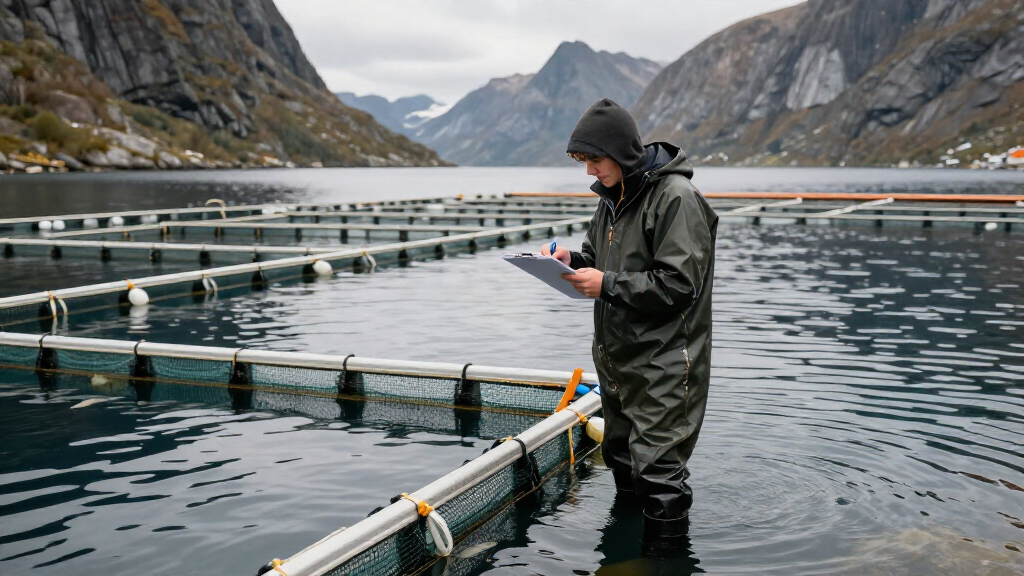
Norway has become the world’s leading producer and exporter of farmed salmon, a status achieved through decades of industry expansion. However, this growth is now raising significant environmental and health concerns, prompting government and industry officials to consider stricter regulations and sustainable practices.
Norway’s salmon industry has experienced rapid growth over the past two decades, making it the dominant player in global seafood markets. According to the Norwegian Seafood Council, exports reached a record $11 billion in 2023, with China, the EU, and the US as major markets. This expansion has been driven by technological advances, favorable regulations, and high consumer demand for salmon.
However, environmental issues have emerged as a major concern. Experts warn of the risks of disease outbreaks, parasite infestations like sea lice, and the environmental footprint of large-scale aquaculture. The Norwegian government has reported increased instances of sea lice infestations affecting wild salmon populations, which conservationists say threaten biodiversity.
Health concerns are also rising, with some scientists raising alarms about the use of antibiotics and chemicals in salmon farming. While Norway maintains strict food safety standards, critics argue that the industry’s growth has outpaced its ability to manage these risks effectively. The Norwegian Food Safety Authority has recently issued warnings about potential contaminants in farmed salmon, though no widespread health crises have been confirmed.
Environmental and Economic Impacts of Norway’s Salmon Boom
The rise of Norway as a global salmon powerhouse has brought economic benefits, including job creation and increased exports. However, it also poses serious environmental challenges, such as damage to wild salmon populations, pollution, and disease spread. These issues threaten the industry’s sustainability and could impact Norway’s reputation as a responsible seafood producer.
Additionally, consumer awareness about sustainable food sources is growing, which could influence demand and trade policies. The industry’s ability to adapt to environmental and health concerns will be crucial for maintaining its market position.
As an affiliate, we earn on qualifying purchases.
Growth of Norway’s Salmon Industry and Rising Concerns
Norway’s salmon industry began expanding rapidly in the early 2000s, aided by government subsidies, technological innovations, and a global increase in seafood consumption. By 2020, Norway had overtaken Chile as the world’s largest salmon producer. This growth was driven by a combination of favorable regulations, investment in aquaculture infrastructure, and high demand in international markets.
Despite economic gains, environmental groups and scientists have raised alarms about the sustainability of intensive fish farming. Reports of disease outbreaks, parasite infestations, and pollution have increased in recent years, prompting calls for tighter regulation. The Norwegian government has responded with measures aimed at reducing environmental impacts, but critics argue these are insufficient.
“We recognize the challenges and are committed to making our industry more sustainable while maintaining our global competitiveness.”
— Norwegian Fisheries Minister Ingrid Skjoldvær
sustainable salmon storage containers
As an affiliate, we earn on qualifying purchases.
As an affiliate, we earn on qualifying purchases.
Unclear Long-term Sustainability and Industry Regulation
It remains uncertain whether Norway’s current regulatory measures will be sufficient to mitigate environmental and health risks in the long term. Experts warn that without significant reforms, the industry could face more severe ecological damage and market restrictions. The full impact of recent disease outbreaks and environmental degradation is still being assessed, and government policies are evolving.
As an affiliate, we earn on qualifying purchases.
Future Regulatory Reforms and Industry Adaptation Efforts
Norwegian authorities are expected to introduce stricter regulations on fish farming practices, including limits on lice levels and chemical use. Industry stakeholders are also investing in new technologies aimed at reducing environmental impacts. Monitoring and enforcement will be key to ensuring sustainability, with upcoming reports and audits likely to shape future policies.
International trade negotiations and consumer preferences may also influence industry direction, potentially leading to more sustainable certification standards and export restrictions.
As an affiliate, we earn on qualifying purchases.
Key Questions
What environmental issues are linked to Norway’s salmon industry?
Key issues include disease outbreaks, sea lice infestations affecting wild salmon, pollution from farm waste, and habitat disruption caused by aquaculture infrastructure.
Are Norwegian farmed salmon safe to eat?
Regulatory agencies like the Norwegian Food Safety Authority maintain strict safety standards. While some concerns about chemical use exist, no widespread health crises have been reported.
What regulations are in place to control environmental impacts?
Norway has implemented measures such as lice thresholds, chemical restrictions, and environmental monitoring, but critics argue these are not enough to prevent ecological damage.
How might this development affect global seafood markets?
Environmental and health concerns could lead to stricter import standards, affecting Norway’s export markets and prompting shifts toward more sustainable practices worldwide.
What is being done to ensure the industry’s sustainability?
Norwegian authorities and industry groups are investing in new technologies, stricter regulations, and sustainability certifications to address ongoing challenges.
Source: hn
Fall Picks
fall essentials
As an affiliate, we earn on qualifying purchases.