🔍 Read the full analysis: Pappardelle Al Cinghiale: Wild Boar Ragù, The Tuscan Autumn Standard on Mad Tasting

Get kitchen staples and gadgets delivered free with Prime
- Fast, free delivery on millions of items
- Prime Video, Amazon Music and more included
- Member-only deals all year
TL;DR
Pappardelle al cinghiale pairs broad pasta with a slow-braised wild boar ragù associated with Tuscany. The dish has no single fixed recipe: cooks vary the wine, tomato and herbs, and marinating is optional. For home cooks, the source guidance emphasizes inspected meat, gentle cooking until tender and safe handling of raw meat and leftovers.
A Mad Tasting guide to pappardelle al cinghiale describes the Tuscan dish as broad pasta ribbons served with slow-braised wild boar ragù, while stressing that recipes vary and marinating is not required. The practical guidance focuses on choosing meat from an inspected supplier, cooking it gently until tender and handling it safely—details that matter for anyone preparing a dish made with a strongly flavored, often lean cut.
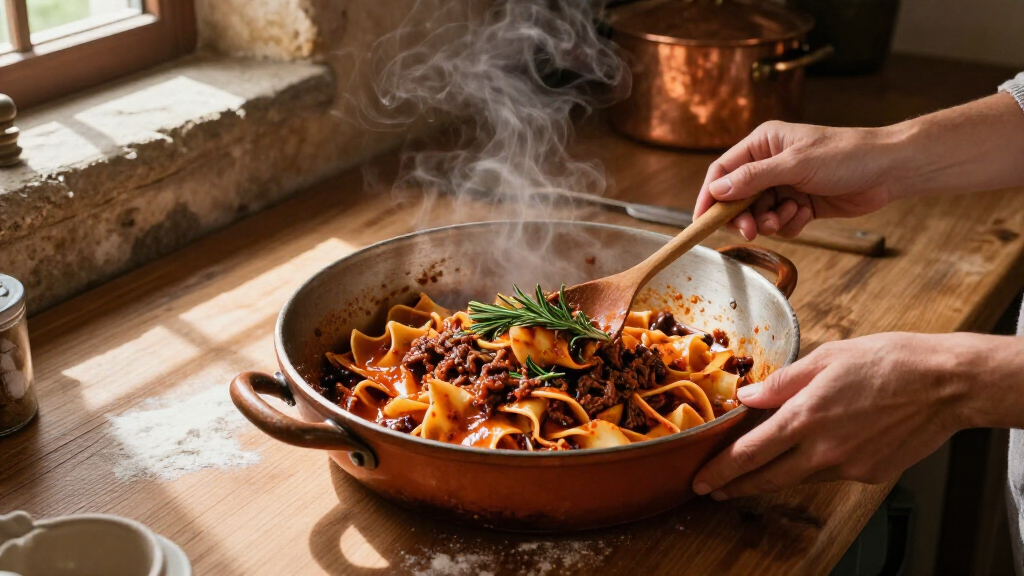
The dish combines pappardelle, a wide ribbon pasta, with ragù made from cinghiale, or wild boar. According to the guide, the pasta’s width helps it hold a thick sauce and pieces of meat. Wild boar is generally leaner and more strongly flavored than domestic pork, making a slow braise a better fit than quick cooking. The finished flavor can vary with the animal, meat handling and the cook’s ingredients.
There is no single recipe described as mandatory. Some preparations use red wine and herbs; others include tomato, stock or both. The guide says a wine marinade with aromatic vegetables is common in some traditional approaches but optional. It can contribute fragrance, but it does not deeply tenderize the meat or compensate for poor handling. Cooks can add aromatics directly to the braise instead.
For the braise, the guide recommends browning meat in batches, then softening onion, carrot and celery in the same pot. Wine can loosen the browned residue before the meat is returned with herbs and tomato, stock or both. Keep the pot at a gentle simmer and judge doneness by tenderness rather than a fixed clock: cut size, preparation and heat all affect cooking time. The source does not provide a temperature target or a tested recipe with exact quantities.
A Tuscan autumn standard · Field guide
Pappardelle al Cinghiale: Wild Boar Ragù
Broad pasta ribbons meet a slow-braised ragù in a dish closely associated with Tuscany. The recipe has room to vary; patient cooking and careful handling are the constants.
01 / The pairing
Why the pasta and ragù work
Pappardelle’s broad shape holds thick sauce and pieces of meat together, while a long, gentle braise suits wild boar’s often lean, firm texture.
Pappardelle
Wide pasta that carries a generous coating of ragù in each bite.
Cinghiale
Wild boar, generally leaner and more strongly flavored than domestic pork.
Time at a simmer
Gentle heat helps firm braising cuts soften and lets their flavor mingle with the sauce.
02 / A flexible sauce
There is no single mandatory formula
The balance depends on the cook. A restaurant’s menu name alone will not tell you whether its ragù is wine-led, tomato-forward or herb-heavy.
Wine & herbs
Red wine and aromatic herbs can give the sauce darker, fragrant notes.
Tomato in the mix
Some versions use tomato, sometimes alongside stock, for a rounder sauce.
Marinate—or skip it
A wine and aromatic vegetable marinade can add fragrance. It is optional and does not replace good handling or a slow braise.
03 / The braise
A practical cooking sequence
The source offers method guidance, not tested quantities, a fixed cooking duration or a safe temperature target. For a complete recipe, follow a tested source and local food-safety directions.
Brown in batches
Give the meat room to brown; avoid crowding the pot.
Soften the base
Cook onion, carrot and celery in the same pot.
Build the braise
Loosen browned residue with wine. Return meat with herbs and tomato, stock or both.
Simmer until tender
Keep the pot at a gentle simmer and check the meat, not just the clock.
04 / Safe handling
Care starts before the pot
Choose inspected meat and keep raw meat, its juices and any marinade safely chilled and separate from ready-to-eat foods.
Source & separate
Buy from a reputable, inspected supplier. Refrigerate raw meat and marinade; prevent raw juices from contacting food that will not be cooked.
Keep it cold
Marinate covered in the refrigerator. Discard used marinade or bring it to a full boil before using it in a sauce.
Chill leftovers
Refrigerate leftovers promptly in a covered container and reheat thoroughly before serving.
Check provenance
Wild-boar availability and rules vary by location and season. Ask a butcher or restaurant about the cut, handling and source.
- Choose meat suited to a long braise.
- Keep raw meat and marinade refrigerated.
- Cook gently until the meat is tender.
- Follow food-safety guidance for your jurisdiction.
05 / Trace the dish
From inspected source to supper
A few dependable choices carry across the many versions of this Tuscan dish.
06 / Quick answers
What to know at a glance
What is pappardelle al cinghiale?
Broad ribbon pasta served with ragù made from wild boar, or cinghiale. The dish is associated with Tuscany.
Does the ragù have to include tomato?
No. Recipes vary: some use tomato, while others lean more on wine and herbs; stock may also be included.
Is marinating necessary?
No. It can add fragrance, but does not replace slow braising or correct poor meat handling.
How do I know when the meat is ready?
Cook at a gentle simmer until tender enough to pull apart or chop. Timing varies by cut and heat.
How should wild boar be handled?
Use an inspected supplier, keep it refrigerated and separate from ready-to-eat foods. Chill marinade with the meat; discard it or boil it fully before using in sauce.
What does the source leave open?
Exact quantities, cooking time, temperature target and the provenance of any particular restaurant’s meat. Check locally and use a tested recipe.
Slow Cooking Shapes the Ragù
The method matters because wild boar can be lean and firm. A rapid, high-heat approach may leave a braising cut tough, while a patient simmer gives it time to soften and allows its flavor to mingle with the sauce. The guide’s advice to cook until tender, rather than relying on a stated duration alone, gives home cooks a practical check when cuts and pot conditions differ.
The pairing also helps explain the dish’s lasting appeal: wide pasta carries a substantial sauce, keeping meat and ragù together in each bite. Its association with Tuscany and colder-weather menus makes it familiar to travelers and restaurant diners, but the guide cautions that the name alone does not reveal whether a version is tomato-forward, wine-led or herb-heavy.
Food handling is part of the guidance, not an optional extra. Wild boar should come from a reputable, inspected supplier; raw meat and its juices should be kept apart from foods that will not be cooked. If meat is marinated, it belongs covered in the refrigerator. The used marinade should be discarded or brought to a full boil before it is used in a sauce.
As an affiliate, we earn on qualifying purchases.
A Tuscan Dish With Variations
The source presents pappardelle al cinghiale as closely associated with Tuscany, where wild boar appears in countryside cooking and colder-season menus. It calls the dish an autumn standard, while noting that its warming flavors and slow cooking also suit other cold months. It does not identify a particular town, restaurant, date or new culinary trend; the development is a practical guide to a regional dish rather than a report of a specific event.
Variations in wine, tomato and herbs shape the ragù’s character. A cook or restaurant may favor a brighter, rounder sauce or one with darker, more aromatic notes. The guide recommends asking how a restaurant prepares its sauce and, if relevant, where its boar comes from. It says availability and rules vary by location and season, and that a menu description alone does not establish the meat’s provenance.
As an affiliate, we earn on qualifying purchases.
Sourcing and Cooking Details Vary
The guide does not supply a single standardized recipe, exact ingredient quantities, a fixed cooking time or a specific safe cooking temperature. Its advice is to braise until tender, but readers seeking a complete recipe should consult a tested source and follow food-safety directions appropriate to their jurisdiction. The source also does not state the origin of any particular restaurant’s wild boar.
Wild-boar sourcing and rules differ by place and season. The guide offers no current figures on availability, hunting regulations or regional supply, and it does not establish that every restaurant dish labeled cinghiale comes from a particular source. Those details remain dependent on supplier and location and should be checked locally.
Italian wild boar ragù ingredients
As an affiliate, we earn on qualifying purchases.
As an affiliate, we earn on qualifying purchases.
Check the Meat Before Cooking
For a home preparation, the next step is to ask a butcher or supplier about the cut, its handling and whether it is suitable for a long braise. Choose an inspected source, refrigerate raw meat and any marinade, and keep raw juices away from ready-to-eat foods. Brown the meat in batches, maintain a gentle simmer and continue cooking until it is tender; the source does not set a universal time.
At a restaurant, diners can ask whether the ragù is based more on wine and herbs or on tomato, and ask about meat sourcing if provenance matters to them. Refrigerate leftovers promptly in a covered container and reheat them thoroughly before serving. The guide’s central point is straightforward: the dish allows variation, but safe handling and patient cooking remain useful across versions.
As an affiliate, we earn on qualifying purchases.
Key Questions
What is pappardelle al cinghiale?
It is broad ribbon pasta served with ragù made from wild boar, known in Italian as cinghiale. The dish is associated with Tuscany.
Does wild boar ragù have to include tomato?
No single formula is given. Recipes vary: some use tomato, while others lean more on wine and herbs; some include stock as well.
Is marinating wild boar necessary?
No. The guide describes marinating as optional. A wine-and-aromatics marinade can add fragrance, but it does not replace slow braising or correct poor meat handling.
How can I tell when the boar is done?
Cook it at a gentle simmer until the meat is tender enough to pull apart or chop. The source says cooking time varies by cut size and heat, and does not provide a specific temperature target.
How should wild boar be handled before cooking?
Buy it from a reputable, inspected supplier, keep it refrigerated, and prevent its raw juices from contacting ready-to-eat foods. Refrigerate any marinade with the meat and discard it or bring it to a full boil before using it in a sauce.
Source: Mad Tasting
NFL season / tailgating Picks
team gear
As an affiliate, we earn on qualifying purchases.