
🔍 Read the full analysis: Chianti Classico Vs Chianti: The Black Rooster Difference on Mad Tasting

Get kitchen staples and gadgets delivered free with Prime
- Fast, free delivery on millions of items
- Prime Video, Amazon Music and more included
- Member-only deals all year
TL;DR
Chianti Classico is a distinct appellation from Chianti, marked by the black rooster seal, which certifies origin but not quality. Both use Sangiovese, but differ in rules and history. The black rooster signifies the historic heart of Tuscany, not a quality ranking.
In 2024, the black rooster, or Gallo Nero, continues to serve as the official emblem of Chianti Classico, certifying that bottles bearing it originate from the historic Chianti region between Florence and Siena. This seal, established by the Chianti Classico consortium in 1924, does not indicate quality or aging potential but confirms geographic origin, making it a key marker for consumers seeking authentic Tuscan wine.
Both Chianti and Chianti Classico come from Tuscany and use Sangiovese as their primary grape, but they differ significantly in boundaries, regulations, and identity. Chianti Classico, designated as a separate DOCG in 1996, covers the historic zone between Florence and Siena, with stricter rules: a minimum of 80% Sangiovese (rising to 90% for Gran Selezione since 2023), prohibition of white grapes since 2006, and the use of the black rooster seal on every bottle. In contrast, Chianti DOCG encompasses a broader region across Tuscany, with a lower minimum Sangiovese percentage (generally 70%) and permitted white grapes.
The black rooster, or Gallo Nero, is a trademarked emblem representing the consortium’s shared rules and the historic boundary. It originated from a legend involving a race between Florence and Siena, symbolizing regional identity rather than quality assurance. The seal appears only on bottles from Chianti Classico, serving as a geographic marker, not a guarantee of superior quality or aging potential. The words ‘Riserva’ and ‘Gran Selezione’ on labels denote aging and selection levels but are independent of the rooster seal.
Chianti Classico vs Chianti: The Black Rooster Difference
Both wines hail from Tuscany and share Sangiovese as their soul — but they are legally distinct appellations with different boundaries, rules, and identities. The Black Rooster (Gallo Nero) certifies where a wine comes from, not how good it is.
The Rules That Separate Them
| Criterion | Chianti Classico DOCG | Chianti DOCG |
|---|---|---|
| Zone | Historic heartland between Florence & Siena | Broader territory across Tuscany |
| Sangiovese minimum | 80% (90% for Gran Selezione since 2023) | Generally 70% |
| White grapes | ✗ Prohibited since 2006 | ✓ Permitted |
| Black rooster seal | ✓ On every bottle | ✗ Never used |
| Separate DOCG status | ✓ Since 1996 | ✓ Regional DOCG since 1984 |
| Guarantees quality? | ~ Origin only — not quality or aging | ~ Same caveat applies |
Historical Roots & Regulatory Evolution
Medici duke legally defines the original Chianti zone — today’s Classico.
Italian government expands the zone outward; the original boundary endures as a symbol of authenticity.
Consortium adopts the Gallo Nero as its official trademark and seal.
Formal split: Chianti Classico becomes a distinct DOCG appellation.
Origin, Not Excellence
Geographic Origin
Every bottle bearing the rooster comes from the historic Chianti zone between Florence and Siena — the medieval heart of Tuscany.
No Quality Guarantee
The seal implies nothing about aging potential, production standards, or excellence beyond geographic origin.
A Race of Roosters
Born from a legend of a boundary-setting race between Florence and Siena, the rooster symbolizes regional identity and shared consortium rules.
“The Gallo Nero is a mark of origin, a symbol of our region’s heritage, and a commitment to traditional practices, but it does not imply a wine’s age or excellence.”
— Chianti Classico Consortium SpokespersonMinimum Sangiovese Requirements
How to Read a Chianti Label
“Riserva” and “Gran Selezione” denote aging and selection levels, but they are independent of the rooster seal. Producer reputation, vintage, and vineyard remain the most reliable quality indicators.
Frequently Asked
Does the black rooster guarantee a higher quality wine?
No. The Gallo Nero certifies that the wine comes from the historic Chianti Classico region — it guarantees nothing about quality, aging potential, or production standards beyond origin.
Can I trust the label alone to find the best bottle?
No. Producer reputation, vintage, vineyard, and terms like “Riserva” or “Gran Selezione” are more reliable indicators of quality and style.
Why did Chianti split into two appellations?
The 1996 split protected the historic Classico zone and established clear geographic and regulatory distinctions from the broader region, which had expanded greatly since the 1930s.
Is Chianti Classico always more expensive?
Not necessarily. Classico often carries a premium, but a well-made Chianti from the broader region can outperform a basic Classico in quality and value.
Why the Black Rooster Seal Matters for Consumers
The black rooster seal is a key indicator of origin, helping consumers identify authentic Chianti Classico wines from the historic heartland of Tuscany. However, it does not guarantee quality or aging potential, which depend more on the producer, vintage, and vineyard. For buyers, understanding this distinction prevents misinterpretation of the seal as a quality mark and encourages more informed choices based on label details beyond the emblem.
As an affiliate, we earn on qualifying purchases.
Historical Roots and Regulatory Evolution of Chianti
The Chianti region’s boundaries were first legally defined in 1716 by the Medici duke, establishing the historic zone now known as Chianti Classico. In 1932, the Italian government expanded the zone, but the original boundary remained a symbol of authenticity for producers and consumers. The formal separation into distinct DOCG appellations occurred in 1996, reflecting evolving regulations and regional identity. Today, the region’s landscape—marked by olive terraces, stone hilltops, and Sangiovese vineyards—remains a testament to this history, with the black rooster emblem serving as a visual reminder of the region’s medieval origins.
“The Gallo Nero is a mark of origin, a symbol of our region’s heritage, and a commitment to traditional practices, but it does not imply a wine’s age or excellence.”
— Chianti Classico consortium spokesperson
As an affiliate, we earn on qualifying purchases.
Remaining Questions About Labeling and Quality Indicators
It is not yet clear how consumers can reliably distinguish higher-quality Chianti Classico wines from basic bottles solely based on the seal, given that the emblem indicates origin, not quality. While labels often include terms like ‘Riserva’ or ‘Gran Selezione’ to denote aging and selection, their correlation with wine quality varies by producer. The impact of recent regulation changes, such as the increased Sangiovese percentage for Gran Selezione, on wine profiles is still being assessed, and consumer perceptions remain inconsistent.
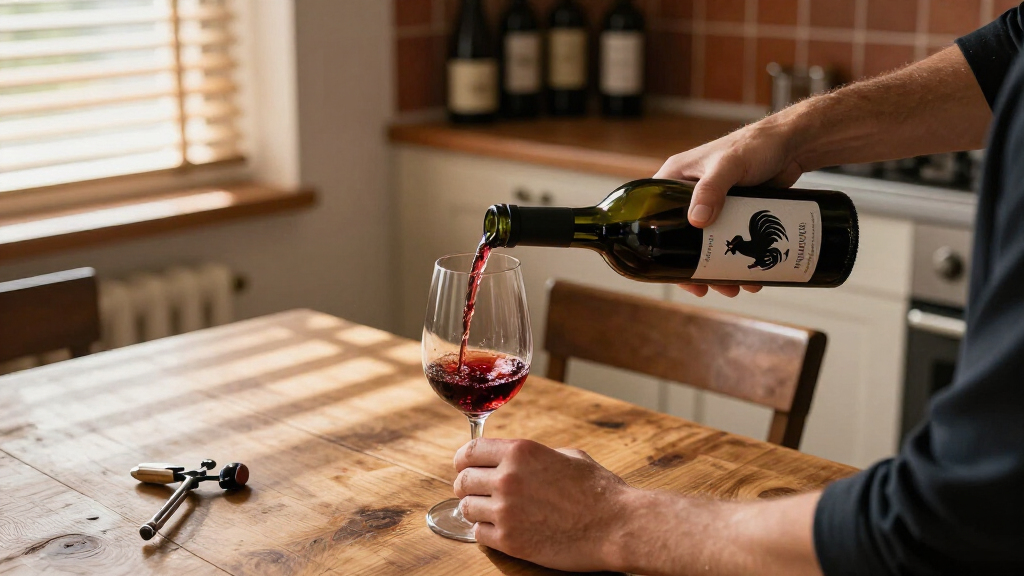
Tuscan red wine with black rooster seal
As an affiliate, we earn on qualifying purchases.
As an affiliate, we earn on qualifying purchases.
Future Developments in Chianti Labeling and Standards
In 2024, regulatory bodies and producer associations are expected to refine labeling standards further, possibly clarifying how quality tiers are communicated. Additionally, consumer education campaigns are likely to emphasize understanding the significance of the black rooster versus other label terms. Market trends toward transparency and terroir-driven wines may influence how producers present their offerings, with more emphasis on vineyard-specific information and aging details to aid consumers in making informed choices.
As an affiliate, we earn on qualifying purchases.
Key Questions
Does the black rooster guarantee a higher quality wine?
No, the black rooster, or Gallo Nero, certifies that the wine comes from the historic Chianti Classico region. It does not guarantee quality, aging potential, or production standards beyond geographic origin.
Can I trust the label alone to determine the best Chianti?
No, other factors such as producer reputation, vintage, vineyard, and specific label terms like ‘Riserva’ or ‘Gran Selezione’ are more reliable indicators of quality and style.
Why did Chianti split into two appellations?
The split in 1996 reflected a desire to protect the historic Chianti Classico zone and establish clear geographic and regulatory distinctions from the broader Chianti region, which had expanded significantly since the 1930s.
Is Chianti Classico always more expensive than Chianti?
Not necessarily. While Chianti Classico bottles often carry a premium due to their historic and geographic significance, a well-made Chianti from the broader region can sometimes outperform a basic Classico in quality and value.
Source: Mad Tasting
Halloween Picks
halloween
As an affiliate, we earn on qualifying purchases.