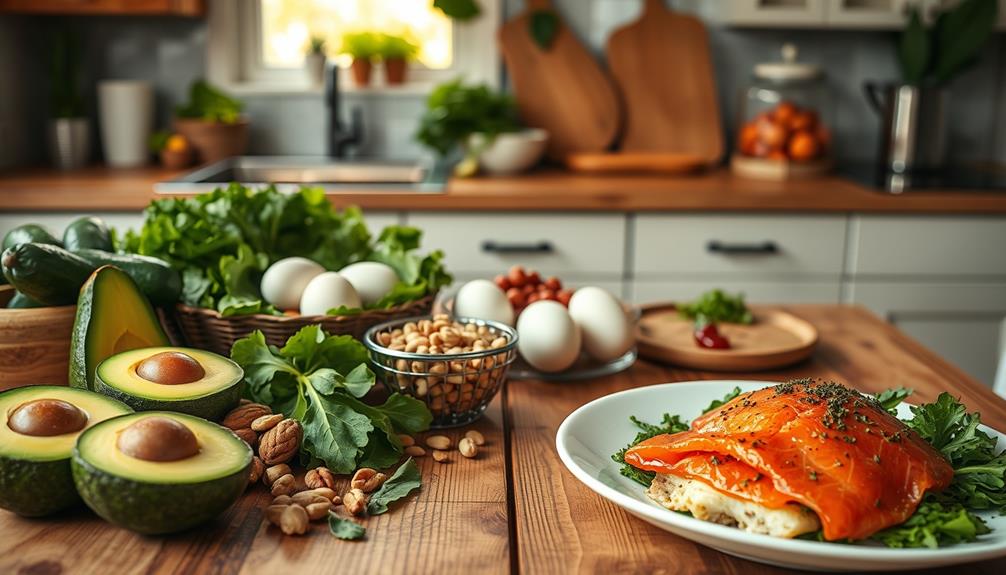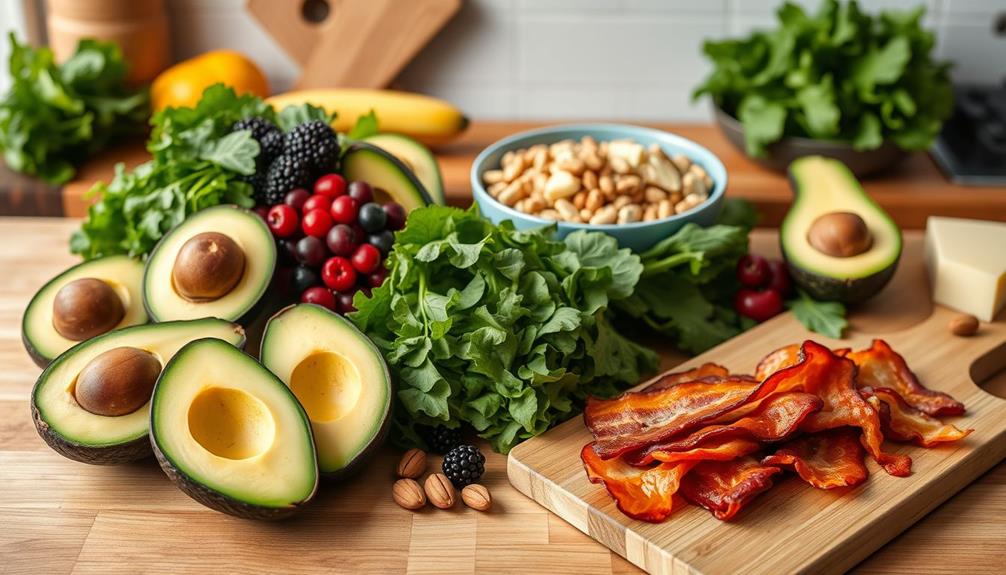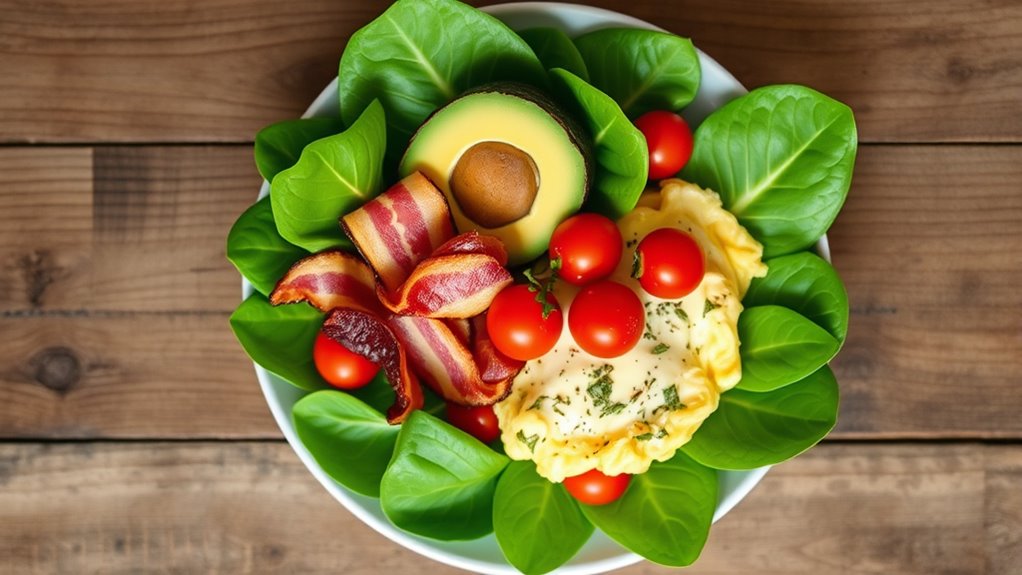

How often you should eat on keto depends on your goals, lifestyle, and how your body reacts. Some prefer smaller, more frequent meals to maintain steady energy and curb cravings, while others find fewer, larger meals help sustain ketosis. Snacking can be minimal and intentional, with about two nutrient-dense snacks per day. Flexibility and listening to your hunger cues are key—continuing to explore different patterns can help you find what works best for you.
Key Takeaways
- Meal frequency on keto varies based on individual goals, with some preferring multiple small meals and others fewer larger ones.
- Incorporate 1-2 healthy snacks daily to maintain energy and prevent overeating, if desired.
- Flexibility in meal timing allows you to adapt to hunger cues and lifestyle preferences while staying in ketosis.
- Intermittent fasting or longer fasting periods can be beneficial but should be personalized and monitored.
- Consistently meeting your daily macronutrient targets is more important than rigid meal timing or frequency.

If you’re following a keto diet, understanding how often to eat can help optimize your results and maintain energy levels. Meal timing plays a vital role in this, as it influences how your body burns fat, manages hunger, and keeps your blood sugar stable. Unlike traditional diets that often emphasize three fixed meals daily, keto may require more flexible or strategic eating patterns depending on your goals and lifestyle. Some people find that eating smaller, more frequent meals helps sustain energy and curb cravings, while others prefer fewer, larger meals to stay in ketosis effectively.
Snack frequency is another important aspect to consider. On keto, you don’t necessarily need to snack constantly, but having a plan for when and what to eat can prevent overeating at main meals and avoid dips in energy. Typically, snacking should be minimal—focused on nutrient-dense, high-fat, moderate-protein options like nuts, cheese, or avocado. You might find that snacking a couple of times a day keeps your hunger at bay without knocking you out of ketosis. However, some keto followers prefer to stick with three meals a day, especially if they find that they naturally don’t get hungry between meals. It’s all about listening to your body’s signals rather than adhering to rigid rules.
The best approach to meal timing on keto is personalized. If you notice that eating more frequently helps control hunger and maintains mental clarity, then spreading out your meals and snacks may be the way to go. Conversely, if you feel energized after longer fasting periods, you might experiment with intermittent fasting protocols, such as skipping breakfast or having shorter eating windows. This flexibility can be beneficial, but it’s important to guarantee that your overall daily intake remains aligned with your macronutrient goals. Additionally, understanding meal frequency and how it impacts your metabolism can help you tailor your eating habits for optimal keto results.
Top picks for "often should keto"
Open Amazon search results for this keyword.
As an affiliate, we earn on qualifying purchases.
Frequently Asked Questions
Can I Snack Between Meals on a Keto Diet?
Yes, you can snack between meals on a keto diet, but it’s important to think about snack timing and meal spacing. Keep snacks low-carb and high-fat to stay in ketosis. Aim for small, satisfying snacks to avoid disrupting your fasting window or meal plan. Listen to your body’s hunger cues, and don’t snack excessively—this helps maintain consistent meal spacing and supports your keto goals effectively.
Should I Eat More or Fewer Meals When Starting Keto?
You should start with fewer meals to support better hunger management and ease your progression into ketosis. Many find that eating two to three times a day helps stabilize blood sugar levels and minimizes cravings. As your body adapts, you can gradually adjust meal timing and frequency. Listen to your hunger cues, and remember, the key is consistency, not strict meal counts—find what works best for your energy and progress.
How Does Meal Frequency Affect Ketosis?
Meal frequency influences ketosis by affecting your meal timing and fasting protocols. Eating fewer meals or practicing intermittent fasting can help you enter and maintain ketosis more effectively, as it promotes glycogen depletion and boosts fat burning. Regularly spacing out meals allows your body to stay in a fat-burning state longer, while more frequent eating may slow down ketosis. Find a pattern that suits your lifestyle and supports your keto goals.
Is Intermittent Fasting Recommended on Keto?
Yes, intermittent fasting is recommended on keto. It helps optimize your meal timing and fasting windows, making it easier to stay in ketosis. By limiting your eating periods, you can boost fat burning, improve mental clarity, and enhance weight loss. Start with a 16/8 fasting window, where you fast for 16 hours and eat within an 8-hour window, then adjust based on how your body responds.
How Do Activity Levels Influence My Eating Schedule?
Your activity levels greatly influence your eating schedule on keto. If you do intense exercise, you might want to time your meals around your exercise sessions, like having a protein-rich meal afterward to support recovery. For lighter activity or rest days, spreading out meals evenly helps maintain ketosis. Adjust your exercise timing and meal timing to match your energy needs, ensuring you stay fueled and in fat-burning mode.
Conclusion
So, next time someone asks how often you should eat on keto, tell them you’re basically a nocturnal wolf—prowling at random, fueled by fat, and rarely sticking to a schedule. Forget meal times; just listen to your body’s primal hunger calls. After all, who needs a clock when you have ketones? Embrace the chaos, and remember: on keto, your stomach’s the boss, and it prefers snack attacks over structured meals.