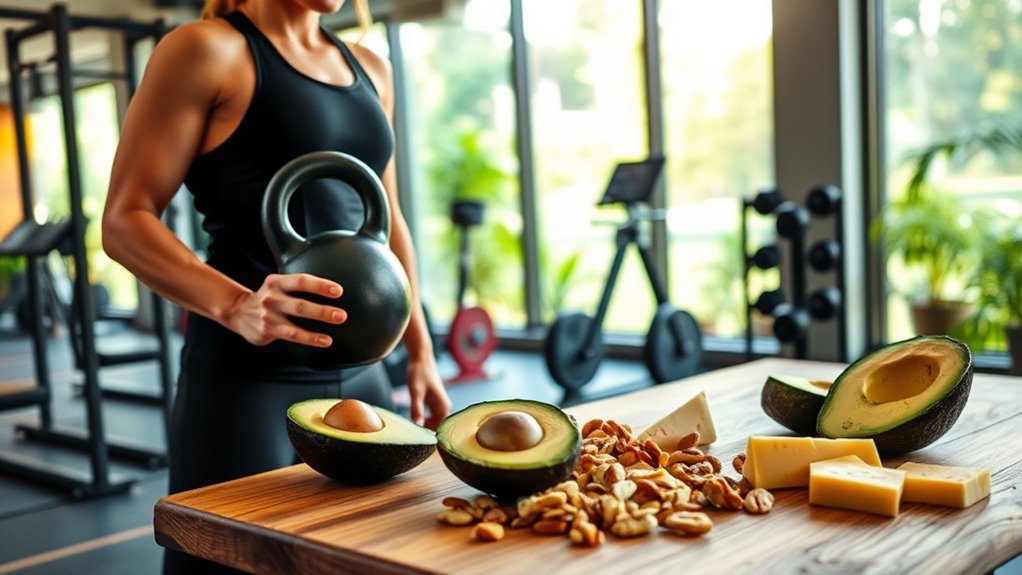

To fuel workouts on a keto diet, time your meals strategically—eat a moderate-fat, low-carb snack 1-2 hours before exercising to boost energy without feeling sluggish. Stay well-hydrated and replenish electrolytes to prevent cramps and fatigue. For post-workout recovery, focus on nutrient-dense fats and moderate protein foods to support muscle repair and glycogen replenishment. Adjust your fueling based on how your body responds, and keep optimizing your routine for better results. Keep exploring to learn more tips tailored for your fitness journey.
Key Takeaways
- Consume a moderate-fat, low-carb meal 1-2 hours before exercise for sustained energy.
- Hydrate well and include electrolytes to prevent dehydration and cramps during workouts.
- Experiment with small pre-workout snacks or fasted training to find what boosts your performance best.
- Prioritize post-exercise meals rich in healthy fats and moderate protein to support recovery without disrupting ketosis.
- Adjust meal timing and hydration based on your body’s response to optimize workout energy and recovery.
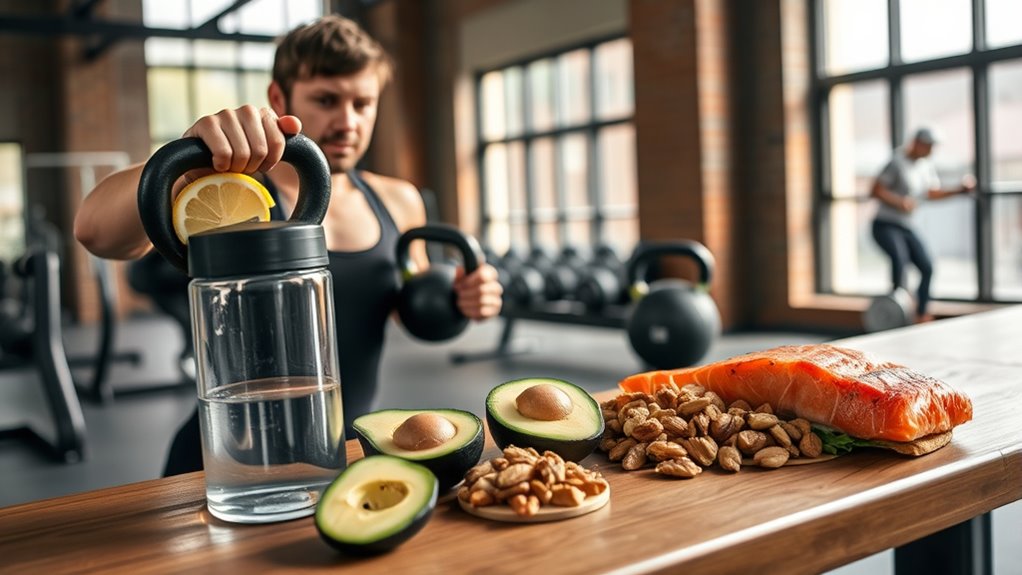
Combining a ketogenic diet with regular exercise can boost your energy levels and help you reach your fitness goals more effectively. When you’re on a low-carb, high-fat plan, optimizing your meal timing is essential to maintain energy and performance during workouts. You want to time your meals so that you’re fueled without feeling sluggish or overly full. Typically, having a moderate-fat, low-carb meal about 1-2 hours before exercise gives you enough energy without discomfort. Some people find that a small snack, like a handful of nuts or a boiled egg, works better if they train early in the morning or on an empty stomach. After your workout, prioritize a meal rich in healthy fats and moderate protein to support recovery and replenish glycogen stores, even if they’re lower on a ketogenic diet.
Optimize your workout fuel with a low-carb, high-fat meal 1-2 hours beforehand for sustained energy.
Hydration strategies take on added importance when exercising on keto. Since your body tends to excrete more water and electrolytes, staying well-hydrated can prevent fatigue and muscle cramps. Make it a habit to sip water consistently throughout the day, especially before, during, and after workouts. Incorporate electrolyte-rich beverages or add a pinch of salt to your water if you notice signs of dehydration or cramping. Proper hydration not only supports performance but also helps your body adapt to the metabolic shift from carbs to fats for fuel, which is a core aspect of the ketogenic lifestyle.
When it comes to fueling your workouts, listen to your body’s signals. Some keto practitioners find that endurance activities like running and cycling benefit from strategic fasting or timed meals, while others perform better with a small snack beforehand. Experiment with different meal timing approaches to identify what maximizes your energy without knocking you out of ketosis. Remember, staying hydrated is just as critical — dehydration can impair your performance and recovery, so prioritize water intake and electrolyte balance to keep your body functioning at its best. Engaging in yoga practices can also support your recovery, flexibility, and mental focus, enhancing overall workout effectiveness.
Finally, consistency is key. Whether you’re training for strength, endurance, or general fitness, aligning your meal timing and hydration strategies with your workout schedule will help you sustain energy levels and recover faster. As you adapt to the ketogenic lifestyle, pay close attention to how your body responds, and adjust your meal timing and hydration accordingly. This way, you’ll maximize your workout results while staying in ketosis and feeling your best.
Frequently Asked Questions
Can I Do High-Intensity Workouts on Keto?
Yes, you can do high-intensity workouts on keto by using carbohydrate cycling and strategic workout timing. To maximize energy, schedule your most demanding sessions when your carbohydrate intake is higher, like on refeed days. This helps maintain performance and recovery. Listening to your body is key, and adjusting your diet around your workout schedule guarantees you stay energized and effective during high-intensity training while staying in ketosis.
How Quickly Will My Performance Improve on Keto?
You’ll notice performance improvements within 2 to 4 weeks during keto adaptation, as your body shifts to burn fat efficiently. Research shows that after this period, many experience increased energy and endurance. To optimize progress, focus on carbohydrate timing—consume carbs around workouts to boost performance without disrupting ketosis. Stay consistent, and you’ll likely see your strength and stamina improve faster than you expect.
Should I Supplement With Electrolytes During Keto Exercise?
Yes, you should supplement with electrolytes during keto exercise to maintain electrolyte balance and support hydration strategies. Low-carb diets can lead to a loss of sodium, potassium, and magnesium, which are essential for muscle function and preventing cramping. Incorporate electrolyte drinks or supplements, especially during intense workouts, to stay hydrated and optimize your performance. Monitoring your electrolyte levels helps guarantee your body functions smoothly on a ketogenic diet.
Can Keto Cause Muscle Loss During Workouts?
Ever wonder if keto might lead to muscle loss? It’s possible if you don’t focus on muscle preservation and strength maintenance. When you’re on a low-carb diet, your body can break down muscle for energy, but you can prevent this by eating enough protein and doing resistance training. Staying mindful of your nutrient intake helps you maintain muscle, so you can stay strong and fit even on keto.
How Do I Prevent Keto Flu While Exercising?
To prevent keto flu while exercising, focus on proper keto meal timing and stay well-hydrated. Eat small, frequent meals rich in electrolytes to replenish lost minerals, and incorporate salt into your diet. Drink plenty of water and consider adding electrolyte supplements if needed. This helps maintain your energy levels and balances your electrolytes, reducing flu symptoms and keeping you energized during workouts.
Conclusion
So, are you ready to embrace keto and crush your workouts? With the right fueling strategies and patience, you’ll find your body adapts and performs just as well—if not better—on low carbs. Remember, it’s about listening to your body and adjusting as needed. Don’t let doubts hold you back; instead, trust the process and discover how powerful you can be on a keto journey. Are you prepared to open your full potential?