Most beans and legumes are off-limits on keto because they contain high amounts of carbs that can quickly surpass your daily limit, which usually ranges from 20 to 50 grams. Even small portions add up fast, making it tough to stay in ketosis. While they do offer some protein and fiber, their carb content generally outweighs these benefits. To find out which options might still work in moderation, keep exploring the details below.
Key Takeaways
- Most beans and legumes are high in carbs, often exceeding keto daily limits even in small portions.
- Their carbohydrate content can quickly consume the daily keto allowance of 20-50 grams.
- The high carb load outweighs their nutritional benefits, making them unsuitable for strict keto diets.
- Legumes contain antinutrients and carbohydrates that interfere with maintaining ketosis.
- Low-carb alternatives like meat, eggs, and cheese are preferred over legumes for keto compliance.
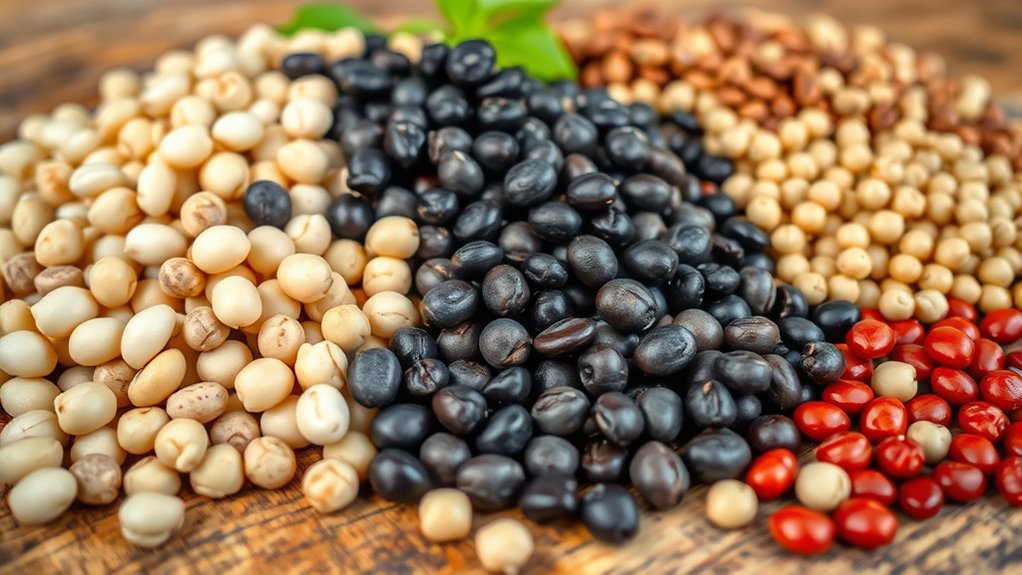
While beans and legumes are often considered healthy sources of fiber and protein, they can pose challenges on a keto diet due to their relatively high carbohydrate content. If you’re trying to stay in ketosis, understanding the legume carbohydrate content is essential. Most beans and legumes are naturally rich in carbs, making it difficult to include them without exceeding your daily limit. For example, a half-cup of cooked chickpeas contains about 20 grams of carbs, which can quickly eat into your daily carb allowance if you’re aiming for 20 to 50 grams. This means that, despite their nutritional benefits, beans often aren’t compatible with strict keto guidelines unless you consume them very sparingly.
When you’re searching for keto friendly protein sources, it’s tempting to turn to legumes since they do offer a decent amount of plant-based protein. However, their carbohydrate content usually outweighs their benefits on a keto diet. Additionally, some legumes contain antinutrients that can interfere with nutrient absorption and digestion, further complicating their inclusion in a keto meal plan. Their carbohydrate content typically outweighs their benefits on a keto diet. Instead, you might consider other protein options like eggs, cheese, or meats that contain little to no carbs. While some legumes like green beans and black soybeans have lower carbohydrate counts, they still need to be eaten in moderation and carefully tracked to ensure they fit within your daily carb goals. The key is to prioritize protein sources that won’t kick you out of ketosis, which means focusing on foods with minimal legume carbohydrate content.
For many keto followers, the challenge isn’t just the carbs but also how legumes impact overall macros. Consuming even small portions of beans can add up quickly, especially if you’re trying to keep your daily intake low. This makes it hard to incorporate traditional legumes into your meal plan unless you’re very precise with your carb counting. If you love legumes, look for alternatives that are lower in carbs or consider using small amounts in recipes that are carefully balanced. Otherwise, it’s often better to avoid them altogether to maintain your keto state.
Ultimately, the high legume carbohydrate content makes most beans unsuitable for a strict keto diet. You can still enjoy the benefits of protein and fiber from other sources that won’t interfere with ketosis. By focusing on keto friendly protein options like meat, seafood, eggs, and certain dairy products, you’ll simplify your meal planning and stay on track. Remember, the goal is to enjoy nutritious foods while keeping your carb intake in check, and for most people, that means steering clear of the majority of beans and legumes. Incorporating sound scientific knowledge about carbohydrate content and metabolic effects can help you make better dietary choices.
Top picks for "bean legum keto"
Open Amazon search results for this keyword.
As an affiliate, we earn on qualifying purchases.
Frequently Asked Questions
Are There Any Legume Options Suitable for Strict Keto Diets?
Yes, some legume options fit strict keto diets. Look for small amounts of legume fiber from choices like green beans, snow peas, or black soybeans, which contain fewer carbs. You’ll need to monitor your intake carefully because many legumes are high in carbs and don’t align with keto restrictions. Incorporate these in moderation to enjoy their benefits without kicking your ketosis out of balance.
How Do Beans Affect Blood Sugar Levels on Keto?
A stitch in time saves nine, so understanding how beans affect blood sugar levels on keto is essential. Beans can cause blood sugar spikes and trigger a strong insulin response due to their carbohydrate content. Even small servings may lead to these spikes, making it harder to stay in ketosis. To keep your blood sugar stable, it’s best to limit or avoid beans on a strict keto diet.
Can Small Amounts of Beans Fit Into a Keto Plan?
Yes, small amounts of beans can fit into your keto plan if you properly prepare them. You need to reduce legume toxins by soaking and cooking beans thoroughly, which minimizes their carb content and potential digestive issues. Be mindful of portion sizes, as even tiny servings can impact your ketosis. Always prioritize low-carb vegetables and use proper bean preparation techniques to enjoy beans without disrupting your keto goals.
What Are the Best Keto-Friendly Alternatives to Beans?
You should try alternatives like cauliflower, zucchini, or shirataki noodles. These options are low in carbs and mimic the texture of beans, making them keto-friendly. Legume nutrition varies, but most beans are high in carbs, so avoid them. When preparing, focus on bean preparation methods that reduce carbs, such as soaking or pressure cooking, but for strict keto, sticking with vegetables is your best bet.
Do Canned Beans Contain Hidden Carbs for Keto?
Canned beans can contain hidden carb sources from additives like sugars and preservatives, so you should check labels carefully. These additives can increase the carb count, making them less keto-friendly. Even natural liquid from the can may contain some carbs, so rinsing beans thoroughly can help reduce hidden carbs. Always read labels and measure portions to stay within your daily carb limit and avoid unexpected carbs that could kick you out of ketosis.
Conclusion
While beans and legumes are nutritious, they’re generally off-limits on a keto diet because they contain too many carbs—sometimes up to 20 grams per serving. Did you know that just half a cup of cooked chickpeas can push you over your daily carb limit? Sticking to keto-friendly foods helps you stay in ketosis and reach your health goals faster. So, choose low-carb options and keep your keto journey on track!