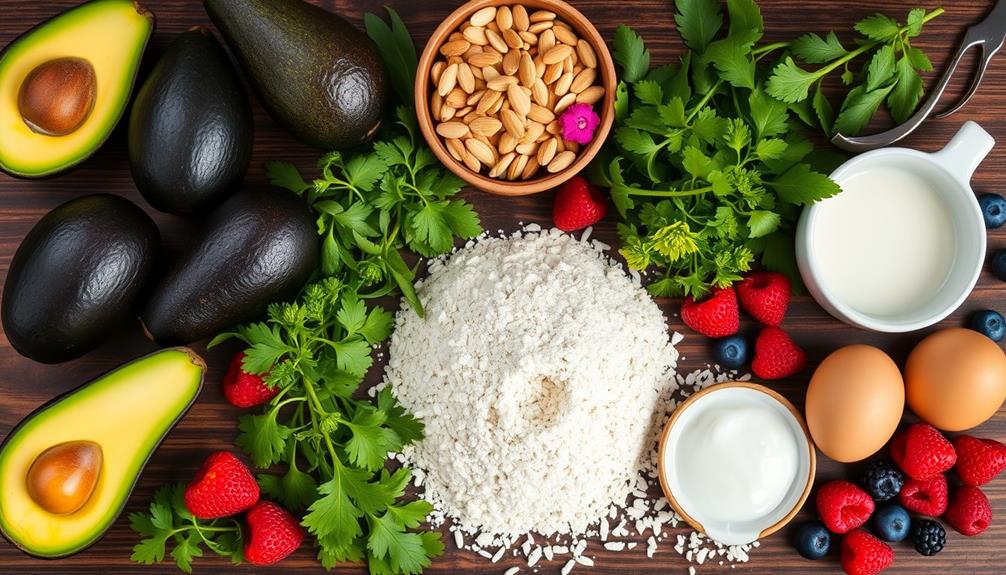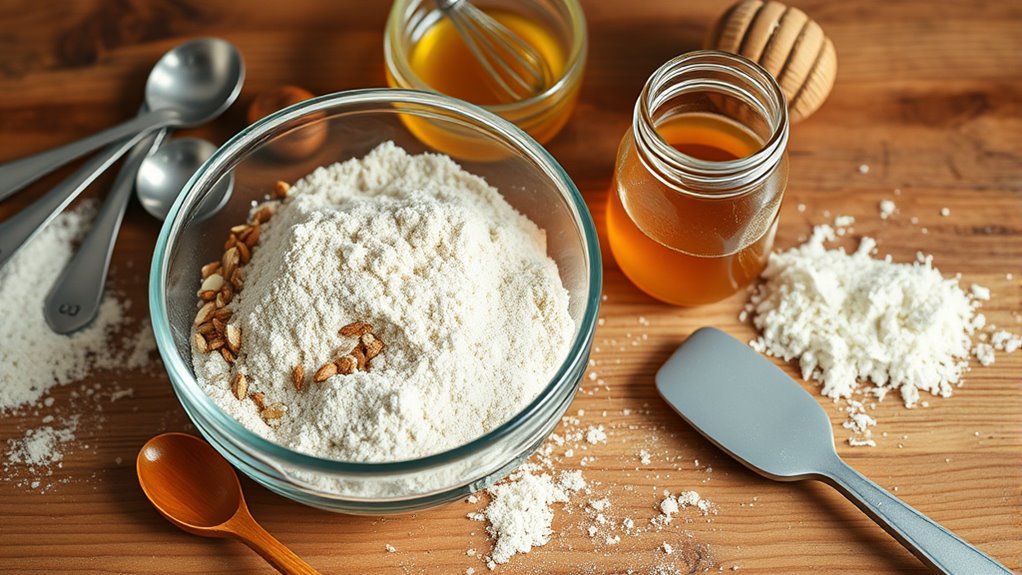

To master keto baking with almond and coconut flours, you need to understand their distinct qualities. Almond flour adds moisture and a nutty flavor, while coconut flour absorbs lots of liquid and can make baked goods drier if used alone. Combining both, along with binders like eggs and psyllium husk, helps you achieve the right texture. Keep experimenting with ingredient ratios and adjustments—more tips await as you explore further.
Key Takeaways
- Combine almond and coconut flour to achieve balanced texture and moisture in keto baked goods.
- Use eggs, psyllium husk, or flaxseed meal as binders to improve structure and elasticity.
- Adjust liquids carefully, as coconut flour absorbs more moisture, requiring recipe modifications.
- Incorporate keto-friendly sweeteners and flavors to enhance taste without increasing carbs.
- Experiment with baking times and temperatures to optimize crust and crumb for almond and coconut flour recipes.

If you’re looking to enjoy baked goods while following a keto lifestyle, understanding the essentials of keto baking is crucial. One of the most important aspects is mastering keto baking techniques that help you achieve the right texture and flavor without using traditional flour. Since regular wheat flour is high in carbs, you’ll need to focus on low carb ingredient swaps like almond flour and coconut flour. These ingredients not only keep your baked goods keto-friendly but also add unique tastes and nutrients.
When working with almond flour, keep in mind that it’s made from ground almonds and has a slightly nutty flavor. It tends to be denser than wheat flour, so you might need to adjust your recipes by adding a bit more moisture or using binders like eggs or xanthan gum to improve structure. Almond flour is excellent for cookies, muffins, and bread because it provides a moist, tender crumb. Its lower carb content compared to traditional flour makes it a popular choice among keto bakers. Coconut flour, on the other hand, is highly absorbent and lightweight. When substituting it into recipes, you’ll typically need less than you would of almond flour because it absorbs a lot of moisture. It also has a subtly sweet flavor that pairs well with spices, vanilla, and cocoa. To use coconut flour effectively, you usually need to increase the egg content or add liquids to prevent baked goods from turning out dry or crumbly.
Incorporating these low carb ingredient swaps requires some experimentation, especially with liquids and binding agents. A common keto baking technique is to combine almond flour and coconut flour for a balanced texture, leveraging the moisture retention of almond flour with the lightness of coconut flour. You can also add keto-friendly binders like psyllium husk or flaxseed meal to improve the elasticity of dough or batter. These techniques help mimic the properties of traditional wheat flour, allowing you to produce baked goods that are both delicious and compliant with keto rules. Understanding the refrigeration cycle and how it relates to moisture retention can also help in selecting ingredients that improve the shelf life and texture of your baked goods.
Frequently Asked Questions
Can Almond and Coconut Flours Be Substituted Equally in Recipes?
You can’t substitute almond and coconut flours equally in recipes because of their nutritional differences and flavor profiles. Almond flour has more fat and protein, while coconut flour is higher in fiber and absorbs more liquid. These differences affect texture and taste, so you’ll need to adjust ratios and ingredients accordingly. Substituting one for the other without modifications can lead to less desirable results in your baking.
How Do Storage Methods Affect Almond and Coconut Flour Freshness?
You should store almond and coconut flour in airtight storage containers to maintain freshness. Proper storage extends their shelf life by preventing exposure to air, light, and humidity, which can cause spoilage. Keep them in a cool, dark place, like your pantry or refrigerator. This method slows down rancidity and preserves flavor, ensuring your flours stay fresh longer and are ready for your baking needs.
Are There Allergy Considerations With Almond or Coconut Flour?
You should be conscious of nut allergy risks if you’re using almond flour, as it can trigger allergic reactions in sensitive individuals. Coconut flour, while not a nut, can still cause coconut allergy concerns for some people. Always check labels and consult with allergy sufferers before baking. If you or your guests have allergies, consider alternative flours to avoid any health issues and ensure everyone’s safety.
How Do These Flours Impact the Glycemic Index of Baked Goods?
You’ll find that almond and coconut flours have a low glycemic impact, which helps with blood sugar control. Using these flours in your baked goods means you’re less likely to experience spikes in blood sugar compared to traditional wheat flour. This makes them ideal for keto baking, as they support steady energy levels and better blood sugar management. So, incorporating these flours can help you maintain a balanced, health-conscious diet.
Can I Use Almond or Coconut Flour in Savory Keto Recipes?
Yes, you can definitely use almond or coconut flour in savory keto recipes. They work well for savory snack ideas like cheese crisps or veggie fritters, adding flavor and texture. For meal preparation tips, combine these flours with herbs, spices, and eggs to create hearty, low-carb dishes. Their versatility makes them perfect for savory baked goods, giving you options to enjoy satisfying, keto-friendly meals and snacks.
Conclusion
Now that you’ve uncovered the secrets of almond and coconut flour, you’re armed with the tools to craft delicious keto treats. Think of your kitchen as a blank canvas, where each recipe is a vibrant stroke of flavor. With these flour options, you can bake your way to guilt-free indulgence, turning simple ingredients into masterpieces. Embrace your baking journey—it’s a flavorful adventure that transforms everyday moments into sweet memories.