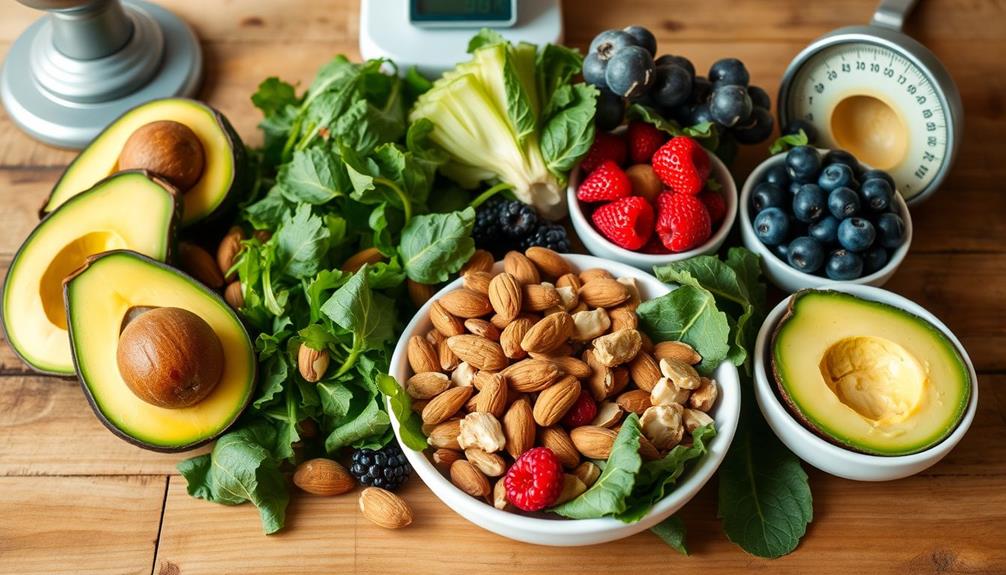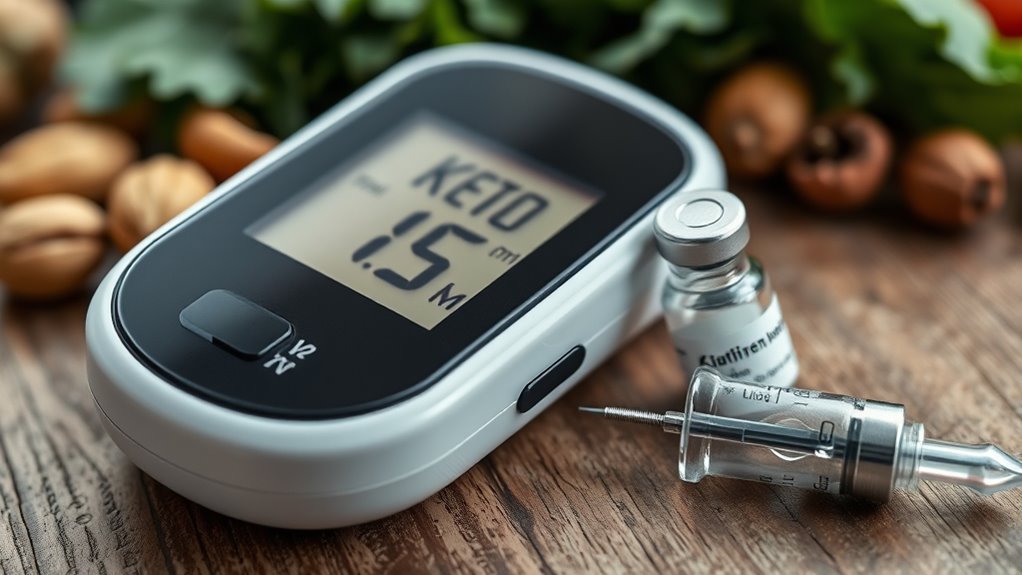

On a keto diet, your blood sugar drops and stabilizes, while insulin stays low, helping your body rely more on fat for energy. This shift boosts metabolic flexibility and reduces sugar fluctuations, which benefits your overall health. As your body becomes fat-adapted, you’ll notice more consistent energy and better blood sugar control. Curious about how this process supports long-term well-being? Keep exploring to uncover more insights.
Key Takeaways
- Blood sugar levels decrease and stabilize at healthier ranges during ketosis.
- Insulin response remains low due to reduced carbohydrate intake.
- Fat adaptation enhances the body’s ability to burn fat, reducing blood sugar fluctuations.
- Ketone production provides a steady energy source, decreasing reliance on glucose.
- Long-term keto benefits include improved insulin sensitivity and metabolic stability.

When you switch to a ketogenic diet, your blood sugar and insulin levels undergo significant changes. Instead of relying on carbohydrates for energy, your body begins to shift toward burning fat, leading to increased ketone production. This process is central to the concept of fat adaptation, where your body becomes efficient at using fat as its main fuel source. As you reduce carb intake, your liver starts converting fatty acids into ketones, which then serve as an alternative energy source for your brain and muscles. This shift not only stabilizes blood sugar levels but also diminishes the need for insulin to regulate glucose, creating a metabolic environment that promotes fat burning.
During this progression, you’ll notice your blood sugar levels tend to drop and stabilize at a lower, healthier range. Insulin, which normally spikes in response to carbohydrate consumption, stays relatively low because there’s less glucose entering your bloodstream. This reduced insulin response is beneficial, especially for those managing insulin resistance or type 2 diabetes, as it helps improve your body’s sensitivity to insulin over time. As your body becomes fat-adapted, it learns to efficiently mobilize stored fat for energy, which further supports stable blood sugar levels. The more you stick to the diet, the more your body fine-tunes this process, becoming better at generating ketones and maintaining energy without fluctuations in blood sugar.
This adaptation process can take anywhere from a few days to several weeks. Initially, your body is adjusting to the new fuel source, and you might experience symptoms like fatigue or brain fog. However, as you become fat-adapted, you’ll notice that your mental clarity improves and your energy levels become more consistent throughout the day. Because ketone production provides a steady supply of fuel, your body no longer depends heavily on glucose spikes, which helps prevent the crashes associated with high-carb diets. Over time, you’ll find that your blood sugar remains more stable, your insulin levels stay low, and your overall metabolic health improves. Additionally, increased metabolic flexibility enables your body to switch seamlessly between fuel sources, enhancing overall energy regulation.
In essence, the key to understanding blood sugar and insulin on keto lies in the process of ketone production and fat adaptation. These mechanisms work together to create a more balanced, efficient energy system, reducing reliance on carbs and stabilizing your blood sugar. As your body becomes more proficient at burning fat, you’ll experience fewer blood sugar swings and a healthier insulin response, supporting your long-term health and energy stability.
Frequently Asked Questions
How Quickly Does Blood Sugar Stabilize on a Keto Diet?
You’ll notice your blood sugar stabilizes within a few days to a week as your body adapts to keto. During keto adaptation, blood sugar fluctuations decrease markedly because your body shifts from carbs to fat for energy. The process varies based on individual factors, but most people experience a steadying of blood sugar levels fairly quickly once they’re fully keto-adapted, supporting better energy and mood stability.
Can Insulin Resistance Improve Within Weeks on Keto?
Yes, insulin resistance can improve within weeks on a keto diet. As you reduce carbs, your body gains metabolic flexibility, becoming better at using fat for fuel. This shift eases the strain on your pancreas, potentially restoring pancreatic function and lowering insulin levels. With consistent adherence, you may notice improved blood sugar regulation and increased insulin sensitivity, making your body more efficient at managing glucose.
Does Keto Affect Blood Sugar Differently in Diabetics?
You might find that keto considerably alters blood sugar regulation in diabetics, with studies showing up to 50% of participants experiencing improved glucose control. While keto can enhance insulin response and stabilize blood sugar levels, individual responses vary. You should monitor your blood sugar closely and consult your healthcare provider, as this dietary approach can be powerful but requires careful management to avoid hypoglycemia or other complications.
Are There Risks of Hypoglycemia on Keto for Insulin Users?
Yes, you can face risks of hypoglycemia on keto if you’re insulin-dependent. As your body adapts, your blood sugar may drop too low, especially if you don’t manage your insulin doses carefully. To avoid issues, watch for symptoms like dizziness or sweating, maintain proper electrolyte balance, and stay hydrated. Be mindful of the keto flu, which can cause dehydration and electrolyte imbalance, further increasing hypoglycemia risk.
How Does Keto Impact Long-Term Insulin Sensitivity?
Like a key opening a door, keto can markedly improve your long-term insulin sensitivity. It promotes better glycemic control and enhances insulin regulation by reducing carbohydrate intake, which lessens insulin demand. Over time, your body becomes more efficient at responding to insulin, lowering the risk of insulin resistance. This metabolic shift can lead to sustained health benefits, making keto a powerful tool for managing and optimizing your insulin response long-term.
Conclusion
So, as you navigate the keto journey, remember that keeping your blood sugar and insulin in check is like having a trusty compass in uncharted waters. With dedication, you’ll see your energy soar and cravings fade—no need to call up your great-great-grandma for advice. Just stay consistent, and you’ll be the master of your health destiny, steering clear of the pitfalls that even the most seasoned explorers faced back in the day.