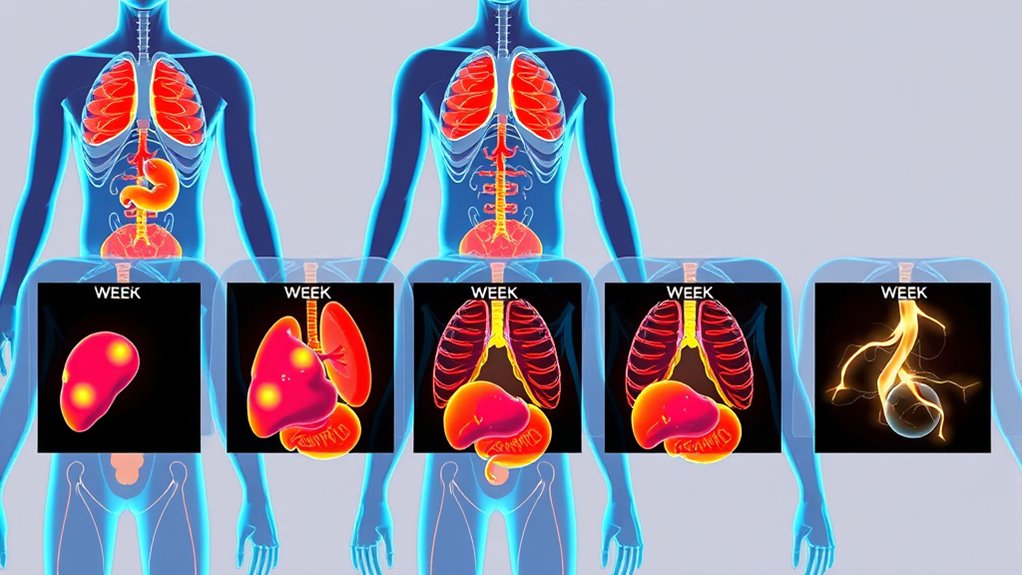

In the first 1-2 days, your glycogen stores deplete, causing fatigue and water loss, as your body prepares for a fuel switch. By week one, ketone production ramps up, and your brain begins using them, often boosting mental clarity and reducing hunger. Weeks 2-3 see faster fat burning and increased energy efficiency, signaling full keto-adaptation. If you keep going, you’ll discover deeper insights about this transformative metabolic shift.
Key Takeaways
- Days 1-2: Glycogen depletion causes water loss and initial symptoms like fatigue and headaches.
- End of Week 1: Ketone production increases, improving mental clarity and reducing hunger.
- Weeks 2-3: Fat oxidation accelerates, weight loss speeds up, and mental and physical performance improve.
- During weeks 2-3: Body becomes fully keto-adapted, relying mainly on fat for energy.
- Full adaptation typically occurs within 2-3 weeks, stabilizing long-term fat-burning efficiency.

Starting a ketogenic diet can be a transformative experience, but understanding the timeline of keto adaptation helps you set realistic expectations. When you switch to a low-carb, high-fat diet, your body undergoes a series of changes, primarily focused on a metabolic shift that encourages fat burning. This shift is vital because it signifies that your body is shifting from relying on glucose for energy to burning fat more efficiently, which is the core goal of keto.
In the first couple of days, your body mainly depletes its stored glycogen. During this period, you’ll notice some common early symptoms, often called the “keto flu,” including fatigue, headache, and irritability. These symptoms result from your body adjusting to lowered carbohydrate intake and the initial loss of water weight associated with glycogen depletion. At this stage, your body hasn’t yet fully switched to fat burning, but it’s laying the groundwork by signaling that it needs to adapt.
By the end of the first week, you typically begin to see more noticeable changes. Your body starts increasing its production of ketones — molecules produced in the liver from fatty acids — which become an alternative fuel source. This marks an important point in the metabolic shift, as your body is now actively engaging in fat burning. You may feel more energetic and less foggy as your brain begins utilizing ketones more efficiently. Hunger might also diminish because fats and ketones provide a more sustained energy supply, reducing cravings for carbs.
Weeks two and three are where the real transformation accelerates. Your body becomes more efficient at producing and utilizing ketones, increasing fat oxidation. You might notice improved mental clarity, stable energy levels, and weight loss from the ongoing fat burning. During this period, your body is becoming truly keto-adapted, meaning it can sustain itself on fat as its primary fuel source without relying heavily on glucose. This adaptation can vary from person to person, but overall, you’re moving toward a more efficient fat-burning state.
Frequently Asked Questions
Can I Speed up My Keto Adaptation Process?
You can speed up your keto adaptation process by increasing your fat intake and maintaining consistent carb restriction, which helps improve metabolic flexibility and accelerates fat adaptation. Incorporate intermittent fasting, stay well-hydrated, and avoid cheat meals to keep your body in ketosis. Regular exercise also boosts fat burning, making your shift smoother and faster. Remember, patience is key, and listening to your body’s signals ensures a successful keto journey.
Does Exercise Affect Keto Adaptation Timeline?
Exercise definitely impacts your keto adaptation timeline. Physical activity accelerates your shift to burning fat by boosting your body’s responsiveness and increasing energy expenditure. When you engage in consistent exercise, especially cardio or high-intensity activities, you enhance enzyme efficiency and promote quicker ketone production. So, your dedication to regular movement can make your progression smoother, speeding up the process while supporting overall health and fitness goals.
Are There Side Effects During the Transition?
During your changeover, you might experience side effects like keto flu symptoms, including fatigue and headaches, caused by electrolyte imbalance. These symptoms happen because your body adjusts to burning fat instead of carbs. To ease these issues, stay hydrated, replenish electrolytes, and get plenty of rest. If symptoms persist or worsen, consult a healthcare professional to make certain your body adapts safely and effectively.
How Long Until I See Weight Loss Results?
You’ll usually notice initial weight loss within the first one to two weeks, mostly water, but true fat burning kicks in after your body gains metabolic flexibility. As your fat burning efficiency improves, sustained results become clearer around the third or fourth week. Stay consistent, and you’ll see gradual, steady weight loss, as your body adapts to burning fat efficiently instead of carbs.
Can I Cheat Without Losing Ketosis?
You can cheat without losing ketosis if you practice keto meal planning and carb cycling carefully. Small cheats may not kick you out of ketosis if you keep your carbohydrate intake low and time your carb consumption around workouts or specific days. Monitoring your ketone levels helps you stay on track. Just be mindful, as frequent or large cheats can disrupt your progress and delay adaptation.
Conclusion
As you journey through the keto adaptation timeline, think of your body as a skilled traveler traversing a new, vibrant landscape. Each week reveals new scenery—your energy, clarity, and resilience blossoming like a sunrise after darkness. Embrace these changes as signs of your inner compass aligning with your goals. Remember, this transformation isn’t just physical; it’s a voyage into a stronger, more resilient you—an adventure worth every step along the way.