TL;DR

Get kitchen staples and gadgets delivered free with Prime
- Fast, free delivery on millions of items
- Prime Video, Amazon Music and more included
- Member-only deals all year
Choose a roasting pan by its usable interior dimensions, sturdy handles, and fit in your oven—not just its advertised turkey capacity. A 16-pound turkey often needs a pan about 16–18 inches long, and a disposable pan should sit on a rigid baking sheet for safer lifting. Check temperature and stovetop guidance before roasting or making gravy. [1]
A roasting pan that looks roomy on a store shelf can jam against your oven door once its handles and a 16-pound turkey are inside. That’s why the smartest first step is a tape measure, not a price tag. A pan should fit the bird, leave a little space for heat to move, and slide into your oven with the rack in place.
This guide helps you choose a pan that fits the turkey while leaving enough breathing room, compare materials, and decide whether you need a rack. You’ll also find practical tips for handling a loaded pan, making gravy, and cleaning stubborn drippings. For example, if you’re borrowing a friend’s oven or planning to roast a larger bird, checking the actual interior dimensions can save a frantic Thanksgiving morning trip to the store.
The key facts are simple: fit, stability, and intended use matter more than a fancy finish. Think of the pan as a sturdy stage for the bird: it needs room for the star, space for the drippings, and a secure path through the oven door.
Measure your oven, including door and rack clearance, and compare it with the pan’s usable interior dimensions.
A 16-pound turkey often needs a pan about 16–18 inches long, but the bird’s shape and pan handles affect fit. [1]
Support a disposable aluminum pan on a rigid baking sheet before adding a heavy turkey.
Use a rack or sturdy vegetables to lift the bird, and choose a broad, moderately deep pan for room and airflow.
Check manufacturer instructions before using the pan on a stovetop, under a broiler, in a dishwasher, or at a high oven temperature.
Measure your oven and turkey before you choose a pan
A Thanksgiving roasting pan should fit the turkey with a little space around it and still clear your oven rack and door. Measure the pan’s usable interior—not just its outside length—and check the handles, rack, and door clearance. A 16-pound turkey often calls for a pan about 16–18 inches long, though bird shape and pan design change the fit. [1]
The distinction between interior and exterior measurements matters because the turkey rests inside the pan, while the handles and rim determine whether the whole setup fits through the oven opening. A pan can have a generous advertised capacity yet leave little room for the bird’s legs or drippings. Check both width and length, then consider the turkey in its actual roasting position; a broad bird may need more space than its weight suggests.
Picture the Thanksgiving kitchen at 8 a.m.: the turkey is seasoned, the oven is hot, and the pan’s handles stop the door from closing. You can avoid that scene by measuring the oven from side to side and front to back, then comparing those measurements with the pan’s full footprint. Include the handles, and check height too if your oven has a low rack or heating element. A pan that barely fits when empty can be harder to slide out safely once it is loaded and hot.
Labels such as “fits a 20-pound turkey” can help you shortlist pans, but they don’t tell the whole story. Two pans with the same capacity may offer different interior room, handle shapes, or depth. Set your turkey in its roasting position mentally—or use its approximate dimensions—and leave a little room around it for hot air to circulate. Crowding can make it harder to position the bird and may limit airflow; buying an oversized pan can also create a poor fit in a small oven.
If you’re shopping for a 12-, 16-, or 20-pound bird, begin with the pan’s interior measurements and your oven, then check the maker’s capacity guidance. For a crowded apartment oven, a slightly smaller bird and a pan with compact handles may work better than buying the largest pan you can find. Fit is practical insurance against spills, uneven browning, and a blocked oven door.
Products Worth Considering

Cuisinart ICE-70WB 2-Quart Ice Cream Maker

Vitamix 5200 Blender with 64 oz. Container, Black

Cuisinart 7-in-1 Air Fryer Toaster Oven Combo, 1800W, TOA-55
As an affiliate, we earn on qualifying purchases.
Compare materials by how you’ll cook and clean
The best roasting pan material depends on whether you value long-term durability, easy cleanup, light weight, or stovetop gravy. Heavy-gauge stainless steel and sturdy enameled steel are durable reusable choices; nonstick can simplify release, while disposable aluminum offers convenience but needs support. Check the maker’s temperature and care instructions because materials and coatings vary. [1]
Material affects what you can do after the turkey comes out of the oven, not just how the pan looks or cleans. Stainless steel is a good workhorse if you want to roast a turkey and make gravy in the same pan, provided its instructions allow stovetop use. Browning can leave flavorful bits on its surface, but those bits may take more effort to clean than a slick coated surface. A nonstick pan can make cleanup feel less like scraping a winter sidewalk, but coatings may have temperature limits and need gentler utensils. If the coating is scratched or overheated, its performance may change, so careful handling is part of the tradeoff.
Enamel wipes clean readily, though a chip can expose the layer beneath, so avoid banging it against the sink. It suits cooks who want a reusable pan with a smooth surface, but the finish needs more care than bare metal. Disposable aluminum pans suit cooks who are carrying food to another home or want fewer dishes afterward. Their tradeoff is rigidity: a thin pan can flex under a heavy bird and hot juices, making spills more likely when lifted. Place it on a sturdy rimmed baking sheet before adding the turkey, and keep it supported while moving it. A reusable aluminum pan may heat well but can also feel less sturdy than a heavy-gauge model.
| Material | Good fit for | Check before buying |
|---|---|---|
| Stainless steel | Durability and possible stovetop gravy | Stovetop and induction compatibility |
| Nonstick | Easier food release and cleanup | Temperature limits and safe utensils |
| Enameled steel | A durable, easy-clean reusable pan | Care instructions and chip prevention |
| Disposable aluminum | Convenient transport or quick cleanup | Rigid support and temperature guidance |
Before you buy, ask yourself how often the pan will leave the cupboard. If it will handle vegetables, Sunday roasts, and gravy all year, a reusable model may earn its space and cost through repeated use. If this is a one-time gathering and you need easy transport, a supported disposable pan may suit your plans, though its limited rigidity makes the support sheet essential. Match the material to the job, not just the holiday table.
Pick a pan shape and rack that help the turkey roast evenly
A broad, moderately deep pan gives you room for drippings and vegetables while letting heat circulate around the turkey. A rack lifts the bird so hot air reaches its underside and juices collect beneath it. Very high sides can shield parts of the turkey from heat, while a pan that is too shallow can spill juices when you lift it. [1]
Pan shape changes the balance between browning, capacity, and control of drippings. Imagine a bird sitting in a deep-sided pan like a loaf tucked into a trench: the bottom may collect plenty of juice, but the sides can limit heat reaching the lower portions of the bird. A pan with a broad base gives you room to spread carrots, celery, and onion without crowding the turkey. Those vegetables can add flavor to drippings, though a packed layer may change airflow beneath the bird and take up space that the turkey needs.
A roasting rack is useful, but it isn’t mandatory. A sturdy oven-safe rack lifts the turkey and lets hot air circulate beneath it while keeping the bird above the drippings. That can help the underside roast more evenly and makes it easier to collect the juices, though it also adds another piece to store and clean. You can make a bed of large vegetables to support the bird if you’re borrowing a pan without a rack. Vegetables are a handy fallback, but they may cook unevenly under a heavy bird and reduce air movement; treat them as supports rather than a tightly packed layer. Avoid using anything whose oven-safety you can’t confirm.
Check that the rack sits securely inside the pan and leaves room for the turkey. If you buy a separate rack, match its dimensions to the pan’s base. A rack that shifts can make it harder to move the loaded pan, while one that is too large may press against the sides or sit unevenly. Lightly oiling an appropriate rack may help reduce sticking, but follow its care guidance and don’t scratch a coated surface. For instance, if you want crisp skin and easy access to drippings, a stable rack in a moderately deep pan is a straightforward setup. Shape affects both browning and handling, so consider the whole roast, not just pan capacity.
Move a loaded roasting pan without a last-minute wobble
Safe handling starts with wide, secure handles and a rigid base that can support the pan, turkey, and hot juices together. Before the holiday, test how you’ll grip the empty pan with oven mitts and confirm its handles clear your oven. A pan that feels manageable empty can become much heavier once it holds a bird and several cups of drippings. [1]
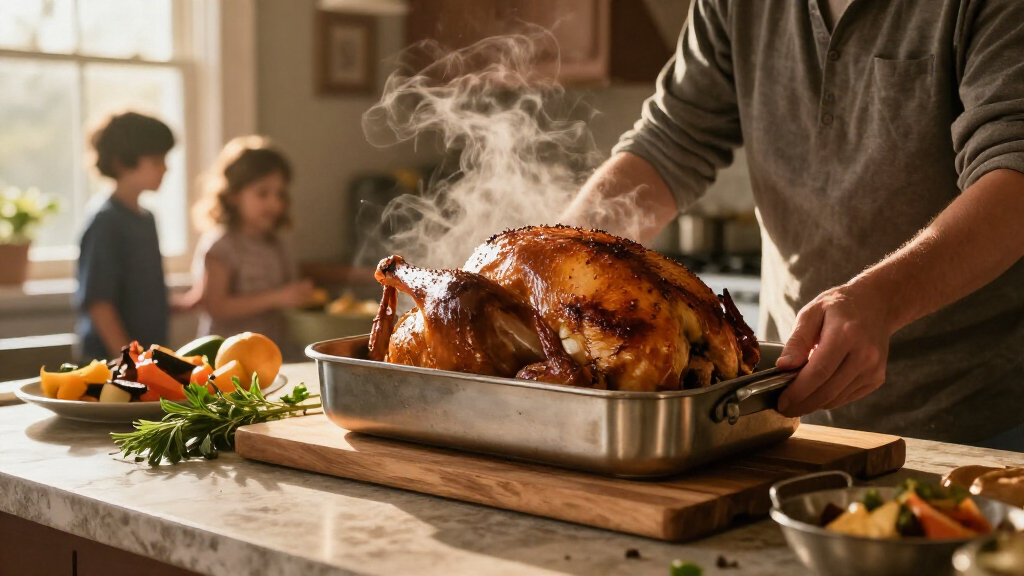
Thanksgiving roasting pans need to travel from oven to counter without a wobble. Clear a landing spot first, use dry oven mitts that let you grip both handles, and ask another adult to help if the pan feels heavy or awkward. Dry mitts help preserve your grip; a damp mitt can transfer heat quickly. Don’t try to carve the turkey in the pan; move it to a cutting board and let it rest before carving, which also keeps carving tools from scraping or damaging the pan surface.
Disposable pans need extra support because their thin walls and base can bend under a heavy roast. Set one inside a rimmed baking sheet or other sturdy, oven-safe base before adding the turkey, then lift the support and pan together. The sheet spreads the load and gives you a rigid surface to hold, reducing the chance that the foil edges fold or the juices slosh. A quick test with the empty setup can show whether your oven rack slides smoothly and whether you can grip both sides without reaching across the hot oven. Don’t carry a loaded pan by pinching the foil edges.
Keep the walkway to the counter clear, especially if guests or pets are underfoot. If the pan is too wide for your mitts or the handles feel flimsy, choose a smaller bird, use a more rigid pan, or arrange help before the roast goes in. Plan the lift before the oven opens; a few minutes of setup can prevent spills and burns when everyone is waiting for dinner.
Use the pan for gravy, vegetables, and cleanup
You can use a roasting pan for gravy or other meals if its instructions permit the cooking method and temperature. Some metal pans can go from oven to stovetop; others are designed for oven use only. Check the maker’s guidance before setting the pan on a burner, and use a saucepan if stovetop compatibility is unclear. [1]
After roasting, browned bits on the bottom can bring rich flavor to gravy. If the pan is stovetop-safe, place it over a suitable burner and scrape gently with a utensil that matches the surface. The wide base can help you work with the drippings in the same vessel, but a pan that does not heat evenly on your burner may make gravy harder to manage. For a coated pan, a safe utensil matters; a metal scraper can leave scratches that change how the surface performs. If the pan cannot go on the stove, transfer the drippings to a saucepan and loosen the browned bits there. This adds a dish, but avoids exposing the roasting pan to a cooking method it was not designed for.
A roomy pan can also roast potatoes, carrots, or another main dish, as long as it’s rated for that recipe’s oven temperature and the food has room to brown instead of steam. If ingredients are packed together, moisture has less room to escape and browning may suffer. Check whether the pan is broiler-safe before using the broiler; an oven-safe label alone doesn’t confirm that because broiler heat is more direct. Dishwasher suitability also depends on coatings, handles, and construction, so follow care instructions rather than assuming a metal pan is dishwasher-safe.
For stuck-on drippings, start with warm, soapy water and soaking rather than aggressive scouring. Soaking softens the residue so less force is needed, which helps protect finishes. Nonstick and enamel surfaces can suffer from abrasive pads, while stainless steel may allow tougher cleaning methods depending on the manufacturer’s directions. A 15-minute soak can loosen residue enough for a soft sponge to lift it. Let the pan’s care guidance lead so a useful holiday pan stays in good shape for the next meal.
Follow four steps before Thanksgiving morning
You can avoid common roasting-pan problems by checking fit, handling, and care before the turkey goes into the oven. Measure the oven and pan, confirm that the bird fits, prepare a stable support, and check cooking-method instructions. These checks answer different questions: whether the roast fits, whether the pan can be moved safely, and whether the pan can handle the heat and cooking method you intend to use. For example, a family bringing a disposable pan to a relative’s house can test the pan on a rimmed baking sheet before travel. [1]
- Measure the oven. Check the interior width and depth, door clearance, and rack position. Include the pan handles in the fit check, since a pan that enters the oven but blocks the door is not usable.
- Check the pan’s usable space. Compare the interior dimensions with your turkey and leave room around the bird. The weight label is only a starting point; the bird’s shape determines whether it actually sits comfortably.
- Set up the support. Fit the rack or vegetables, and place a disposable pan on a rigid baking sheet. A stable setup reduces shifting and gives you a firmer base when lifting.
- Read the care and temperature instructions. Confirm oven limits, stovetop use, and whether the rack or pan is broiler-safe. Knowing these limits beforehand prevents a last-minute change of plan when you want to make gravy.
Once the turkey is roasting, follow a reliable recipe and use a food thermometer to check that it reaches a safe internal temperature. Keep raw turkey and its juices away from ready-to-eat foods, and wash hands and surfaces after handling raw poultry. Refrigerate leftovers within two hours, using shallow containers so they cool promptly; keep the refrigerator at 40°F (4°C) or below.
These checks take only a few minutes, yet they solve the problems that tend to appear when the kitchen is crowded: a pan that won’t fit, a rack that slips, or a disposable base that bends. If you’re hosting, write the oven dimensions and pan model in your shopping notes. A small check before the holiday gives you more attention for the food and the people around the table.
Frequently Asked Questions
What size roasting pan do I need for a 12-, 16-, or 20-pound turkey?
Start with the turkey’s shape and the pan’s usable interior dimensions, then check that the pan clears your oven door and rack. A 16-pound turkey often fits a pan around 16–18 inches long, but dimensions vary by design. [1]
Do I need a roasting rack?
No. A rack lifts the bird so heat can circulate and drippings collect below, but a bed of sturdy vegetables can support it too. The vegetables may affect airflow, so avoid packing them tightly beneath the turkey.
Are disposable roasting pans safe to use?
Disposable aluminum pans are commonly used for roasting, but thin ones can flex beneath a heavy bird. Place the pan on a rigid baking sheet before adding the turkey, and follow its temperature instructions. [1]
Can I make gravy in the roasting pan?
Only use the pan on a burner if its manufacturer says it is suitable for stovetop use. Otherwise, transfer the drippings and browned bits to a saucepan to make gravy.
Which roasting-pan material should I choose?
Choose stainless steel for durability and possible stovetop use, nonstick for easier release with careful utensil use, or enamel for easy cleaning with care to prevent chips. Disposable aluminum is convenient, but it needs sturdy support. Check each pan’s temperature and care guidance. [1]
How do I clean baked-on drippings?
Try soaking the pan in warm, soapy water before using a soft sponge. Avoid abrasive tools on nonstick or enamel surfaces, and follow the manufacturer’s cleaning instructions.
Conclusion
Choose your Thanksgiving roasting pan by checking three things: the turkey fits, the pan fits your oven, and the handles feel secure. Then match the material and rack to the way you plan to roast, make gravy, and clean up. If a disposable pan is the right fit, give it a sturdy base before the bird goes in.
Measure once before the holiday rush, and your pan can carry dinner from oven to table without turning the doorway into an obstacle course. A good fit makes room for the roast—and lets you focus on the people waiting for it.