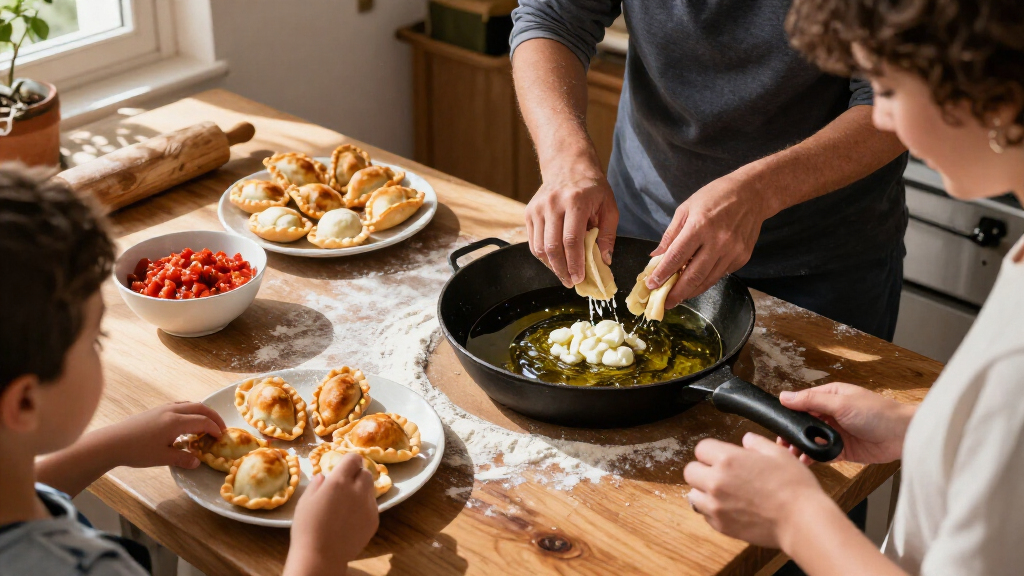

🔍 Read the full analysis: Panzerotti Fritti: Puglia's Pocket-Sized Party Trick on Mad Tasting

Get kitchen staples and gadgets delivered free with Prime
- Fast, free delivery on millions of items
- Prime Video, Amazon Music and more included
- Member-only deals all year
TL;DR
Panzerotti fritti are small, sealed pastries associated with Puglia, particularly Bari, commonly filled with tomato and mozzarella and deep-fried. The source material offers home-cooking guidance: keep fillings dry, seal the dough rim firmly, fry at about 340–355°F, and let each pastry cool briefly before eating.
Mad Tasting’s guide to panzerotti fritti describes the small fried pastries associated with Puglia, especially Bari, and sets out practical steps for making them at home. The recipe guidance centers on a common tomato-and-mozzarella filling, a firmly sealed dough edge and oil kept around 340–355°F (170–180°C)—details that can help limit leaks and uneven cooking.
A panzerotto is a folded dough pocket, usually half-moon-shaped, filled, sealed and fried until its exterior is golden. The plural is panzerotti. The guide describes tomato and mozzarella as the familiar filling, while noting that cooks also use ingredients such as onion, cooked ham, olives, anchovies and other cheeses. Baked versions exist, but “fritti” means fried, and frying is what gives this version its crisp shell.
The preparation advice focuses on moisture and sealing. The guide recommends cooking or draining tomato and draining mozzarella, then leaving a clean border around the dough round. After adding a modest spoonful of filling, the cook folds the dough, gently presses out trapped air and pinches the edge closed. A fork can crimp the rim, but filling on the edge may interfere with the seal.
Fry in small batches and keep the oil near the suggested temperature, turning the pastries as needed for even browning. The guide advises letting them drain and rest briefly before serving because the filling can remain hotter than the crust. It also recommends making one test pastry first: a leak may point to excess filling, a wet rim or an incomplete seal.
Panzerotti Fritti Puglia’s pocket-sized party trick
These sealed fried pastries are especially associated with Bari. A dry filling, firm seal and steady oil help home cooks serve them crisp and warm.
What goes inside
Tomato and mozzarella are the familiar filling; household variations are common.
Tomato and mozzarella
Drain wet ingredients to help keep the pastry sealed.
Make it your own
Onion, cooked ham, olives, anchovies and other cheeses are also used.
Shape a secure pocket
A clean rim and modest filling help prevent leaks.
Cook or drain tomato and drain mozzarella.
Leave a clean border, press out trapped air and pinch the edge closed.
Turn for even browning and let the oil recover between batches.
A regional favorite, many ways
Panzerotti are part of Puglian home cooking and street-food culture, with Bari especially associated with them.
- Folded, sealed dough pocket
- Fried and served warm
- Size, dough and filling can vary
- No single definitive recipe
Try one before the batch
A test pastry can reveal whether the filling or seal needs adjusting.
Why the Seal and Temperature Matter
The techniques address two practical problems: a leaking pastry and a crust that browns before the dough cooks through. A firm seal and a relatively dry filling help keep the contents inside; maintaining the oil around 340–355°F is the guide’s suggested way to cook the pastry without scorching it or leaving it greasy. These are cooking recommendations from the source, not a guarantee that every batch will behave identically.
There is also a serving-safety point. The guide warns that the filling may stay hotter than the outer crust, so a short rest before the first bite can reduce the risk of burning the mouth. For readers hosting a gathering, the pastries’ small size and mix-and-match fillings make them easy to serve in batches, though the source does not provide nutritional information or a tested recipe with exact ingredient quantities.
Products Worth Considering

De'Longhi Classic Signature Espresso Machine with Adjustable Milk Frother

Instant Pot Pro 6 Qt 10-in-1 Electric Pressure Cooker, Black

KitchenAid 5.5-Quart Bowl-Lift Stand Mixer, Porcelain White
As an affiliate, we earn on qualifying purchases.
A Puglian Pocket with Local Variations
The guide places panzerotti within Puglian home cooking and street-food culture, with Bari especially associated with the pastry. It says they are found across Puglia and may vary in size, dough and filling from one cook or household to another. The source connects the name to pancia, the Italian word for “belly,” a reference to the pastry’s plump shape.
It does not present one definitive formula. Dough may use flour, yeast, water and salt, with olive oil or another fat; some home cooks add potato for a softer texture. The guide treats those differences as household and regional habits rather than departures from a single fixed recipe. The common form is a sealed pocket, fried and served warm.
““Keep the filling fairly dry, seal the clean dough rim firmly, and fry at about 340–355°F so the crust cooks without scorching.””
— Mad Tasting guide
Recipe Details Still Vary
The supplied guide gives a temperature range and shaping advice, but it does not include a complete ingredient list, measured quantities, dough-resting time, frying duration or a specific oil type. It also does not establish one authoritative regional recipe or provide evidence comparing the different methods. The suggested temperature should therefore be read as the guide’s cooking range, not a universal rule for every dough, pan or fryer.
Its food-safety advice is limited to caution around hot oil and allowing the filling to cool briefly. It does not specify a cooling time, storage instructions or a food-safe holding period. Readers should not infer those details from the guide.
Testing a Small Home Batch
The guide recommends starting with one test pastry before shaping the rest, then adjusting the filling amount or seal if it leaks. For a larger batch, it advises frying in groups and allowing the oil temperature to recover between them. A thermometer can help track the recommended range more reliably than judging the oil by color alone.
For serving, let the pastries rest briefly and warn guests that the centers may be very hot. The source does not announce a new product, event or follow-up publication; its next step for readers is simply to try the method and adapt fillings to household preferences while keeping the filling manageable and the rim clean.
Key Questions
What are panzerotti fritti?
They are small, filled pastries made by folding dough around a filling, sealing the edge and deep-frying until golden. “Fritti” means fried.
What filling is most commonly associated with panzerotti?
The guide identifies tomato and mozzarella as the familiar filling. It also notes variations that may include onion, cooked ham, olives, anchovies or other cheeses.
How hot should the frying oil be?
The guide recommends about 340–355°F (170–180°C). It advises frying in small batches and monitoring the temperature as the oil recovers.
How can a cook reduce the chance of a panzerotto leaking?
Use a modest amount of filling, drain wet ingredients, leave a clean dough border and pinch the folded edge firmly shut. The guide suggests frying one test pastry first.
Why should panzerotti cool before eating?
The guide says the filling can stay hotter than the crust. Letting each pastry rest briefly before biting can help prevent burns.
Source: Mad Tasting