🔍 Read the full analysis: Sagrantino Di Montefalco: Umbria's Big Red, Without The Intimidation on Mad Tasting

Get kitchen staples and gadgets delivered free with Prime
- Fast, free delivery on millions of items
- Prime Video, Amazon Music and more included
- Member-only deals all year
TL;DR
Sagrantino di Montefalco is an Umbrian wine made from the local Sagrantino grape, with a dry Secco style and a sweet Passito style. The source guide recommends serving it at 16–18°C (61–64°F) and pairing the dry wine with savory food to make its firm tannins feel less pronounced. This is a practical wine explainer, not a report of a new industry development.
Mad Tasting’s guide to Sagrantino di Montefalco explains how to approach the Umbrian red’s pronounced, drying tannins, recommending a serving temperature of 16–18°C (61–64°F), food with substance and attention to the label’s style designation. The guide distinguishes the dry Secco from the sweet Passito, two markedly different wines made under the Montefalco Sagrantino DOCG.
The guide describes Sagrantino as a deeply colored red made entirely from the Sagrantino grape, which is local to the Montefalco area in Umbria, central Italy. Its defining feature is pronounced tannin: a drying, grippy sensation that can feel firm on the tongue and gums, especially in a young bottle tasted without food. The guide compares that texture to strong black tea or walnut skin, rather than to acidity or alcohol.
Young wines may show black cherry, blackberry or plum beneath the tannins. With age, or depending on producer style, the profile may develop dried herbs, spice, earth or savory notes. These are descriptions of possible characteristics, not a guarantee that every bottle will show the same flavors. The guide recommends serving the wine slightly cool, at 16–18°C (61–64°F), and suggests that bottle age can make a wine more welcoming; it does not set a specific aging period for an individual bottle.
On the label, Secco means dry and is the style suited to a main course. Passito means sweet: it is made from grapes dried after harvest, concentrating sugars and flavors. The guide says Passito is better suited to dessert or a small after-dinner pour. It also cautions shoppers not to confuse Montefalco Sagrantino with Montefalco Rosso, a separate appellation that may be a blend.
Umbria’s big red without the intimidation
Sagrantino’s firm tannins become easier to approach when you match the style, serving temperature and food to the bottle.
Choose your style
Check the full label: Secco and Passito are distinct wines with different pairings.
- Dry; suited to a main course.
- Pair with savory food with substance.
- Sweet, made from grapes dried after harvest.
- Better with dessert or a small after-dinner pour.
Make the tannins work
Fat and protein can make the wine feel less drying.
Substantial savory dishes
Try braised or grilled red meat, game, sausage, aged hard cheese or hearty lentils.
Delicate plates
Plain white fish or a lightly dressed salad may be overwhelmed by a powerful young bottle.
What to check on the bottle
Montefalco Sagrantino DOCG identifies the protected appellation; Montefalco Rosso is a separate appellation and may be a blend.
Secco means dry; Passito signals a sweet wine made from dried grapes.
The guide recommends 16–18°C (61–64°F).
For bottle-specific advice, check the vintage and drinking window with the retailer or producer.
How Food Softens Sagrantino’s Grip
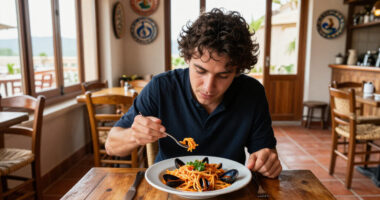
The guide’s practical point is that Sagrantino’s strong tannins need not make it inaccessible to new drinkers. A savory dish with fat and protein can make the wine seem less drying, while a substantial sauce gives its concentrated fruit a flavor to meet. The suggested pairings include braised or grilled red meat, game, sausage, aged hard cheese and hearty lentils.
That advice helps readers decide what to order or cook, not just what tasting notes to expect. A glass of Secco alongside slow-cooked ragù or grilled sausage may feel more balanced than a first sip on its own. The guide warns that delicate food, such as plain white fish or a lightly dressed salad, can be overwhelmed by a powerful young bottle. Passito offers a different option for the end of a meal, where its sweetness can pair with dessert.
Products Worth Considering

Vitamix VX1 Professional-Grade Blender, 64 oz, Black

KitchenAid Artisan 5-Quart Tilt-Head Stand Mixer, Almond Cream

Le Creuset Enameled Cast Iron Round Bread Oven, 9.5-Inch, Cerise
As an affiliate, we earn on qualifying purchases.
Two Styles From Montefalco
Montefalco Sagrantino DOCG is the protected appellation named in the guide. It says the DOCG red is made from 100% Sagrantino, while other wines may use the grape in blends under different appellations. That makes the full wording on the bottle important: the place name alone may not tell a shopper which wine or style they are buying.
The guide also says the appellation requires extended maturation before release, including time in oak and bottle. It does not give exact maturation periods and notes that rules can change. Readers who need precise requirements are advised to check current regulations or producer information. For a specific purchase, the guide suggests asking about the style, vintage and producer’s advice on whether to open or keep the bottle.
““That firm, drying grip is the grape’s signature.””
— Mad Tasting guide
Bottle Age and Rules Vary
The source does not provide a publication date, specific producer recommendations, or exact maturation periods required by the appellation. It also does not establish how a particular vintage or bottle will taste: age and producer style can affect the wine’s character, and the flavor notes listed are possibilities rather than a fixed profile. Current appellation rules and bottle-specific advice should be checked with the producer or a current regulatory source when those details matter.
What to Check Before Pouring
For a first bottle, check whether the label says Secco or Passito, then choose food to match: a substantial savory meal for the dry style, or dessert for the sweet one. Serve the wine at 16–18°C (61–64°F); if you are unsure about a bottle’s readiness, ask the retailer or producer about its vintage and recommended drinking window. The guide offers these as practical choices, not as a promise that every wine will respond identically.
Key Questions
What is Sagrantino di Montefalco?
It is a wine from Umbria’s Montefalco Sagrantino DOCG. The guide describes its DOCG red as made from 100% Sagrantino, a grape local to the Montefalco area.
What is the difference between Secco and Passito?
Secco is dry and is suited to a main course. Passito is sweet, made from grapes dried after harvest, and is better suited to dessert or a small after-dinner pour.
What food goes well with Sagrantino Secco?
The guide recommends savory, substantial dishes such as braised meat, sausage, game, aged hard cheese or hearty lentils. Fat and protein may make the wine’s drying tannins feel less pronounced.
At what temperature should Sagrantino be served?
Mad Tasting recommends serving it at 16–18°C (61–64°F), slightly cool. The source does not specify a different temperature for Secco and Passito.
Is Montefalco Rosso the same wine?
No. The guide says Montefalco Rosso is a separate appellation and may be a blend. Check the full label rather than relying on the word “Montefalco” alone.
Source: Mad Tasting