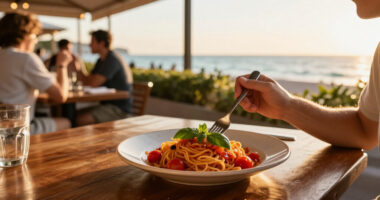
🔍 Read the full analysis: Bigoli In Salsa: Venice's Whole-Wheat Anchovy Pasta on Mad Tasting

Get kitchen staples and gadgets delivered free with Prime
- Fast, free delivery on millions of items
- Prime Video, Amazon Music and more included
- Member-only deals all year
TL;DR
Bigoli in salsa is a traditional Venetian pasta dish built around thick noodles, slowly cooked onions and salt-cured fish, often anchovies or sardines. Recipes vary: bigoli may be whole wheat, mixed flour or egg pasta, and dried bigoli or sturdy pasta can be used when the traditional tool or fresh noodles are unavailable.
Bigoli in salsa, a traditional pasta dish from Venice, pairs thick, rough-surfaced noodles with slow-cooked onions and preserved fish, commonly anchovies or sardines. The Mad Tasting source explains the dish’s defining balance of sweetness and salt, while noting that pasta ingredients and fish choices vary by recipe.
According to The Mad Tasting, the sauce begins with onions cooked gently until soft and sweet. Salt-cured fish is then stirred in so it breaks down into the onions, creating a savory coating rather than a sauce of distinct, large fish pieces. The source describes the intended result as rounded and gently savory, not sharply fishy or pooled with oil. Tomato and cream are not part of the preparation it describes.
The Mad Tasting says the pasta is traditionally made into substantial strands using a bigolaro, a press that pushes dough through an opening. Bigoli are often described as whole-wheat, but the source cautions that versions may use mixed flours or include egg. Their thickness and rough surface help the onion-and-fish sauce cling. The source also notes that dried bigoli can work when fresh pasta or the press is unavailable; it offers bucatini as a practical substitute, while noting that it will not have precisely the same texture.
The source identifies anchovies and sardines as options, with the choice affecting the sauce’s flavor and saltiness. It also notes that fish packed in oil and salt-packed fish can differ in intensity. The Mad Tasting recommends holding back on added salt until after the fish, pasta and cooking water are combined, since each can contribute salt. Starchy pasta water helps bind the sauce to the noodles.
Bigoli in Salsa Venice’s onion and fish pasta
This traditional dish pairs thick noodles with gently cooked onions and preserved fish. Its defining balance is sweetness and salt.
A few durable ingredients
Resourceful Venetian cooking uses preserved fish for concentrated flavor and onions for sweetness.
Thick and textured
Bigoli are often whole wheat, but recipes may use mixed flour or egg pasta.
Onions meet fish
Slow-cooked onions soften the savory intensity of anchovies or sardines.
No single formula
Pasta and fish choices vary, so versions can differ in flavor and saltiness.
What to ask when dining
The dish is meatless, but it contains fish and is not vegetarian.
- Whole wheat, mixed flour or egg?
- Fresh bigoli or dried pasta?
- Anchovies, sardines or both?
- Check ingredients if avoiding fish or animal products.
A practical home method
A bigolaro is traditional, but dried bigoli or sturdy bucatini can work.
Let them soften until sweet.
Let it break down into the onions.
Use starchy pasta water to coat the noodles, then taste before adding salt.
A Venetian Pantry Dish
The Mad Tasting places bigoli in salsa within cucina povera, or resourceful cooking, describing how preserved fish provides concentrated flavor while onions soften that intensity and supply sweetness. The source presents the dish as a substantial regional preparation made from a small set of durable ingredients. It also notes that the sauce is not tomato-based and that its fish flavor need not dominate.
The source describes the dish as meatless, including appearances on days such as Good Friday. That does not make it vegetarian: anchovies and sardines are fish. Diners avoiding fish or other animal products should ask what the sauce contains rather than relying on a “meatless” description. The Mad Tasting also notes that the recipe’s flexibility around pasta and fish makes it approachable without a specialized press, while the balance of salt and sweetness remains central.
Products Worth Considering

KitchenAid 5.5-Quart Bowl-Lift Stand Mixer, Porcelain White

KitchenAid Artisan 5-Quart Tilt-Head Stand Mixer, Almond Cream

Le Creuset Enameled Cast Iron Round Bread Oven, 9.5-Inch, Cerise
As an affiliate, we earn on qualifying purchases.
Noodles, Fish and Local Variation
The Mad Tasting describes bigoli’s identity as partly rooted in its shape and texture. A traditional press forms thick strands with a coarse surface, unlike smooth, delicate pasta, giving the onion sauce a sturdy base. The source says whole wheat is common, but not a universal rule; it also mentions flour blends and egg-based versions, so diners and cooks should check labels rather than assume every package is the same.
Preserved fish is another point of variation in the source’s account. It identifies salt-cured sardines in traditional Venetian versions and notes that anchovies are familiar and readily available elsewhere. Those options are related but not identical, so a restaurant’s version may differ in saltiness and flavor. The Mad Tasting provides cooking guidance and background, but does not establish a single definitive recipe or a dated culinary development.
Recipe Details That Vary
The Mad Tasting describes a family of preparations rather than one fixed formula. Its account does not specify exact quantities, cooking times or a standardized ingredient list, and it notes variation in the flour, use of egg and choice of fish. The source also does not identify a particular restaurant, chef, new study or recent announcement; this is a food report, not coverage of a newly dated event.
The amount of salt needed cannot be set in advance from the source because it depends on the preserved fish, pasta water and any cheese added. The source advises tasting before seasoning, but individual products and recipes will differ. Its material does not establish how common each version is across Venice or the wider Veneto region.
What Diners and Cooks Can Check
For diners in Venice, The Mad Tasting’s account suggests asking whether the dish uses anchovies, sardines or both, and whether the bigoli are whole wheat, mixed flour or egg pasta. Those questions clarify the variations the source describes and help people with dietary restrictions avoid mistaking a fish-based dish for a vegetarian one.
At home, the source says cooks can use dried bigoli if available or choose a thick, textured substitute such as bucatini. Its guidance is to cook the onions gently until soft, add the fish, and use pasta water to help the sauce coat the noodles. Taste before adding salt. The source does not announce a future event or further reporting milestone; its guidance is culinary, and the result will depend on the ingredients and recipe used.
Key Questions
What is bigoli in salsa?
It is a Venetian pasta dish made with thick noodles and a sauce of slowly cooked onions and preserved fish, often anchovies or sardines.
Is bigoli always whole wheat?
No. The source says bigoli are often described as whole wheat, but recipes may use mixed flours or egg. Check the package or ask the restaurant about its pasta.
Can I make it without a bigolaro?
Yes. The source suggests dried bigoli when available, or a sturdy textured pasta such as bucatini. The substitute will not match traditional bigoli exactly, but can carry the sauce.
Is bigoli in salsa vegetarian?
No. Although it may be served as a meatless dish, its sauce contains fish, typically anchovies or sardines. Ask about ingredients if you avoid fish or animal products.
Why should I wait before adding salt?
Preserved fish and pasta water can already be salty, and cheese may add more. Taste the combined sauce first, then add salt only if needed.
Source: Mad Tasting