🔍 Read the full analysis: Cioccolato Di Modica: Grainy, Ancient, And Worth Seeking Out on Mad Tasting

Get kitchen staples and gadgets delivered free with Prime
- Fast, free delivery on millions of items
- Prime Video, Amazon Music and more included
- Member-only deals all year
TL;DR
Cioccolato di Modica is a Sicilian chocolate made by working cocoa mass and sugar without fully dissolving the sugar, leaving a firm, crystalline texture. The EU granted it Protected Geographical Indication status in 2018; its historical influences are real, but claims that today’s recipe is unchanged since antiquity are not established.
Cioccolato di Modica, a chocolate associated with southeastern Sicily, is drawing attention for a firm, grainy texture created by working cocoa mass and sugar without fully dissolving the sugar. The European Commission’s register of geographical indications records the product’s Protected Geographical Indication (PGI) status, granted in 2018. The product specification and historical accounts describe its production method and influences, while the available evidence does not establish that today’s recipe is an unchanged ancient formula.
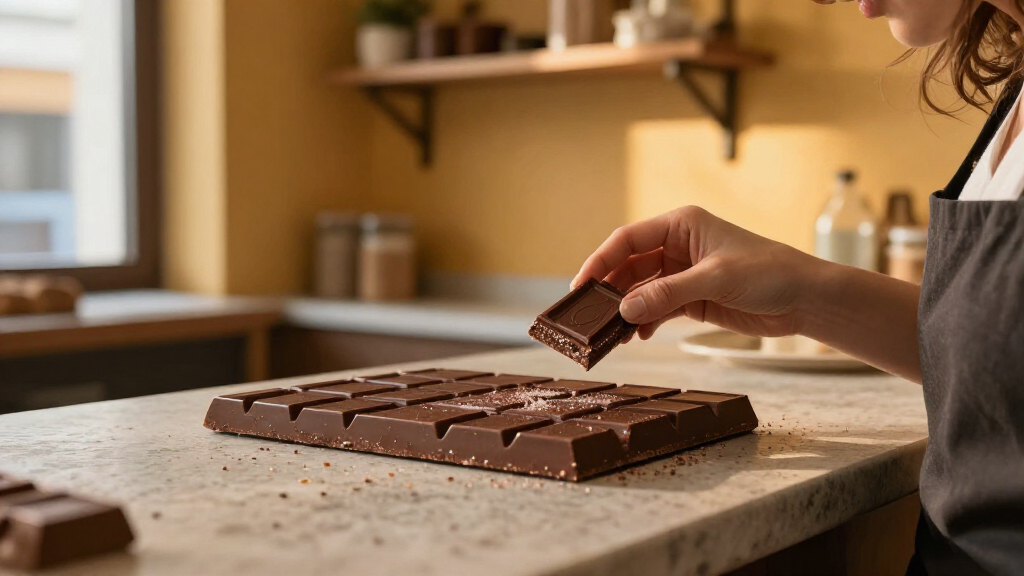
The Cioccolato di Modica PGI product specification describes a method that leaves perceptible sugar crystals, unlike smooth chocolate made to melt evenly. Those crystals give the bar a dry, crumbly bite and can make sweetness arrive in small bursts alongside the cocoa. This texture is a result of the method, not by itself evidence that the chocolate has gone stale or was made incorrectly.
The protected product specification describes a recipe based on cocoa mass and sugar; traditional versions may contain no added cocoa butter, contributing to a firmer, less creamy feel. Producers also make versions with ingredients such as cinnamon, vanilla, chili or citrus zest. The specification and individual package labels show that recipes vary, so shoppers should check the ingredient list and allergen information rather than assume every bar contains the same ingredients.
The practical buying cue is the full name Cioccolato di Modica IGP and the EU PGI mark. The European Commission’s register records the designation as granted in 2018 and links it to a defined geographical area and product specification. A package that mentions Sicily or Modica without the protected name and mark is not, on that basis alone, evidence that it meets the PGI rules.
Cioccolato di Modica Grainy, Ancient, and Worth Seeking Out
A distinctive Sicilian chocolate gets its firm, crystalline texture from sugar that is not fully dissolved. Its history has older influences, though an unchanged ancient recipe is not established.
Why the texture is grainy
The method leaves sugar crystals perceptible in the finished chocolate.
The sugar is not fully dissolved, creating a firm, crystalline texture.
Expect a dry, crumbly bite and bursts of sweetness rather than a smooth, quick melt.
What the PGI mark tells you
The EU designation ties the protected product to a defined area and specification.
- Look for the full name Cioccolato di Modica IGP and the EU PGI mark.
- The product follows a defined specification.
- A general mention of Modica or Sicily alone does not establish PGI status.
- Read ingredients and allergen information; recipes vary.
A layered history
Accounts connect Modica’s tradition to older chocolate-making influences and links among Spain, the Americas, and cacao.
Distinctive local method
The product specification describes the production approach that creates its characteristic texture.
Unchanged since antiquity
The available historical accounts do not prove an uninterrupted recipe passed down unchanged.
Choose and serve a bar
Use the label to match the version to your taste and dietary needs.
- Try a plain cocoa-and-sugar version to focus on the crystalline texture.
- Choose cinnamon, vanilla, chili, or citrus for added flavor.
- Serve a small piece at room temperature and let it soften slightly; espresso or fruit can accompany it.
How the PGI Mark Helps Shoppers
The European Commission’s geographical-indications register and the Cioccolato di Modica PGI specification give buyers a way to distinguish the protected product from bars that make a looser reference to Modica or Sicily. The mark is especially useful for visitors choosing a souvenir, but it does not mean every certified bar has an identical flavor: permitted ingredients and added spices can affect taste while the characteristic production approach remains central.
Product descriptions and the specification also help set expectations. Someone expecting a creamy, quick-melting bar may find the crystals surprising; a small piece served at room temperature makes its texture and concentrated cocoa flavor easier to notice. The difference reflects the technique described in the product specification.
Products Worth Considering

Le Creuset Alpine Outdoor Enameled Cast Iron Square Grill Pan, 10.25 in

Ninja Crispi 4-in-1 Portable Glass Air Fryer, Grey, FN101GY
Instant Pot Duo 6-Quart 7-in-1 Electric Pressure Cooker
As an affiliate, we earn on qualifying purchases.
A Sicilian Tradition With Older Influences
Modica is in the province of Ragusa in southeastern Sicily. Historical accounts of Modica chocolate connect the local tradition to older chocolate-making influences and to links among Spain, the Americas and the movement of cacao and chocolate knowledge. The historical record of cacao’s American origins and its arrival in Europe after European contact rules out treating the present-day recipe as an unchanged ancient European formula.
Accounts of Modica chocolate describe connections to older Mesoamerican chocolate practices, but resemblance and historical influence do not prove an uninterrupted recipe passed unchanged to today. Recipes, tools and tastes can evolve. The more supportable account in those historical sources is that Modica has a distinctive method and a layered history, rather than a demonstrably identical formula extending back to antiquity.
What the Historical Record Establishes
The historical accounts available here do not identify a specific original recipe, a complete chain of transmission or evidence that modern production has remained unchanged over centuries. They caution against claims that the recipe dates unchanged to antiquity. Those accounts do not detail the exact historical steps through which the method developed in Modica.
The European Commission’s PGI specification establishes the product’s protected requirements, but the mark does not tell shoppers what a particular bar will taste like beyond its relationship to those rules. The source material provides no individual producer details, current sales figures or newer policy development; the European Commission’s register records the designation as dating to 2018.
What to Check Before Buying
When choosing a bar, check for the full Cioccolato di Modica IGP name and EU mark, then read the ingredients and allergen statement. The European Commission’s product specification describes the protected product, while the package label shows the ingredients in a particular bar. A plain cocoa-and-sugar version makes the crystalline texture easiest to assess; cinnamon or citrus varieties offer a more aromatic alternative. The source material does not point to a pending regulatory decision or scheduled next milestone.
At home, serve a small piece at room temperature, allowing it to soften slightly before tasting. The source material also suggests pairing it with espresso or fruit, or using it in desserts without losing sight of its distinctive texture. The immediate next step for shoppers is to compare labels and choose a version suited to their preferences and dietary needs.
Key Questions
Why is Cioccolato di Modica grainy?
The Cioccolato di Modica PGI product specification describes cocoa mass and sugar being worked without fully dissolving the sugar. The remaining sugar crystals create a firm, dry and grainy texture.
How can I identify the protected product?
Look for the full name Cioccolato di Modica IGP and the EU Protected Geographical Indication mark. The European Commission’s register identifies the protected product; a general mention of Sicily or Modica is not equivalent evidence of protected status.
Is the recipe unchanged since antiquity?
No historical source cited here establishes that claim. Accounts describe older influences, but do not support presenting the history as an uninterrupted, unchanged recipe dating to antiquity.
What ingredients should I check?
The protected product specification describes cocoa mass and sugar, while producers may also make versions with cinnamon, vanilla, chili or citrus. Read the package’s ingredient and allergen information because products vary.
How should I serve it?
Serve a small piece at room temperature and let it soften slightly as you taste it. The source material also suggests pairing it with espresso or fruit.
Source: Mad Tasting