🔍 Read the full analysis: Scacce Ragusane: Sicily's Folded Flatbread Pies on Mad Tasting

Get kitchen staples and gadgets delivered free with Prime
- Fast, free delivery on millions of items
- Prime Video, Amazon Music and more included
- Member-only deals all year
TL;DR
Scacce ragusane are thin, filled flatbreads associated with the Ragusa area of southeastern Sicily. Cooks fold the dough over its filling in layers and bake it; recipes vary, but a thin sheet and restrained filling help prevent a soggy center.
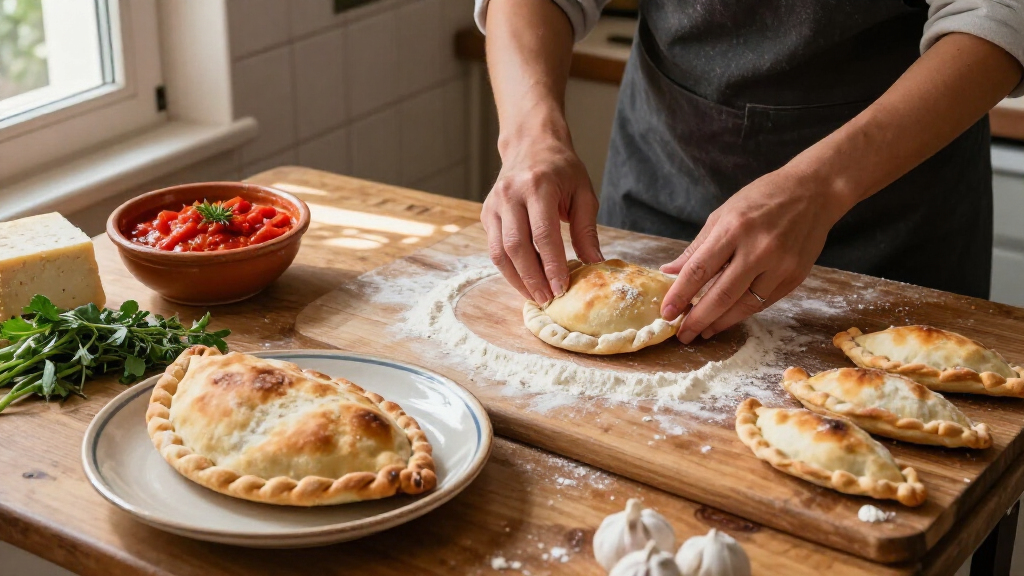
Scacce ragusane, a folded flatbread associated with Ragusa in southeastern Sicily, have a distinctive structure: cooks spread filling over thin dough, fold it over itself and bake it until browned. A Mad Tasting guide describes the dish and offers a home-cooking method, while stressing that fillings and family recipes vary.
The finished scaccia can resemble a small loaf or long rectangle, but a slice shows thin layers of dough with savory filling between them. The dough commonly uses flour, water, salt and yeast, with some versions adding olive oil. Cooks may use durum wheat flour or combine it with another flour. The guide presents tomato and cheese as a familiar starting combination, not a single required recipe.
Other fillings named in the guide include ricotta, onion, parsley, sausage and vegetables. Cheese choices vary, and caciocavallo is one option mentioned for its flavor and melting qualities. The central cooking advice is to roll the dough evenly and keep the filling modest: excess sauce or cheese can leak through the folds or leave the interior damp before the outer dough browns.
Scacce are commonly served warm or at room temperature as a snack, light meal or antipasto, according to the guide. Their folded shape makes them straightforward to cut into portions. The guide says the dish differs from pizza, where toppings sit on an open base, and calzone, which generally encloses filling in one folded pocket. Scacce instead distribute filling through several folds.
Scacce Ragusane Folded Flatbread Pies
This regional flatbread from southeastern Sicily layers savory filling between folds of thin dough. The method matters more than any single recipe.
What Makes Scacce
Filling runs through several layers, shaping both how the bread bakes and how it is served.
Thin dough, several folds
Spread filling over an even sheet, fold it over itself, then bake until browned.
Ragusa, Sicily
The dish is associated with the Ragusa area of southeastern Sicily.
Slice and share
Serve warm or at room temperature as a snack, light meal or antipasto.
A Practical Starting Point
A familiar filling combination is tomato and cheese; household and local recipes vary.
Prepare yeast dough using a tested recipe and roll it into an even sheet.
Use a light coat of thick sauce and a restrained amount of cheese.
Leave a narrow border, fold and seal. Follow a tested recipe for rise and baking details.
Choose Your Filling
The guide names several options, with no single filling required.
How the Folds Set It Apart
The filling’s position distinguishes scacce from two familiar Italian foods.
| Food | How filling is arranged |
|---|---|
| Scacce | Spread through several folds |
| Pizza | Toppings sit on an open base |
| Calzone | Usually enclosed in one folded pocket |
The Layers Define the Dish
The folding method is more than a visual distinction: it shapes how the bread cooks and how it is eaten. A thin, evenly rolled sheet allows the dough around the filling to bake through, while a restrained amount of moisture helps the layers hold their form. That makes technique central to reproducing the dish outside Sicily, even when a cook uses a different local cheese or seasonal filling.
For readers deciding what to make, the practical difference from pizza and calzone is useful. Scacce are built to be sliced across their layers, and the guide describes them as suitable for serving at room temperature as well as warm. The result is a regional food with an adaptable format, not a recipe that requires one fixed combination of ingredients.
The source also cautions against treating any single version as representative of every household. Local and family recipes differ; tomato and cheese offer a starting point, while vegetables, greens, ricotta or sausage can reflect what cooks have available. That variation is part of the dish’s reported character.
Products Worth Considering

Breville Barista Express Espresso Machine with Grinder, Black Truffle

Vitamix 5200 Professional-Grade Blender

Le Creuset Alpine Outdoor Enameled Cast Iron Square Grill Pan, 10.25 in
As an affiliate, we earn on qualifying purchases.
Ragusa’s Regional Flatbread
The name links the food to its place: the guide explains that scaccia refers to the dish and ragusane connects it to Ragusa; scacce is the plural form. The source locates the bread in southeastern Sicily and describes it as home cooking shaped by household and town preferences.
Its appearance can prompt comparisons with better-known Italian breads, but its defining feature is the filling spread across dough and carried through multiple folds. The guide offers that comparison as a way to understand the construction, rather than claiming that scacce have one uniform shape or thickness. It gives practical home advice, not a formal history or a definitive record of the dish’s origins.
““Local recipes vary, so think of the method as a useful starting point, not a claim that every Sicilian family makes the same scaccia.””
— Mad Tasting guide
Recipes Vary by Household
The source does not identify a single canonical filling, dough formula, shape or baking time, and it notes that recipes vary by family and locality. It also provides no publication date, interviews with Ragusa cooks or historical sourcing. The guidance should therefore be read as a practical overview of one approach, not a claim that all scacce are made the same way.
The exact proportions and baking conditions depend on the chosen dough and filling. The guide advises using a recipe for the dough’s rise and baking process but does not give a complete timed recipe in the supplied material. Readers should not infer a definitive cooking temperature or duration from it.
A Home Cook’s First Fold
The guide’s suggested starting point is tomato and a melting cheese. Prepare and rest a yeast dough according to a recipe, roll it into an even thin sheet, spread on a light coat of thick sauce and add a modest amount of cheese. Leave a narrow border, then fold the sheet over itself and seal the parcel before baking. The supplied material does not specify a complete fold sequence or baking time, so cooks should follow a tested recipe for those details.
For wetter ingredients, preparation matters: the guide recommends draining ricotta and squeezing moisture from cooked greens before adding them. Scacce may contain wheat, milk or cheese; sausage versions contain meat. Check ingredient labels and account for allergies and dietary needs. No further news milestone is identified in the source; the immediate next step for readers is trying a recipe that fits their ingredients and oven.
Key Questions
What are scacce ragusane?
Scacce ragusane are folded, baked flatbreads associated with the Ragusa area of southeastern Sicily. Their filling sits between layers of thin dough.
How are scacce different from pizza and calzone?
Pizza has toppings on an open dough base, while a calzone usually encloses filling in one folded pocket. Scacce are made by spreading filling over thin dough and folding it into several layers.
What filling should a beginner use?
The guide suggests tomato sauce and cheese as a familiar starting combination. Use a restrained amount of thick sauce and a melting cheese to limit excess moisture.
Can scacce be served at room temperature?
Yes. The guide says scacce are commonly eaten warm or at room temperature, including as a snack, light meal or antipasto.
What allergens or dietary ingredients may be present?
Recipes may contain wheat, milk and cheese; sausage versions contain meat. Check the ingredients in the specific recipe and any packaged products for allergens and dietary requirements.
Source: Mad Tasting