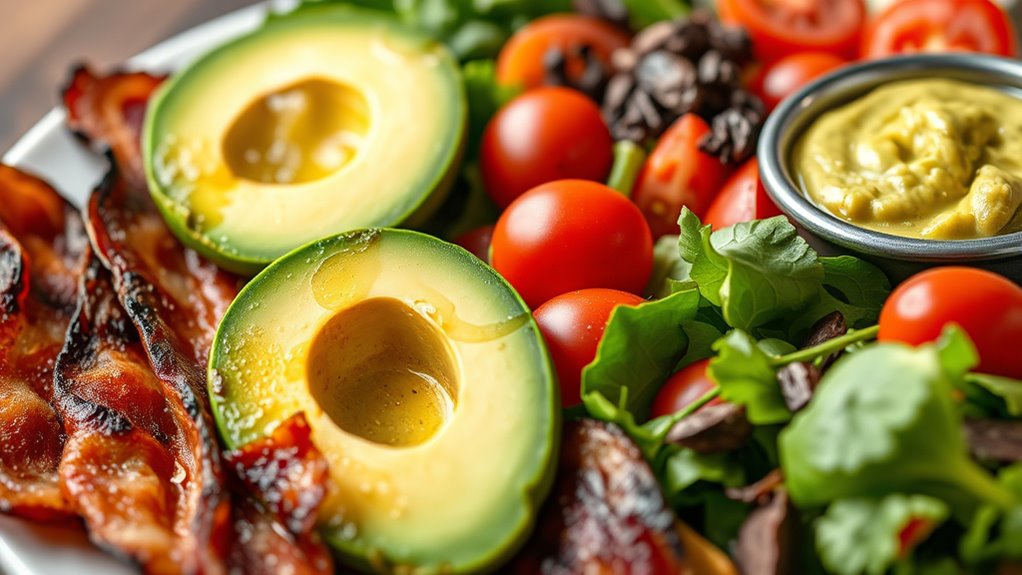

To avoid common keto mistakes, focus on thorough meal planning, accurate carb counting, and reading labels carefully. Poor planning can leave you unsure of what to eat, while miscounting carbs or overlooking hidden sugars can knock you out of ketosis. Balancing fats, proteins, and carbs is vital. Staying vigilant about these areas can make your keto journey smoother and more successful. Keep going to discover essential tips that help you stay on track.
Key Takeaways
- Failing to plan meals leads to unintentional carb intake and reliance on high-carb snacks.
- Not accurately reading food labels can result in consuming hidden carbs that hinder ketosis.
- Overlooking the importance of balancing fats, proteins, and carbs can disrupt energy levels and diet effectiveness.
- Underestimating carb content in seemingly innocent foods causes unintentional ketosis breaks.
- Neglecting consistent carb counting and meal prep increases the risk of derailment and slow progress.

Starting a ketogenic diet can be a game-changer, but even small mistakes can hinder your progress. One common pitfall is neglecting proper keto meal planning. Without a clear plan, you might find yourself unsure of what to eat, which can lead to unintentional carb sneaking into your meals. Effective keto meal planning involves understanding the right macronutrient ratios and preparing your meals in advance. When you plan ahead, you’re less likely to reach for high-carb snacks or processed foods that throw you out of ketosis. It also helps you maintain consistency, which is *essential* for seeing results. To do this well, you need to familiarize yourself with carb counting techniques. These techniques are *indispensable* for tracking your daily intake and ensuring you stay within your target carbohydrate limit—usually around 20 to 50 grams of net carbs per day. Using tools like food diaries or apps can simplify this process. They help you quickly identify hidden carbs in sauces, dressings, or packaged foods, preventing accidental overconsumption. Many beginners underestimate how many carbs are in seemingly innocent foods, so mastering carb counting techniques is *crucial* for staying in ketosis.
Another mistake many people make is failing to read food labels carefully. Packaged products often contain added sugars or carbs that can sabotage your efforts. When you plan meals, always check labels for ingredients like malt, dextrose, or dextrose equivalents, which are common hidden sources of carbs. Relying solely on generic guidelines or assumptions can lead you astray, especially with processed or prepared foods. Incorporating more whole, unprocessed foods into your diet minimizes the risk of hidden carbs and makes carb counting more straightforward. Remember, even small miscalculations can add up over time and knock you out of ketosis, so accuracy is *paramount*.
Additionally, you might overlook the importance of balancing your meals with enough healthy fats and protein. Many beginners focus too much on reducing carbs without ensuring they’re consuming enough fats to satisfy hunger and fuel your body. Proper keto meal planning involves not just counting carbs but also tailoring your meals to include sufficient healthy fats, like avocados, olive oil, and nuts, alongside moderate protein. This balance helps keep your energy levels stable and prevents cravings that might lead to carb binges. Ultimately, the key to a successful keto journey is meticulous planning, accurate carb counting, and mindful food choices. By paying attention to these areas, you’ll avoid common keto mistakes and stay on track toward your health goals.
Frequently Asked Questions
Can I Eat Unlimited Fats on a Keto Diet?
You can’t eat unlimited fats on a keto diet. While fat consumption is a key part of the diet, moderation is essential to maintain ketosis and avoid weight gain. You still need diet flexibility, so focus on healthy fats like avocados, nuts, and olive oil, and watch your overall intake. Balancing fats with proteins and carbs ensures you stay in ketosis and achieve your health goals effectively.
How Do I Track My Daily Carb Intake Accurately?
Tracking your daily carb intake is like using a precise map to avoid getting lost. You should focus on macronutrient tracking and carbohydrate counting by weighing your foods, reading nutrition labels, and using apps or journals. Measure portion sizes carefully, and stay consistent. This way, you’ll maintain ketosis without overdoing carbs, ensuring your keto journey stays on track and effective.
Is It Necessary to Fast While on Keto?
You don’t need to fast while on keto, but some people find intermittent fasting helps accelerate fat loss and improve mental clarity. If you choose to fast, remember to still focus on calorie counting and maintaining proper nutrient intake. Fasting isn’t essential for ketosis, so listen to your body and decide whether it fits your lifestyle. Stay consistent with your keto plan and adjust as needed for best results.
Can I Cheat on Keto Without Losing Progress?
You can do a keto cheat occasionally without losing progress if you get back on track quickly. A keto cheat might temporarily kick you out of ketosis, but it doesn’t mean all progress is lost. To maintain progress, limit cheat meals, focus on high-fat, low-carb foods, and resume your keto routine promptly. Remember, moderation is key, and consistency helps you achieve your goals without setbacks.
What Are Signs of Keto Flu and How to Prevent It?
Keto flu symptoms can hit you like a wave—fatigue, headache, irritability, and brain fog. To avoid keto flu, stay hydrated, replenish electrolytes, and ease into ketosis gradually. While it’s tempting to push through, listening to your body is key. Staying mindful of these signs and taking proactive steps helps you avoid keto flu, allowing you to enjoy the benefits of your keto journey without unnecessary discomfort.
Conclusion
Avoiding these keto mistakes can make your journey smoother and more successful. Stay mindful of what you eat, listen to your body, and don’t be afraid to adjust along the way. Remember, Rome wasn’t built in a day, so give yourself time to adapt and learn. Stay committed, and you’ll find that sticking to your goals gets easier. Keep your eye on the prize, and you’ll soon see the results you’re aiming for!