
To master keto baking, you need to understand how baking powder, yeast, and their substitutes work to give your treats rise and texture. Use keto-friendly baking powder made with baking soda and a non-sugar starch, or try alternatives like baking soda with vinegar or cream of tartar. Yeast can add flavor and structure but requires longer rise times. If you’re curious about perfecting your low-carb baking, exploring these options further will help you succeed.
Key Takeaways
- Use keto-friendly baking powder, which contains baking soda and non-carb fillers, to ensure proper leavening without sugar.
- Yeast can be used for bread, but requires longer rising times; opt for gluten-free, keto-compatible types.
- Substitute baking powder with baking soda combined with acid like vinegar or cream of tartar for quick leavening.
- Check ingredient labels to avoid added sugars or fillers that interfere with ketosis.
- Proper understanding of leavening agents ensures light, well-risen baked goods suitable for a keto diet.

If you’re diving into keto baking, having the right essentials makes all the difference. The foundation of successful keto recipes hinges on knowing which ingredients to use, especially when it comes to leavening agents and sweeteners. One of the most important aspects is selecting the right gluten free flours, as traditional wheat flour isn’t suitable for a keto diet. Almond flour and coconut flour are popular options because they’re low in carbs and high in healthy fats. These flours not only give your baked goods structure but also contribute to their moistness and flavor. When choosing gluten free flours, remember that they behave differently from regular flour, so you might need to adjust your ingredient ratios or add binders like xanthan gum or psyllium husk to achieve the desired texture. Understanding the symbolism behind ingredients like baking powder can help you appreciate their role in your baking process.
Sweetening your baked goods without sugar can be tricky, but sugar substitutes are your best friends here. Popular options include erythritol, stevia, and monk fruit extract. These sweeteners provide the sweetness you crave without the carb load, making them ideal for keto baking. When using sugar substitutes, be mindful of their sweetness potency—some, like stevia, are much sweeter than sugar, so a little goes a long way. Also, some sugar substitutes can have aftertastes, so experimenting with blends might be worthwhile to achieve a more natural flavor.
Sweeteners like erythritol, stevia, and monk fruit bring sugar-free sweetness to keto baked goods.
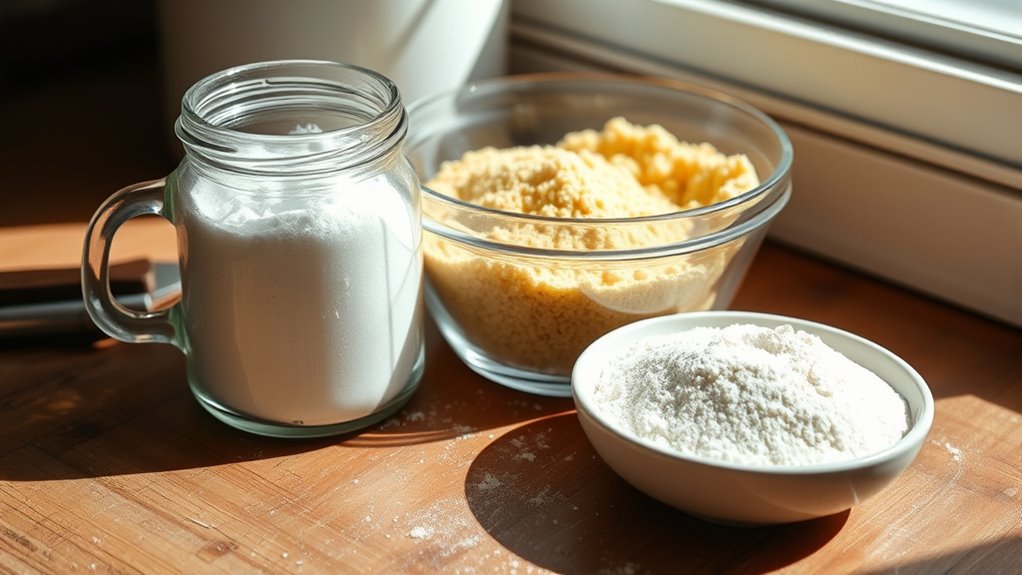
Leavening agents like baking powder and yeast are essential for giving your baked goods rise and a light texture. Keto-friendly baking powder typically contains baking soda and a starch that doesn’t interfere with ketosis. Always check labels to ensure there are no added sugars or fillers. Yeast can also be used in keto baking, particularly in bread recipes, but it requires patience as it takes longer to rise. For those avoiding traditional yeast, baking soda combined with an acid like apple cider vinegar or cream of tartar can serve as a quick alternative, providing the necessary lift for your baked treats.
Understanding the roles these essentials play helps you craft better keto baked goods. Having the right gluten free flours ensures your recipes hold together and mimic traditional textures, while sugar substitutes keep your desserts sweet without the carbs. Proper leavening agents give your baked creations a desirable rise and lightness. With these essentials in your pantry, you’ll feel more confident experimenting and creating delicious, low-carb treats that satisfy your cravings. The key is to recognize how each ingredient interacts and to adjust your recipes accordingly, making keto baking both enjoyable and successful.
Frequently Asked Questions
Can I Use Baking Soda Instead of Baking Powder?
Yes, you can use baking soda instead of baking powder, but you need to make some adjustments. Baking soda is more potent, so you’ll want to use about a third of the amount called for in baking powder. To activate it, add an acid like lemon juice or vinegar. For baking soda alternatives, consider using cream of tartar or yeast substitution tips, but remember, they may change your recipe’s texture.
How Do I Store Baking Ingredients to Keep Them Fresh?
Storing snacks smartly sustains freshness and flavor. Keep baking ingredients in airtight containers to prevent pests and preserve potency. Store baking powder and yeast in cool, dry places away from sunlight to extend their shelf life. Label containers with purchase dates, and periodically check for clumps or changes in smell. Proper storage tips protect ingredient longevity, ensuring your baking stays fresh, flavorful, and fuss-free for future fabulous feasts.
Are There Gluten-Free Yeast Options Suitable for Keto?
Yes, there are gluten-free yeast options suitable for keto baking. You can use nutritional yeast or gluten-free, grain-free yeasts that work well with keto-friendly ingredients like almond or coconut flour. These yeasts enhance flavor without adding carbs or gluten. Pair them with sugar alternatives to keep your baked goods low-carb and tasty. Always check labels to make sure they’re free from grains and adhere to your keto and gluten-free standards.
What Are Natural Substitutes for Baking Powder?
You can use natural leavening agents like baking soda combined with acid substitutes such as lemon juice or apple cider vinegar for baking powder. When you mix baking soda with these acids, it creates carbon dioxide bubbles that help your baked goods rise. This natural leavening method works well in keto recipes, providing a clean, gluten-free alternative to traditional baking powder. Just remember to adjust quantities for the best results.
How Does Altitude Affect Keto Baking With Yeast?
At higher altitudes, you need to make altitude adjustments to guarantee proper yeast rising. The thinner air causes dough to rise faster, so you should reduce the yeast amount slightly and increase liquids to prevent over-expansion. Also, consider decreasing sugar and adding a bit more salt. These tweaks help maintain the right structure and flavor, giving your keto baked goods the perfect rise and texture despite the altitude challenges.
Conclusion
With these keto baking essentials in your pantry, you’re armed with the ingredients to turn your low-carb dreams into reality. Whether you rely on baking powder, yeast, or their substitutes, you hold the key to crafting delicious treats that won’t derail your diet. Think of these ingredients as the secret spices in your keto recipe arsenal—adding flavor, lift, and life to every bake. Now, go ahead and create keto masterpieces that delight your taste buds and fuel your goals.