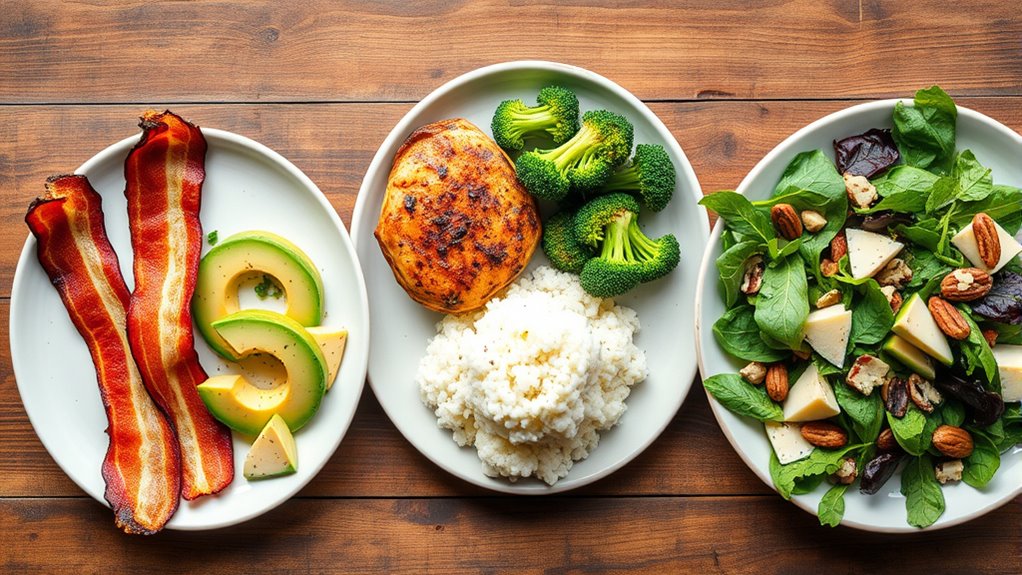
Keto and Atkins both cut carbs to promote fat burning but differ in their approach. Keto focuses on high fats and very low carbs to stay in ketosis, with strict meal timing and supplement use. Atkins starts with few carbs but gradually adds them back, offering more flexibility over time. If you want to explore which plan fits your lifestyle and goals better, you’ll find more details below.
Key Takeaways
- Keto emphasizes strict high-fat, moderate-protein, very low-carb intake to sustain ketosis, while Atkins starts very low and gradually reintroduces carbs.
- Atkins offers more dietary flexibility over time, whereas keto requires consistent meal timing and electrolyte support for ketosis maintenance.
- Both diets promote fat loss and mental clarity but differ in carbohydrate reintroduction and overall strictness.
- Supplement use, such as electrolytes and fiber, is common in both to prevent deficiencies during initial phases.
- Other low-carb diets may vary in carb limits and structure, often blending features from keto and Atkins for personalized approaches.

When choosing between the keto and Atkins diets, understanding their similarities and differences can help you make an informed decision. Both focus on reducing carbohydrate intake to promote fat burning, but they differ in how strictly and how quickly they shift your body into ketosis. The keto diet emphasizes a high-fat, moderate-protein, very low-carb approach to induce and maintain ketosis continuously. In contrast, Atkins starts with a very low carb intake during the induction phase but gradually increases carbs as you progress through its phases. This flexibility means you might find Atkins easier to adapt over time, especially if you want to incorporate more carbs later.
Meal timing plays a role in both diets, although it’s more emphasized in keto. Since keto aims to keep you in ketosis consistently, many follow regular, spaced-out meals to sustain stable blood sugar and ketone levels. Some keto followers also experiment with intermittent fasting to boost fat loss and enhance mental clarity. On the other hand, Atkins allows for more flexible meal timing, especially in the later phases when carb intake increases. During the initial phase, sticking to a strict schedule helps establish ketosis, but as you progress, you can adapt your meal timing to suit your lifestyle.
Both diets may benefit from dietary supplements, especially during the initial stages. Many keto enthusiasts supplement with electrolytes—magnesium, potassium, and sodium—to prevent imbalances caused by rapid water loss. They also often take exogenous ketones or MCT oils to help boost ketone levels and improve energy. Atkins followers might also use supplements, especially during the induction phase, to manage cravings and ensure nutritional adequacy. For example, fiber supplements can help offset the low fiber intake from restricted carbs, and multivitamins can fill potential nutrient gaps caused by limited fruit and grain consumption. Additionally, some individuals use monitoring tools to track their progress and stay in ketosis more effectively.
While both diets aim for fat loss and improved mental clarity, they require careful planning around meal timing and supplementation. Keto demands more consistent meal scheduling and supplements to maintain ketosis and electrolyte balance, especially during the initial phases. Atkins offers a more gradual transition, giving you room to reintroduce carbs and adjust your intake without strict adherence to continuous ketosis. Ultimately, your choice depends on how strict you want to be, your lifestyle, and your willingness to incorporate dietary supplements to optimize your results. Understanding these nuances helps you tailor your approach and stay committed to your health goals.
Frequently Asked Questions
How Do These Diets Impact Long-Term Cardiovascular Health?
You might wonder how these diets impact your long-term heart health. While they can improve some risk factors like weight and blood sugar, they may also carry long-term risks, especially if your fat intake is high. Consistently consuming unhealthy fats could increase your risk of heart disease. To protect your heart health, focus on balanced, nutrient-rich foods and consult your healthcare provider for personalized advice.
Can These Diets Be Tailored for Specific Medical Conditions?
Think of your diet as a custom suit; it can be tailored for your unique needs. You can incorporate personalized nutrition and medical adaptations to these low-carb plans, ensuring they suit conditions like diabetes or heart issues. By working with a healthcare professional, you adapt your diet’s fabric—its carbs, fats, and proteins—so it fits your health goals and medical requirements perfectly, making your journey safer and more effective.
What Are Common Challenges When Transitioning to These Diets?
When shifting to these diets, you might face challenges with meal planning and social eating. You’ll need to carefully plan meals to stay within low-carb limits, which can be time-consuming. Social situations, like dining out or gatherings, often involve carb-heavy foods, making it hard to stick to your plan. Staying committed requires preparation, flexibility, and clear communication about your dietary needs to maintain your progress.
Are There Differences in Mental Clarity or Energy Levels?
You’ll likely notice improved mental clarity and sustained energy on low-carb diets, especially after the initial adaptation phase. Studies show that many experience a 20% reduction in brain fog within weeks. With steady blood sugar levels, you won’t face energy crashes, making it easier to stay focused and alert throughout the day. This mental sharpness often surpasses what you feel on high-carb diets, giving you a clearer, more energetic mind.
How Do These Diets Affect Athletic Performance?
You might notice improved athletic performance on low-carb diets like keto or Atkins, as they can enhance fat burning and energy stability. These diets support muscle recovery by providing steady fuel and help maintain hormonal balance, which is vital for endurance and strength. However, some athletes may initially experience a dip in performance, so it’s vital to adapt your diet gradually and monitor how your body responds.
Conclusion
Ultimately, choosing between keto, Atkins, or other low-carb diets depends on your goals and preferences. Think of it like picking your favorite steed—each has its strengths and quirks. Whether you prefer the steady ride of Atkins or the rapid sprint of keto, remember that consistency is key. So, don’t be a knave—pick what suits you best, stay committed, and watch your health transform faster than a knight can draw his sword.