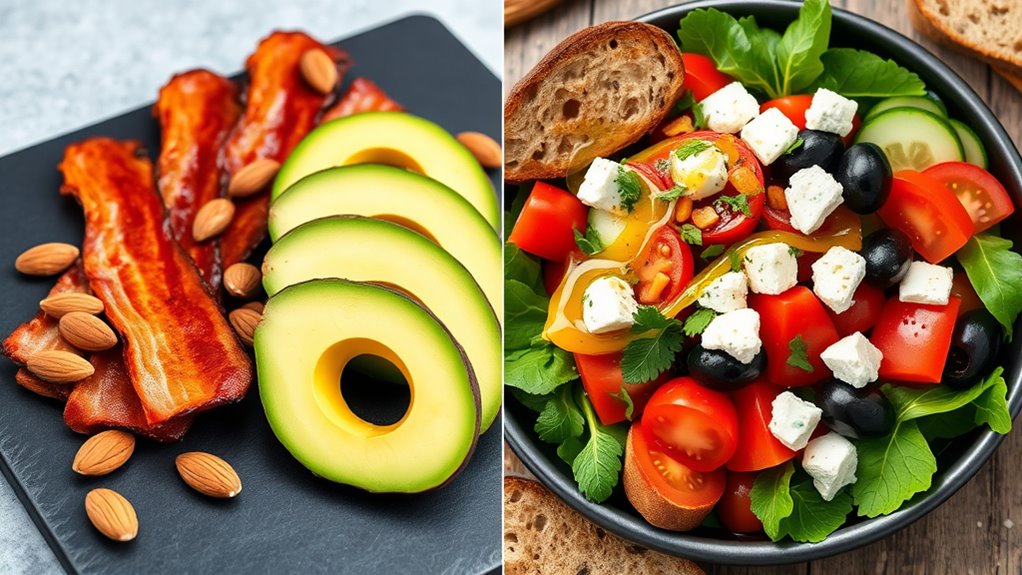

If you’re deciding between the keto and Mediterranean diets, consider your health goals. The keto diet focuses on very low carbs and high fats to promote rapid fat loss and ketosis, while the Mediterranean diet emphasizes heart-healthy fats, plant-based proteins, and moderate carbs for long-term well-being. Both can incorporate intermittent fasting and plant-based options. To discover which approach aligns best with your lifestyle and goals, explore the key differences further.
Key Takeaways
- Keto emphasizes very low carbs and high fats to induce ketosis, promoting rapid fat loss.
- Mediterranean diet focuses on heart-healthy fats from olive oil, nuts, and fish with moderate carbs from plant-based foods.
- Keto restricts carbohydrate sources, while Mediterranean diet allows more carbs from whole grains, legumes, and fruits.
- Both diets include healthy fats, but keto prioritizes high-fat intake, and Mediterranean emphasizes balanced, heart-friendly fats.
- Combining intermittent fasting with either diet can boost fat burning and health benefits, tailored to individual goals.

Are you trying to decide between the keto and Mediterranean diets? Both have their unique benefits, but understanding how they align with your lifestyle goals can help you make the right choice. The keto diet emphasizes low carbs and high fat, encouraging your body to enter ketosis for energy. Meanwhile, the Mediterranean diet promotes heart-healthy fats, plant-based proteins, and a balanced approach to eating. To get the most out of either, consider how they fit into your daily routines, especially if you’re interested in practices like intermittent fasting or incorporating more plant-based proteins.
If you’re leaning toward keto, you might find that combining it with intermittent fasting amplifies its benefits. Intermittent fasting involves cycling between periods of eating and fasting, which can boost fat loss and improve metabolic health. When you fast, your body shifts more quickly into ketosis, making the diet more effective. Plus, integrating plant-based proteins like nuts, seeds, and tofu into your keto meals can add variety and essential nutrients without knocking you out of ketosis. These proteins help maintain muscle mass and keep your diet balanced, especially if you’re looking to reduce reliance on animal products. Additionally, understanding the role of keto-friendly fats can optimize your diet’s effectiveness.
On the other hand, the Mediterranean diet naturally incorporates plenty of plant-based proteins, including legumes, grains, nuts, and seeds. These not only provide essential nutrients but also support long-term heart health. If you enjoy a more flexible eating pattern that allows for moderate carbohydrate consumption, the Mediterranean approach might suit you better. You can still achieve fat loss and health benefits by choosing healthy fats like olive oil, avocados, and fatty fish. It’s a diet that encourages social eating, fresh produce, and whole grains, making it easier to stick with over time.
Both diets can be tailored to include intermittent fasting, though the approach may differ. With keto, fasting can help accelerate ketosis and fat burning, especially when combined with low-carb, high-fat meals featuring plant-based proteins. The Mediterranean diet, paired with fasting, supports a balanced, heart-healthy approach while allowing for more carbohydrate intake, which some find easier to sustain long-term.
Incorporating intermittent fasting enhances both keto and Mediterranean diets for better health results.
Ultimately, your choice depends on your preferences and goals. If you want rapid fat loss and don’t mind limiting carbs, keto with intermittent fasting and plant-based proteins could work well. If you prioritize heart health, variety, and a more moderate carb intake, then the Mediterranean diet offers a sustainable, flexible option. Either way, understanding how these elements fit into your lifestyle helps you make informed decisions for your health journey.
Frequently Asked Questions
Can I Combine Keto and Mediterranean Diets?
Yes, you can combine the keto and Mediterranean diets, but diet compatibility depends on your goals. Focus on meal planning that emphasizes healthy fats like olive oil and nuts while limiting carbs to stay within keto guidelines. Incorporate Mediterranean staples like vegetables, fish, and lean meats. Adjust portions and ingredients to balance low-carb needs with heart-healthy fats, creating a personalized plan that suits your lifestyle and health objectives.
Which Diet Is Better for Athletes?
You should choose the diet that best supports your training challenges and helps avoid nutrient deficiencies. The Mediterranean diet offers heart-healthy fats and a balanced approach, providing sustained energy for endurance and recovery. Keto can boost fat-burning but may cause nutrient deficiencies and hinder high-intensity performance. Consider your sport’s demands and consult a nutritionist to tailor your diet, ensuring ideal performance and health.
How Do These Diets Impact Mental Health?
Your mental health can feel like a rollercoaster, but these diets influence it differently. The keto diet’s focus on fats may boost cognitive benefits and enhance mood regulation for some, while the Mediterranean diet’s emphasis on whole foods and healthy fats supports brain function and emotional stability. You might find that one helps you feel sharper and more balanced, depending on your body’s response and nutritional needs.
Are There Age-Specific Considerations for These Diets?
You should consider age-related nutritional needs and diet customization considerations when choosing between these diets. For example, older adults may need more calcium and vitamin D, so you might adjust your Mediterranean diet to include more dairy or fortified foods. Younger individuals might focus on balanced macros, but always tailor your approach to support your health goals. Consulting a healthcare professional guarantees your diet suits your specific age and needs.
What Are the Long-Term Sustainability Differences?
Ironically, sticking to a diet long-term can feel like a marathon, not a sprint. The Mediterranean diet often wins in sustainability because it promotes diet adherence through variety and pleasure, plus its lower environmental impact. Keto, while effective short-term, may be harder to maintain due to restrictive rules and higher resource use for animal products. So, if you want lasting change, consider its long-term sustainability and environmental implications.
Conclusion
Choosing between keto and the Mediterranean diet depends on your goals and preferences. Both offer unique benefits—keto for quick energy and weight loss, Mediterranean for heart health and long-term wellness. Remember, Rome wasn’t built in a day, so find what works for you and stay consistent. Whichever path you pick, making small, sustainable changes will lead to lasting results. Your health journey starts with one step—so go ahead and take it today!