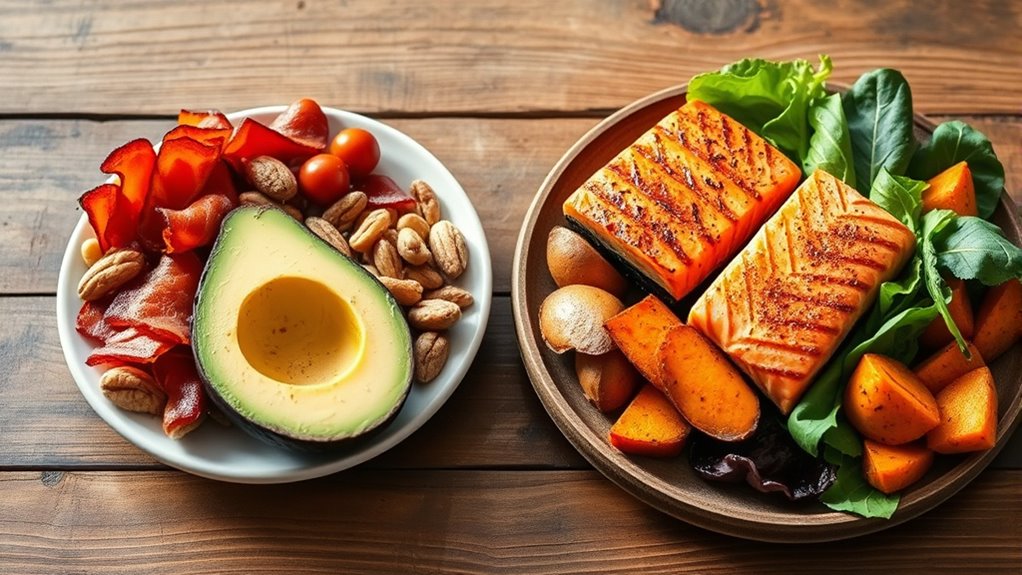

Choosing between keto and paleo depends on your goals and lifestyle. If you want rapid fat loss and mental clarity, keto’s high-fat, low-carb approach and meal timing might suit you best. If you prefer a more flexible, natural-food style with fewer restrictions, paleo offers balance and a broader range of carbs from fruits and tubers. To discover which aligns best with your needs and preferences, explore how each diet fits into your daily life.
Key Takeaways
- Choose keto for rapid fat loss, mental clarity, and strict ketosis; opt for paleo if you prefer flexibility and natural, unprocessed foods.
- Keto requires precise meal timing and electrolyte management; paleo offers more adaptable eating patterns and fewer restrictions.
- If you want a high-fat, moderate-protein diet with carb limits, keto is ideal; for a balanced, less restrictive plan, paleo suits better.
- Keto emphasizes strict carb control from all sources; paleo allows natural carbs from fruits and tubers, making it more flexible.
- Consider your lifestyle goals: keto for intense fat burning and mental focus, paleo for sustainable, whole-food-based health.
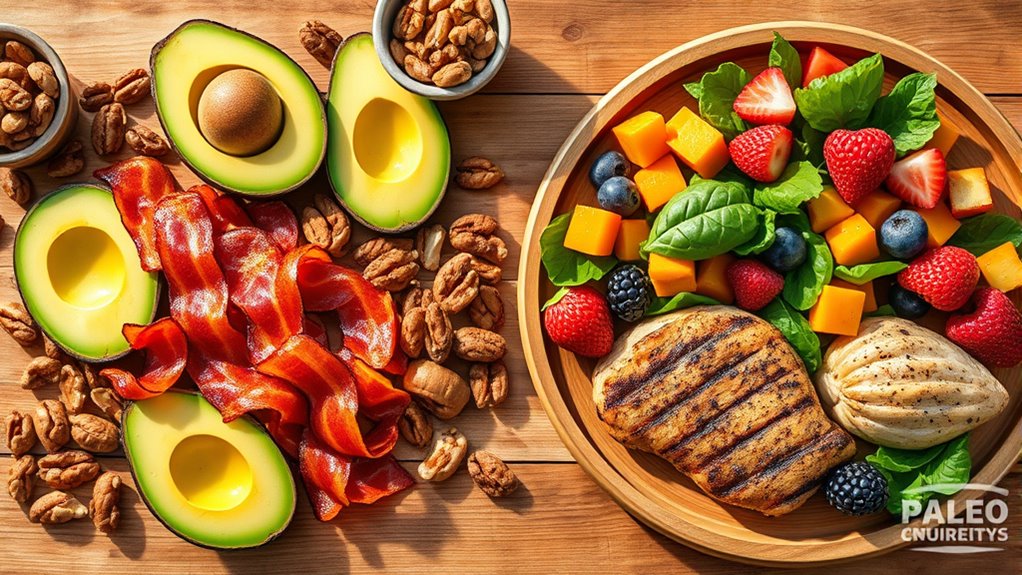
Are you trying to decide between the keto and paleo diets? Both focus on reducing carbs and emphasizing whole, unprocessed foods, but they approach this goal differently. Understanding how each diet influences your meal timing and supplement strategies can help you choose the one that fits your lifestyle best. With keto, your primary focus is on maintaining a state of ketosis by limiting carbs to around 20-50 grams daily. This means you’ll need to plan your meals carefully to keep your carb intake low, often eating high-fat, moderate-protein foods. Proper meal timing becomes pivotal here, as spacing out meals to sustain ketosis can prevent dips in energy and mental clarity. Some keto followers even incorporate intermittent fasting, which enhances fat burning and simplifies meal planning by reducing the number of eating windows. When it comes to supplement strategies, keto dieters often supplement with electrolytes—sodium, potassium, magnesium—to combat potential imbalances caused by reduced carb intake. Omega-3 fatty acids and MCT oil are also popular, helping boost energy levels and support fat metabolism. Additionally, performance enhancements like targeted supplements can further optimize your keto experience.
On the other hand, paleo emphasizes eating whole, unprocessed foods similar to what ancient hunter-gatherers consumed. It’s less restrictive about macronutrient ratios, so you might find more flexibility in your meal timing—eating more frequently or less often, depending on your hunger cues. Paleo encourages balanced meals that include lean meats, fruits, vegetables, nuts, and seeds, allowing for natural carb intake from fruits and tubers. Since paleo doesn’t strictly limit carbs, supplement strategies differ; many paleo followers focus on nutrient-dense foods to get their vitamins and minerals naturally, but some might take supplements like fish oil or vitamin D if their diet lacks certain nutrients. Meal timing here is more adaptable, but adhering to regular eating patterns helps maintain stable energy levels and prevent overeating.

Bentgo Prep – 20-Piece 3-Compartment Reusable Meal Prep Containers with Lids, PFAS & BPA Free Materials, Durable, Microwave, Freezer, & Dishwasher Safe To Go Food Storage (Silver)
#1 Brand Pick for Meal Prep Containers: Bentgo is the top pick for meal prep containers!* This lightweight,…
As an affiliate, we earn on qualifying purchases.
As an affiliate, we earn on qualifying purchases.
Frequently Asked Questions
Can I Combine Keto and Paleo Diets Effectively?
Yes, you can combine keto and paleo diets effectively by focusing on meal pairing and food flexibility. Stick to paleo-approved foods like vegetables, meats, and healthy fats, while keeping carb intake low enough for keto. Adjust portion sizes and ingredients to suit both diets, allowing for variety and balance. This approach helps you enjoy the benefits of both, while maintaining a sustainable and personalized plan that fits your lifestyle.
What Are the Long-Term Health Impacts of Each Diet?
Your long-term health can be dramatically impacted by your diet choices. Keto may boost heart health for some, but it risks nutritional deficiencies if not carefully managed. Paleo emphasizes whole foods, supporting long-term heart health, but can be restrictive. Over time, both diets could lead to deficiencies or imbalances if not properly planned. Stay informed and consult a healthcare professional to guarantee your diet promotes lasting health and vitality.
How Do Keto and Paleo Affect Athletic Performance?
You’ll find that keto can boost your ketogenic endurance, helping you sustain energy during prolonged cardio sessions. Paleo, on the other hand, emphasizes strength, supporting muscle growth with natural, unprocessed foods. If endurance is your goal, keto might be more suitable, while paleo can enhance your strength training. Both diets influence performance differently, so choose based on whether you prioritize sustained energy or muscle power.
Are There Any Age Restrictions for Starting These Diets?
There are generally no strict age limits for starting keto or paleo diets, but you should consider your health status before beginning. If you’re a teenager, elderly, or have specific medical conditions, it’s best to consult a healthcare professional first. Age influences diet initiation because nutritional needs change over time, so tailoring these low-carb plans guarantees safety and effectiveness as you adapt to your body’s requirements.
Which Diet Is More Sustainable for Weight Maintenance?
Think of sustainable weight maintenance like a well-tended garden—you need consistent care. Paleo often offers more flexibility, making meal planning easier and reducing social challenges, which helps you stick to it long-term. Keto’s strict carb limits can be harder to maintain socially and in daily life. Ultimately, choose the one that fits your lifestyle, preferences, and social habits, so you stay committed and see lasting results.

Paleo Pro Beef Protein Powder – Grass Fed Protein Powder Isolate – Pure Animal Based Pastured & Cage-Free | Dairy & Gluten Free, Natural and Clean Proteins for Paleo & Keto – 15 Days Supply (Cacao)
26g PURE PALEO PROTEIN: Fuel your body with 26g of premium pure protein powder per serving from pastured…
As an affiliate, we earn on qualifying purchases.
As an affiliate, we earn on qualifying purchases.
Conclusion
Choosing between keto and paleo depends on your goals and preferences. Did you know that nearly 60% of people who try low-carb diets experience improved energy and weight loss? If you want rapid fat burning and mental clarity, keto might suit you best. But if you prefer whole, unprocessed foods and sustainable eating, paleo could be your perfect fit. Whichever you choose, commit to consistency and listen to your body for the best results.
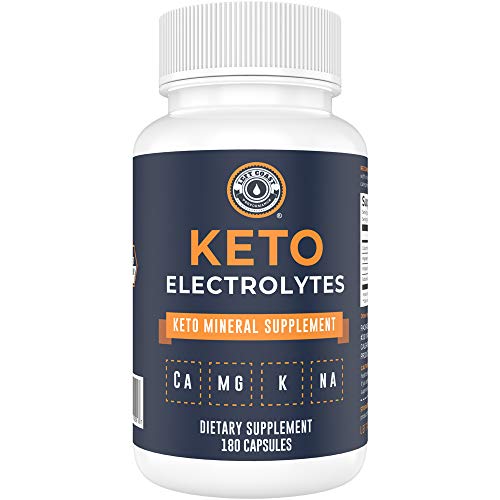
Keto Electrolyte Supplement, 180 Capsules. Electrolyte Pills for Ketogenic Diet. Magnesium, Potassium, Sodium, Calcium. Keto Tablets for Hydration Support* by Left Coast Performance
Ideal For the Keto Diet & Low Carb Diets: Our formulation focuses on the ingredients you need (Magnesium,…
As an affiliate, we earn on qualifying purchases.
As an affiliate, we earn on qualifying purchases.

Nature’s Way Organic MCT Oil, Brain and Body Fuel*, Liquid Coconut MCT Oil with C8 Caprylic & C10 Capric Acids, 14 g Medium Chain Triglycerides per Serving, Keto & Paleo Certified, Non-GMO, 16 Fl Oz
Organic Coconut MCT Oil – Organic MCT oil sourced from coconuts, delivering medium chain triglycerides with 14 g…
As an affiliate, we earn on qualifying purchases.
As an affiliate, we earn on qualifying purchases.