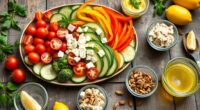
Batch cooking involves preparing large quantities of a few dishes for later, focusing on cooking techniques like roasting or slow-cooking, while meal prepping centers on chopping, portioning, and assembling ingredients beforehand for varied meals. Batch cooking saves time by reheating mainly the same dishes, whereas meal prepping offers flexibility with different meal options using prepared ingredients. To learn more about how these strategies can fit into your routine, keep exploring the differences and benefits.
Key Takeaways
- Batch cooking prepares large quantities of specific dishes, while meal prepping involves pre-assembling ingredients for various meals.
- Batch cooking focuses on cooking techniques like roasting or simmering, whereas meal prepping emphasizes chopping, portioning, and organizing ingredients.
- Batch cooking produces ready-to-eat meals for multiple servings, while meal prepping offers flexible ingredients for diverse meal assembly.
- Proper storage is essential for both, but meal prepping often involves more ingredient organization for quick meal customization.
- The choice depends on personal preferences for consistency and simplicity (batch cooking) versus variety and meal flexibility (meal prepping).

When it comes to saving time and staying organized in the kitchen, batch cooking and meal prepping are popular strategies. They both help you manage your weekly meals more efficiently, but they serve slightly different purposes. Understanding the distinction starts with how you handle ingredient storage and the cooking techniques involved.
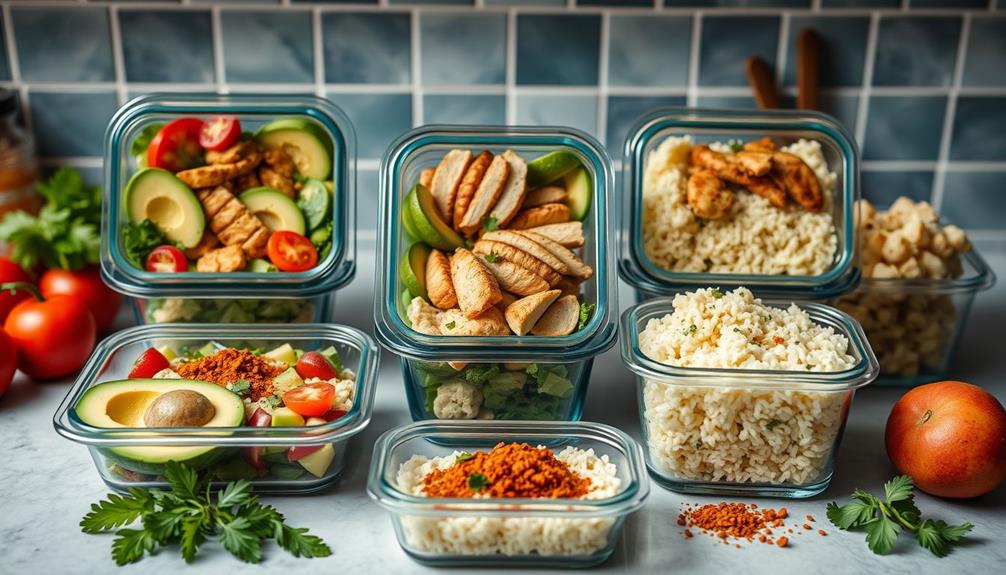
Batch cooking involves preparing large quantities of a few dishes at once, then portioning them into containers for later use. It’s ideal if you want to cook multiple servings of the same meal, such as a big pot of chili, stew, or roasted vegetables. This method emphasizes cooking techniques that allow you to make large batches, like simmering, roasting, or slow-cooking. Once you’ve cooked these items, proper ingredient storage becomes essential to keep everything fresh and safe. Using airtight containers or vacuum-sealed bags preserves flavors and extends shelf life, and labeling your meals helps track freshness. This process reduces daily cooking time because you only need to reheat the prepared dishes during the week.
Prepare large batches of meals and store them in airtight containers to save time and keep ingredients fresh.
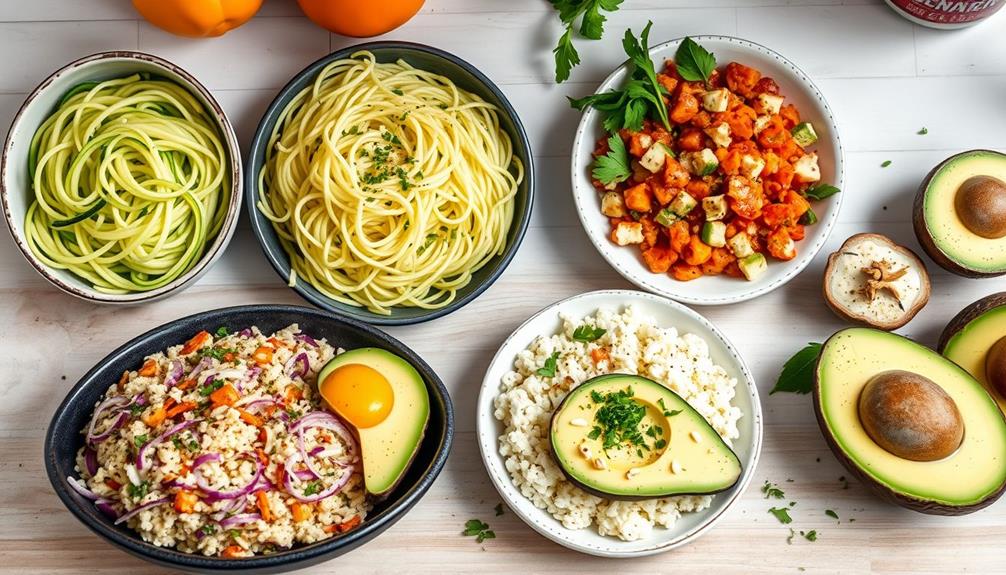
Meal prepping, on the other hand, focuses on preparing ingredients or entire meals ahead of time, often with a more diverse selection. Instead of cooking large quantities of the same dish, you might chop vegetables, cook grains, or portion out proteins in advance. The key here is to streamline your cooking techniques so that ingredients stay fresh and are easy to assemble later. For example, you might roast a batch of vegetables for the week, cook a large pot of rice, and prepare grilled chicken breasts—then combine these ingredients into different meals during the week. Ingredient storage plays an integral role here, too. Proper containers, like meal prep boxes or small jars, keep ingredients separate and fresh until you’re ready to assemble. By organizing your ingredients properly, you can mix and match meals quickly, saving time each day.
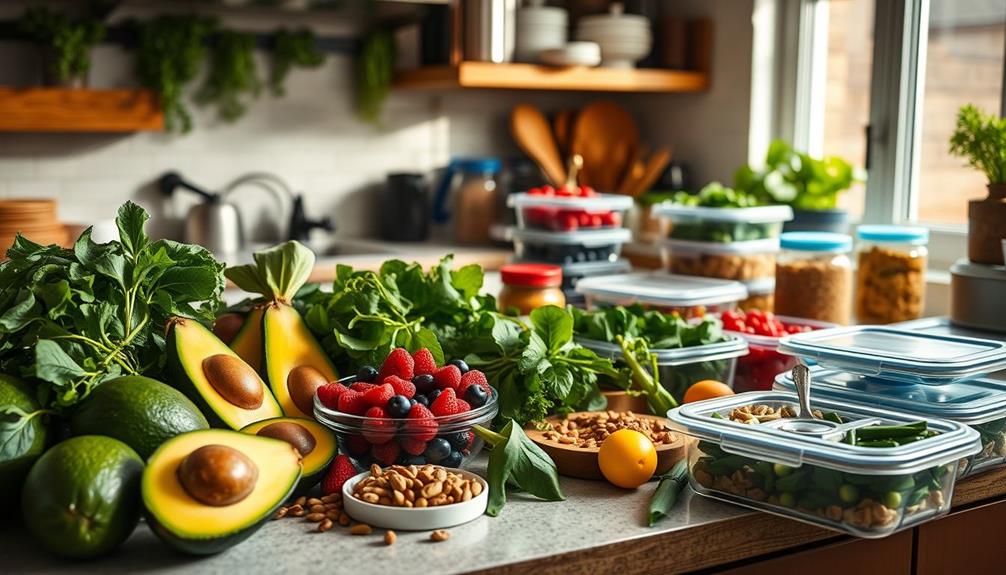
Both approaches rely heavily on efficient ingredient storage and smart cooking techniques. Batch cooking often involves techniques that maximize large-scale output, while meal prepping emphasizes prepping individual ingredients to facilitate quick assembly later. Choosing between them depends on your schedule, cooking style, and preferences. If you prefer having a few meals ready to go, batch cooking might be best. If you like variety and flexibility, meal prepping lets you prepare ingredients ahead and create different meals throughout the week. Either way, mastering ingredient storage and high-quality cooking techniques helps you stay organized, reduce waste, and make healthy eating easier. Additionally, incorporating space-saving storage solutions can significantly improve your kitchen organization and ensure your prepped ingredients remain fresh longer.
Frequently Asked Questions
Which Method Is More Cost-Effective Long-Term?
You’ll find that both methods can be cost-effective long-term if you focus on cost savings and ingredient variety. Batch cooking allows you to buy ingredients in bulk, reducing expenses over time, while meal prepping helps you avoid impulse buys and minimizes waste. By choosing the approach that suits your schedule and preferences, you can maximize savings and enjoy a diverse range of nutritious meals without overspending.
How Do Storage Needs Differ Between the Two?
Storage needs substantially differ, so you should consider container types and refrigeration requirements. Batch cooking often involves larger portions stored in sturdy, stackable containers that tolerate freezing and reheating. Meal prepping usually requires smaller, versatile containers for daily use, kept refrigerated for freshness. You need to prioritize airtight, leak-proof containers to prevent spills, and guarantee your fridge space suits the volume of prepared meals, keeping everything fresh and safe for consumption.
Can Batch Cooking Accommodate Dietary Restrictions?
Yes, batch cooking can accommodate dietary restrictions effectively. You can plan ahead by making dietary adaptations and ingredient substitutions to suit specific needs like gluten-free, vegan, or low-sodium diets. This approach allows you to prepare large quantities of meals with the right ingredients, ensuring consistency and convenience. By customizing recipes during batch cooking, you maintain control over dietary requirements, making it an ideal solution for diverse nutritional needs.
Which Approach Is Better for Busy Weeknights?
Imagine you have only 30 minutes after work to prepare dinner. For busy weeknights, meal prepping works best because you can plan ingredient variety ahead of time, ensuring quick assembly. With batch cooking, you might spend more time upfront but save time later, though it may lack flexibility. If speed is your priority, prepped ingredients allow you to cook fast, making meal prepping the better choice for hectic evenings.
How Do Flavor and Freshness Compare Over Time?
You might wonder how flavor retention and freshness longevity hold up over time. Typically, freshly prepared meals taste better and retain their flavors longer when eaten within a day or two. As days pass, flavors can fade, and textures may suffer, especially if you didn’t store the food properly. To maximize freshness, keep meals airtight in the fridge and reheat gently, ensuring your food stays tasty and fresh longer.
Conclusion
So, whether you’re a kitchen ninja or just starting out, understanding the difference between batch cooking and meal prepping can save your sanity—and your dinner plans—like nothing else. Mastering these techniques might just transform you into a culinary superhero, capable of conquering weeknight chaos with a single, mighty meal. Get ready to rule your kitchen kingdom and leave mealtime stress in the dust—because with these skills, you’re unstoppable!