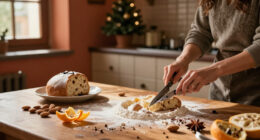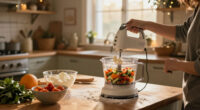
Holiday cooking puts pressure on different parts of a kitchen: a cook may need to chop vegetables for a large meal, make pie dough, whip cream, and mix several batches of cookies. A food processor and a stand mixer can both save time, but they solve different problems. The food processor is the stronger all-purpose prep tool for savory dishes and quick ingredient processing; the stand mixer is the better choice when baking, mixing, and kneading dominate the schedule. The real decision is which repeated task you want to make easier. Choose a food processor for broad prep help and compact storage, or a stand mixer if holiday baking is the work you most want to speed up.

Get kitchen staples and gadgets delivered free with Prime
- Fast, free delivery on millions of items
- Prime Video, Amazon Music and more included
- Member-only deals all year

Patelai 10-Piece Christmas Silicone Spatula Set
- ✔ Quantity: 10 spatulas
- ✔ Materials: Silicone and wood
- ✔ Approximate dimensions: About 11.42 × 0.79 inches each; listing notes inconsistent size information

OIULO 3-Piece Christmas Mini Tongs Set, 7-Inch
- ✔ Quantity: 3 tongs
- ✔ Length: 7 inches
- ✔ Materials: Stainless steel and silicone
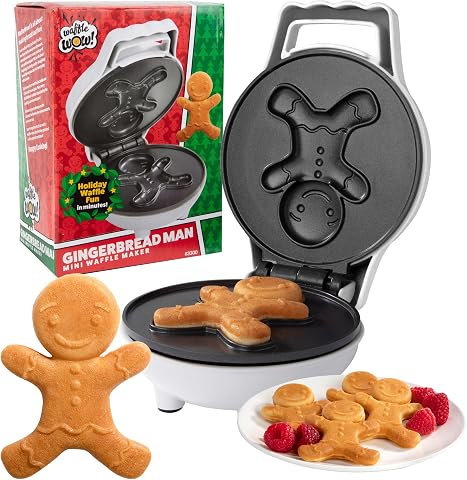
Waffle Wow! Gingerbread Man Mini Waffle Maker
- ✔ Material: Aluminum
- ✔ Wattage: 100 watts
- ✔ Dimensions: 5 × 4 × 2 inches
At a Glance
| Criteria | Food processor | Stand mixer | Winner |
|---|---|---|---|
| Chopping and slicing | Fast for many vegetables, nuts, crumbs, and other ingredients; results depend on the blade and technique. | Not designed for chopping or slicing; separate tools or attachments may be needed. | A |
| Baking and mixing | Can make some batters and doughs, but offers less controlled mixing than a stand mixer. | Excels at mixing, creaming, whipping, and combining baking ingredients. | B |
| Dough handling | Useful for some pastry doughs, though capacity and texture can be less predictable. | Strong for kneading bread and working larger or repeated batches, within the model’s capacity. | B |
| Range of holiday tasks | Strong across savory prep, sauces, dips, crumbs, and selected baking jobs. | Best for baking, with a narrower role in general meal preparation. | A |
| Hands-free operation | Requires monitoring and often stopping to scrape or redistribute ingredients. | Mixes hands-free once ingredients are added, though scraping and checking remain useful. | B |
| Counter and storage space | Usually easier to store, though attachments and bowls still take space. | Often heavy and best left on the counter, with extra attachments requiring storage. | A |
| Value for typical holiday use | Better value when it will handle frequent chopping and prep year-round. | Worth the higher outlay for frequent bakers who will use its capacity and attachments. | Depends |
Patelai 10-Piece Christmas Silicone Spatula Set
When holiday cooking means cookies, batters, sauces, and several dishes competing for counter space, the Patelai 10-piece set offers the broadest role in this group. Its silicone spatulas are described for baking, cooking, and mixing, so they can contribute during preparation rather than appearing only at serving time. Compared with the OIULO tongs, which are chiefly for handling food at the table, these tools are more useful across the work that happens before guests sit down. The set also has more pieces than most cooks need for one task, which can be helpful when recipes are underway at the same time.The wooden handles bring a rustic, seasonal look, and the colorful Christmas designs can double as kitchen decoration. That makes the set a natural fit for a holiday baking station, especially if several people are helping. Still, the listing gives inconsistent size information, so we would not choose these for a task that depends on precise dimensions or reach. Wood also requires more consideration than an all-silicone utensil when cleaning and drying; the supplied details do not specify dishwasher suitability. Unlike the Waffle Wow! appliance, this set does not create a single showpiece food, but it is much more adaptable to different recipes. Its main drawback is that the festive look may feel out of place once the season ends.
Pros:
- Ten spatulas provide options for mixing, baking, and cooking.
- Silicone construction suits a range of kitchen tasks.
- Wooden handles add a rustic seasonal appearance.
- Colorful Christmas designs can also decorate a holiday kitchen.
Cons:
- The listed size information is inconsistent.
- Holiday designs may see less use outside the season.
- Care instructions for the wooden handles are not specified.
Best for: Home cooks who bake and prepare several holiday dishes and want a coordinated set of mixing and cooking utensils.
Not ideal for: Buyers seeking dishwasher-safe utensils, precise size information, or a neutral set they will use year-round.
Bottom line: For the most varied contribution to holiday prep, this set beats the more specialized tongs and waffle maker, provided its seasonal styling and unclear sizing suit your kitchen.
“For the most varied contribution to holiday prep, this set beats the more specialized tongs and waffle maker, provided its seasonal styling and unclear sizing suit your kitchen.”
OIULO 3-Piece Christmas Mini Tongs Set, 7-Inch
For platters of appetizers, cookies, or other small foods, the OIULO mini tongs solve a more specific problem than the Patelai spatulas: letting guests serve themselves with a little more control. Three designs—Christmas tree, snowman, and gingerbread man—make it easy to place a matching tong beside different dishes, while the silicone-cushioned handles provide grip. The set is also stated to be heat-resistant up to 480°F and dishwasher-safe, practical details for a busy hosting day. A pull-ring lock and hanging loop offer two storage options.That convenience comes with a clear size limit. At 7 inches, these are small serving tools, not a substitute for long tongs used to turn food on a grill or reach into a deep pot. Compared with the Waffle Wow! maker, they are less of an activity or centerpiece, but they can be useful throughout a buffet or dessert table. Their compact build can help with small plates and tight serving areas, yet it may feel undersized for larger hands or generous portions. The Christmas patterns also make them less neutral than ordinary stainless-steel tongs. We rank them behind the spatula set because they cover fewer cooking tasks, while giving them a distinct edge for festive, small-scale serving.
Pros:
- Three themed tongs can be assigned to different serving dishes.
- Silicone-cushioned handles support grip and control.
- Stated heat resistance is up to 480°F (249°C).
- Dishwasher-safe, with a locking ring and hanging loop for storage.
Cons:
- Seven-inch length limits reach and serving size.
- Christmas designs may be less useful year-round.
- The compact format is not suited to every cooking or grilling task.
Best for: Hosts setting out appetizers, desserts, or other small foods who want compact seasonal serving tools.
Not ideal for: Cooks who need long, heavy-duty tongs for large roasts, deep cookware, or year-round general use.
Bottom line: Choose these over the other picks when small-food serving is the priority, but keep full-size tongs for larger dishes and cooking jobs.
“Choose these over the other picks when small-food serving is the priority, but keep full-size tongs for larger dishes and cooking jobs.”
Waffle Wow! Gingerbread Man Mini Waffle Maker
The Waffle Wow! makes the most sense when the holiday meal begins with a bit of theater. Its gingerbread man-shaped waffles turn breakfast into a seasonal activity, and a recipe booklet gives new users a starting point. The compact appliance stands upright for storage, so it asks for less cabinet room than a larger waffle maker. Compared with Patelai’s flexible spatulas or OIULO’s serving tongs, this is a much narrower purchase: its appeal is a particular breakfast experience rather than help across the whole holiday menu.The tradeoff is visible in its 4-inch cooking surface and single shape. A family or brunch group may need several batches, which can make it a poor fit when everyone expects to eat at once. Anyone who prefers classic round or Belgian waffles may also tire of the novelty quickly. The listing specifies a 100-watt appliance and a nonstick aluminum surface, described as PFAS-free and PFOA-free; those details do not make it a replacement for a full-size waffle iron. Its compact footprint and upright storage are useful in small kitchens, but the specialized output puts it third overall for broad holiday cooking. Pick it for shared festive breakfasts, not as the most versatile kitchen gadget in this lineup.
Pros:
- Makes gingerbread man-shaped waffles for a holiday-themed breakfast.
- Nonstick surface is described for easier release and cleanup.
- Compact body stands upright for storage.
- Includes a recipe booklet to help users get started.
Cons:
- Single-shape design limits variety.
- Four-inch cooking surface may require repeated batches for a group.
- Its seasonal novelty may not justify storage space for buyers seeking an everyday appliance.
Best for: Families or hosts who want a compact appliance for themed holiday breakfasts and a hands-on kitchen activity.
Not ideal for: Large households needing fast batch output, or buyers who want one waffle maker for varied shapes and everyday breakfasts.
Bottom line: This is the most distinctive breakfast pick, but its small, single-shape output makes it less practical than the other two for broad holiday cooking needs.
“This is the most distinctive breakfast pick, but its small, single-shape output makes it less practical than the other two for broad holiday cooking needs.”
As an Amazon Associate we earn from qualifying purchases.
Key Differences
The food processor earns its place through speed across many short prep jobs. It can reduce the time spent chopping vegetables, shredding cheese, making breadcrumbs, blending a sauce, or preparing a dip. Those jobs often pile up before a holiday meal, and one machine can take on several of them. It does not replace careful knife work for every ingredient, and it is not a dedicated mixer, but its range makes it a practical choice for cooks whose holiday menu leans savory.
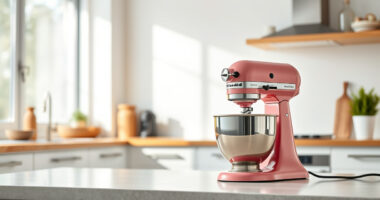
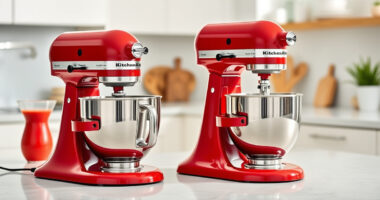
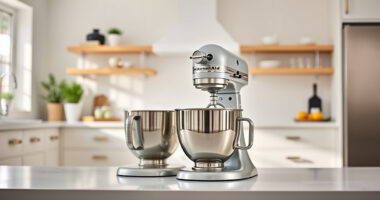
The stand mixer has a clearer specialty: baking. Its bowl and mixing action make it easier to cream butter and sugar, whip ingredients, combine cookie dough, and knead bread. It can keep working while the cook handles another task, a meaningful advantage when the kitchen is busy. That convenience comes with a larger footprint and less help for chopping or slicing. If baking is occasional, its unused capacity may not justify the expense; if baking is a regular holiday tradition, the time and effort saved can make the higher cost worthwhile.
Detailed Comparison
Chopping and slicing (Food processor wins — major)
The food processor wins by a major margin. Its blades and discs can process many vegetables and other ingredients much faster than hand preparation, which helps when side dishes and sauces require repeated prep. A stand mixer does not perform these jobs without specialized attachments, so cooks would still need a knife or another appliance. For a menu built around vegetables, dips, and savory sides, this difference is felt throughout the cooking session.
Baking and mixing (Stand mixer wins — major)
The stand mixer wins by a major margin for regular baking. It combines ingredients, creams butter, and whips mixtures with less continuous effort than a food processor, which can be less suited to delicate or aerated results. A food processor can help with some doughs and batters, but it does not provide the same straightforward control for a range of baking tasks. If cookies, cakes, or whipped toppings are central to the holiday menu, the mixer is the stronger tool.
Dough handling (Stand mixer wins — moderate)
The stand mixer has a moderate advantage, especially for bread dough and repeated batches. Its dough hook is designed for kneading and can reduce the physical work involved, while a food processor can handle some dough tasks quickly but may require closer attention to capacity and consistency. For pie pastry, the right method and recipe matter, so neither appliance is automatically the best fit for every crust. Choose the mixer if yeast breads are a regular project; choose the processor if pastry preparation is occasional and general prep matters more.
Range of holiday tasks (Food processor wins — moderate)
The food processor wins by a moderate margin for cooks who need one appliance to cover many kinds of preparation. It handles chopping, shredding, pureeing, crumbs, and some dough or batter work. A stand mixer is more capable within baking, but it contributes less to the savory parts of a meal unless a cook buys compatible attachments. The processor is therefore the more flexible default for a mixed holiday menu, while the mixer is the better specialist.
Hands-free operation (Stand mixer wins — moderate)
The stand mixer wins by a moderate margin. Once ingredients are in the bowl, it can mix while the cook prepares another dish, although recipes still benefit from occasional checks and scraping. A food processor is quick, but many tasks require short pulses, ingredient adjustments, or stopping to inspect the result. The practical difference is less about total speed than how much attention each appliance occupies during a crowded cooking session.
Counter and storage space (Food processor wins — moderate)
The food processor usually wins by a moderate margin for storage. Many models can be put away between uses, though their bowls, blades, and discs take room and need careful handling. Stand mixers are often heavier and larger, so frequent bakers commonly leave them on the counter. If counter space is limited or the appliance will be used only for a few holiday meals, the processor is easier to accommodate. Check the specific model’s footprint and accessory storage before buying.
Value for typical holiday use (major difference)
This is a genuine tie that depends on how often the appliance will be used. A food processor tends to offer broader value when it helps with everyday cooking throughout the year as well as holiday prep. A stand mixer can justify its higher cost for frequent bakers who make bread, cookies, or cakes in batches and benefit from hands-free mixing. Paying more for a mixer makes sense when those jobs are routine; for occasional holiday baking alone, the purchase may be hard to justify.
Food processor: Pros and Cons
Pros:
- Speeds up chopping, shredding, and pureeing
- Useful for many savory dishes and prep jobs
- Often easier to store than a stand mixer
- Can make crumbs, sauces, dips, and some doughs
Cons:
- Less suited to controlled mixing, creaming, and whipping
- Many tasks require pulsing and close monitoring
- Blades and discs need safe handling and storage
- Capacity varies and may limit large batches
Stand mixer: Pros and Cons
Pros:
- Excels at mixing and baking tasks
- Handles kneading with less manual effort
- Mixes hands-free while the cook works elsewhere
- Useful for frequent or large baking batches within capacity
Cons:
- Does not chop or slice without additional tools
- Usually takes more counter and storage space
- Higher cost is harder to justify for occasional baking
- A specialized tool with less help for savory prep
Who Should Choose What
Choose Food processor if:
- You prepare vegetables, cheese, dips, sauces, or crumbs for a large holiday menu.
- You want a versatile appliance that will also help with everyday cooking.
- You have limited counter space or bake only occasionally.
- Your most time-consuming jobs involve chopping, shredding, or pureeing.
Choose Stand mixer if:
- You bake several batches of cookies, cakes, or bread during the holidays.
- You want help kneading dough or mixing while you handle another recipe.
- You bake often enough through the year to make the counter space and cost worthwhile.
- Your main frustration is repetitive mixing or working dough by hand.
Skip both if: Skip both if you cook small meals, already have effective knives and a hand mixer, and would use either appliance only once or twice a year.
Value for Money
The food processor is usually the better value for a household that wants one appliance to help with a broad range of cooking tasks. Its value comes from repeated use: chopping vegetables for weeknight meals, making sauces, and preparing holiday ingredients. A stand mixer costs more in many lineups and occupies more space, so its premium is worth paying when baking is frequent enough for its bowl capacity and hands-free mixing to matter. Do not pay for mixer attachments on the assumption that they will turn it into a general prep machine; compare the cost and storage needs of the specific accessories you would actually use.
Final Verdict
For most cooks choosing one appliance specifically to make holiday cooking easier, choose the food processor. It covers more of the varied prep work behind a large meal and is likely to remain useful outside the holiday season. Choose the stand mixer if baking is the centerpiece of your holiday routine and you regularly mix or knead enough to justify its cost and counter space. The deciding factor is the task that repeats most: choose A for broad ingredient prep, and choose B for serious baking. If neither task is frequent, keep the money and use the tools you already own.
Frequently Asked Questions
Which is better for holiday cooking overall, a food processor or a stand mixer?
A food processor is the better general choice for mixed holiday menus because it helps with chopping, shredding, pureeing, and several other prep jobs. A stand mixer is better when baking is the main workload.
Can a food processor replace a stand mixer for holiday baking?
It can help with selected doughs and batters, but it is not a full substitute for creaming, whipping, repeated mixing, or kneading bread dough. If those are regular tasks, a stand mixer is more capable.
Is a stand mixer worth buying for one holiday season?
Usually only if you bake often enough during the rest of the year to keep using it. For occasional seasonal baking, a hand mixer and existing kitchen tools may be better value.
Which appliance saves more time for a large holiday meal?
It depends on the menu. A food processor can save more time on vegetable, cheese, and sauce preparation; a stand mixer can save more effort when mixing several batches or kneading dough. Count the tasks you repeat most before deciding.